CYBER SALE! ➔

4 Snowman Sequencing Activities That Increase Engagement With Preschoolers

When implementing a themed-based approach, you want to use activities incorporating the words related to the theme as much as possible. It gives your students context with how to process the knowledge of the theme and the vocabulary used with the theme. You are building more substantial vocabulary knowledge in many ways because students can categorize and attach word associations to the words being used. Today, I wanted to share some snowman sequencing activities that work on language skills while keeping your students engaged! 

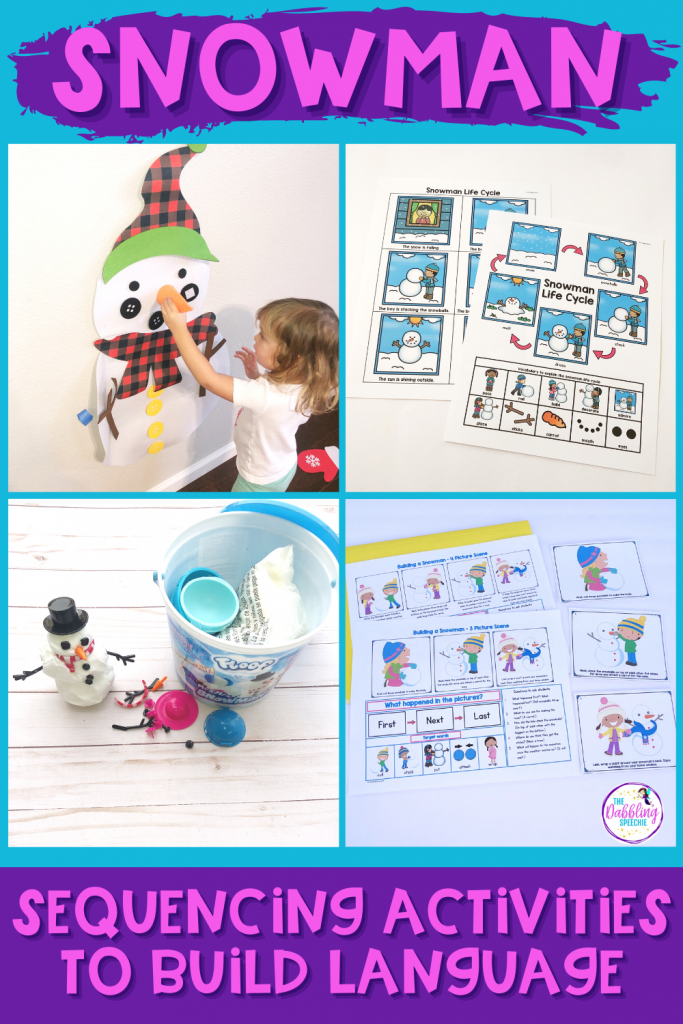
Hands On Building a Snowman Sequencing Activities

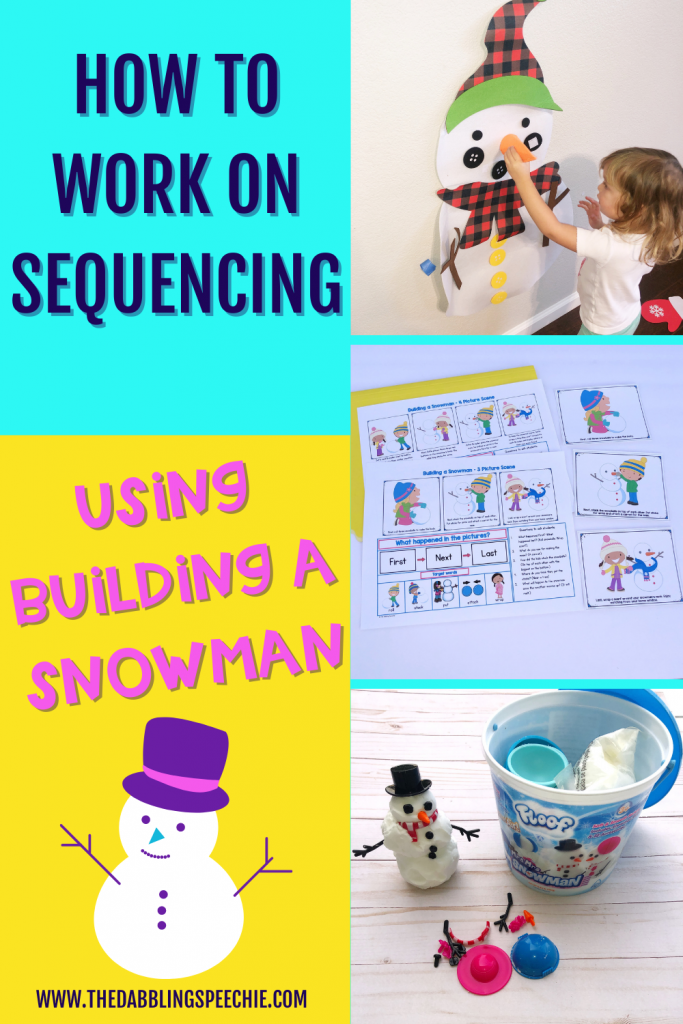
With students that have a shortened attention span or need to be activating their sensory system, you can use these hands on snowman sequencing activities to work on verbs, spatial concepts, requesting, sequencing and more:

  • To build a snowman, use white playdough with items such as dried black beans, buttons, sticks, and a foam hat. Students can work on sequencing the steps while building their own.
  • Similarly, you can find a felt snowman building set on Amazon or possibly Dollar Tree. Students can follow directions for the steps to make a snowman.

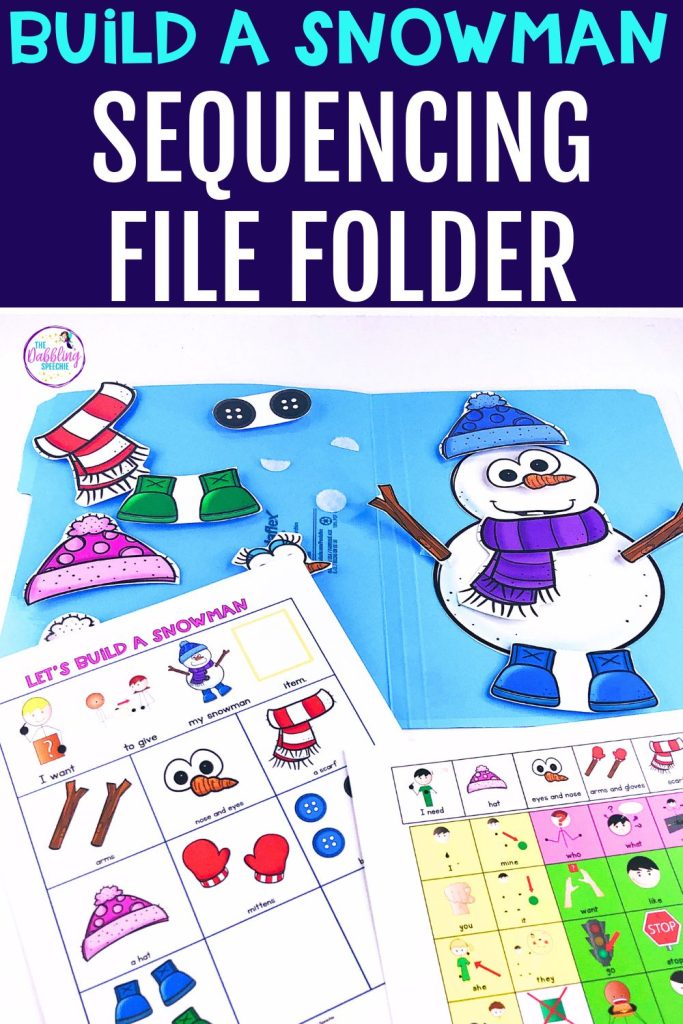
Build a Snowman File Folder Activity

If you don’t want a mess but need a hands-on activity, why not build a snowman as a file folder activity? You can target sequencing, requesting, CORE words, turn-taking, and describing. Students will have fun making their snowman their own.

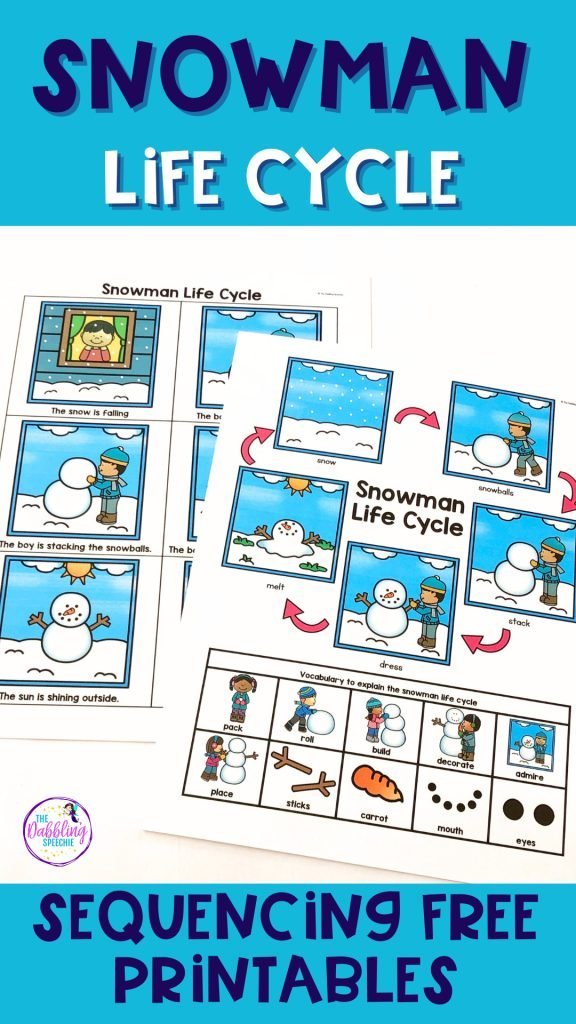
Life Cycle of a Snowman Sequencing Activity

You can also work on sequencing while talking about the snowman life cycle. This also is a great theme smashing opportunity to incorporate how we get snow! Check out this YouTube video for discussing snow. As you work on the life cycle of a snowman, you can target verbs (i.e., stack, melt, build, snow, roll, etc.), adverbs (i.e,. slowly, quickly), antonyms (i.e., hot, cold), basic concepts (i.e., before, after).

Download your free Life Cycle of a Snowman printables to target all of these speech and language goals easily!

Learn about the life cycle of a snowman and work on speech and language goals.

Articulation Words to Use While Talking About a Snowman Life Cycle

S & S-blends Sounds

  • snow, snowman, scarf, stare, slow, stack, and smile.
  • cycle, sun, outside, dress, place

R Sound

  • Dress, roll, decorate, admire, carrot

L Sound

  • life, cycle, roll, build, place, snowballs, melt, fall

Snowman Sequencing Activities with Short Stories

snowman-sequencing-activities-speech-therapy

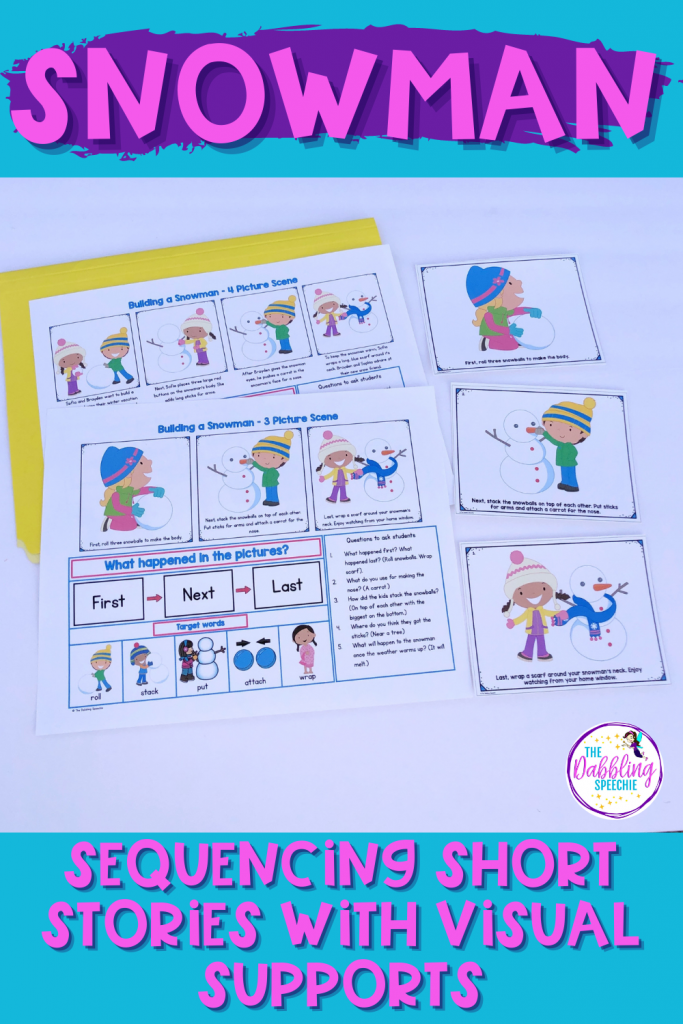
Discussing the steps for building a snowman in the context of a short story can help your students relate to the vocabulary when used in context.

You can find snowman short stories on GetEpic such as “Make a Snowman” by Pam Holden. If you need short stories that also have picture sequencing cards, check out the winter short stories set in my TPT store. It not only comes with picture sequencing cards but also has short stories with an answer key and visuals to help you guide the instruction during your sessions. There are lots of ways to use winter short stories to cover speech and language goals. 
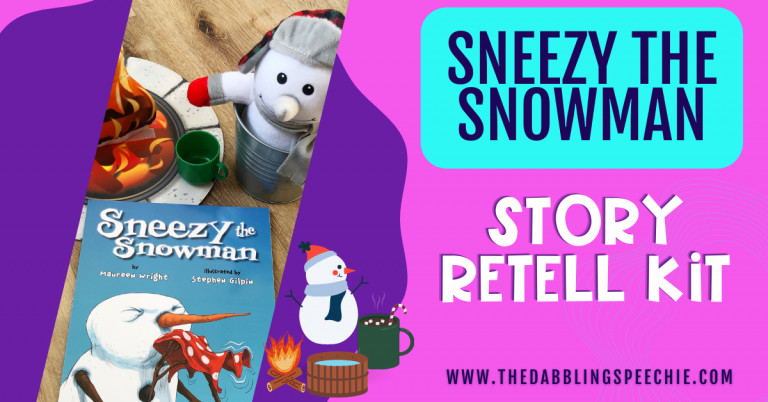
Build a Snowman Sequencing Activity with Digital Tools

If you are looking for some digital materials to work on building a snowman, check out ABCYa. They have a free build a snowman activity that you can work on sequencing the steps for making a snowman. Additionally, you can also target describing, requesting, CORE words (i.e. more, want, look, done, here, etc.), transition words, and grammar structures. For SLPs that love using Boom Cards™, you can use this snowman sequencing activity set to work on tier II vocabulary related to the sequencing activity. Plus, there are 3, 4, and 6 picture scenes to practice the steps for build a snowman. In all of the sequencing Boom Cards™ sets, there are extension activities to work on other language skills related to your snowman theme. 

What tips do you have for working on sequencing skills?

What is working for you when teaching sequencing with your students? I would love to know any tips or strategies that have been helpful, especially for your language impaired students. Share you tips in the comments!

Share it:
Email
Facebook
Pinterest