


Every SLP needs language therapy ideas and evidence-based practices for grammar intervention because many of our students have goals targeting this area! Throughout my career as a speech therapist, I have worked with students needing support in grammar, syntax, and morphology. Often, students with receptive and expressive language delays in syntax and morphology also struggle in other language domains. For example, children who make errors with word order, verb tense, or plural markers frequently show weaknesses in vocabulary, oral comprehension, and narratives.
Today, I’m sharing research-backed strategies for implementing effective grammar intervention in speech therapy. Scroll down to find engaging grammar speech therapy activities you can use to support your students in building strong language skills!

When exploring research on grammar intervention, one thing becomes clear—there isn’t a one-size-fits-all approach for treating grammar goals in speech therapy. However, researchers have identified key principles that can guide SLPs in developing effective treatment plans for improving receptive and expressive language skills.
One insightful resource is the article “Ten Principles of Grammatical Intervention for Children with Specific Language Impairments” by Fey, Long, and Finestack (2003), published in the American Journal of Speech-Language Pathology (Read it here). This article provides valuable guidelines for clinicians designing language therapy activities that support grammar development.
Here are a few critical takeaways from the research:
By incorporating these principles into language therapy sessions, SLPs can create more effective interventions that align with academic standards while fostering meaningful communication growth.

Allison Fors and I want to take the headache out of implementing grammar intervention, so we have a jam-packed 1-hour presentation that is going to help you in the following areas:
A randomized clinical trial explored two grammar intervention strategies—recasting and a cueing hierarchy—to determine which approach led to better outcomes in five-year-olds with speech and language impairments. The study examined 31 children to see how each method impacted their grammar development.
First, let’s break down the fancy term “recasting” in simple terms. Recasting is when a clinician implicitly corrects a child’s grammar error while keeping the conversation going. For example, if a child says, “I really love cookie,” the SLP might respond with “I really love cookiesssss too!”, emphasizing the correct word without explicitly stopping to correct the child. This strategy allows for natural language modeling without disrupting communication. (Now you can sprinkle this term into IEP meetings and impress everyone! 😉)
Here’s how the two intervention groups worked in the study:
The study found that the cueing group made more progress than the recasting group. This suggests that children with speech and language impairments benefit more from implicit grammar intervention that provides cueing, allowing them to restate and correct their own sentences.
To help you with using conversational recasting with your language therapy activities, I break it all down in this blog post.
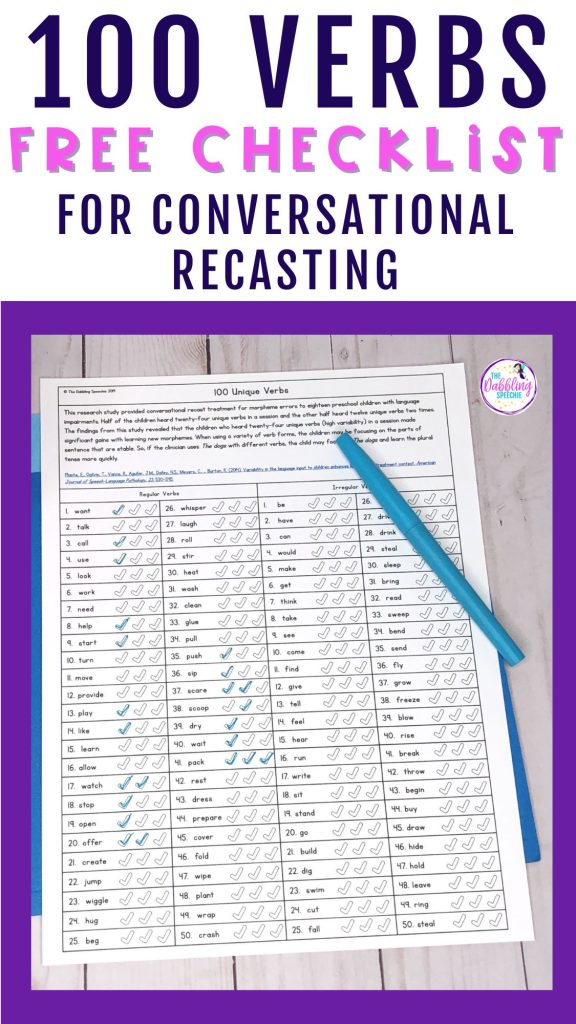
📌 Free Resource Alert! Grab my 100 Unique Verbs List to make your language therapy activities even more effective!
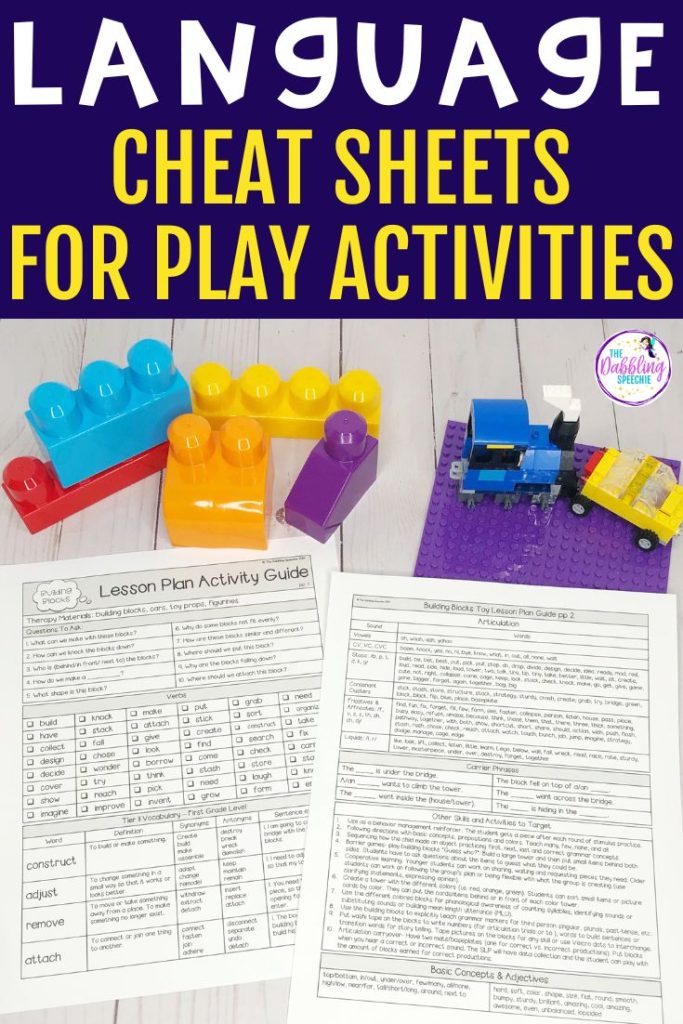
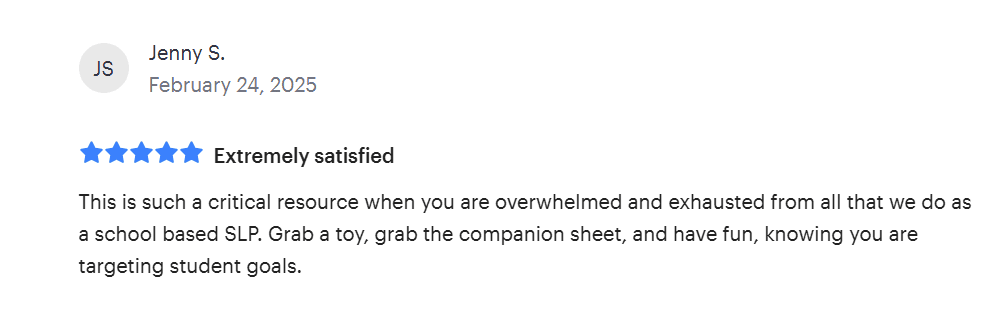
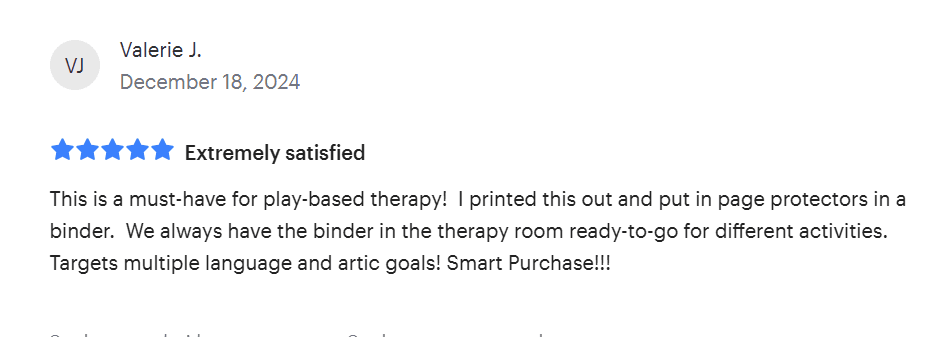
If you need more verbs and parts of speech to recast conversationally during play-based speech therapy, use my toy companion speech therapy cheat sheets to help you have language therapy targets ready for all your toys and games. They are available in my TPT store and on my website.


Now, let’s dive into practical strategies for implementing grammar intervention in your language therapy sessions!
I typically structure my sessions into two phases:
For the first one or two sessions, I focus on explicitly teaching grammar concepts using cueing strategies. These structured sessions include:
✅ Visual sentence strips to support sentence formulation (Check them out here).
✅ Grammar rule visuals to reinforce morphology concepts (See morphology visuals here).
✅ Worksheets and modeling to help students grasp the targeted grammar structure.
✅ Scaffolded practice to ensure students can use the rule correctly before moving to generalization.
The next two sessions focus on helping students apply grammar skills in real-life contexts. This phase includes:
📚 Books & storytelling to target syntax and morphology.
🎭 Play-based speech therapy activities (e.g., playdough, toy cars, tea parties) to practice grammar in a naturalistic way (Explore play-based ideas here).
🖼️ Picture scenes for describing, sequencing, and answering WH-questions (Get picture scenes here).
🗣️ Conversational recasting to model and reinforce correct grammar use in context. (Yes, another fancy SLP term you can drop in IEP meetings! 😉)
These sessions provide multiple opportunities for modeling, expanding, and recasting grammar skills in meaningful language interactions—a crucial part of evidence-based language therapy.

When working on regular past tense verbs (-ed markers) in language therapy, it’s important to use explicit instruction, drill-based practice, and naturalistic activities to help students generalize grammar skills effectively. Incorporating a variety of language therapy ideas ensures students hear, practice, and apply past-tense verbs in meaningful contexts.
This 4-session plan integrates evidence-based practices and provides engaging, structured activities that make learning past-tense verbs interactive and functional for students in speech therapy.
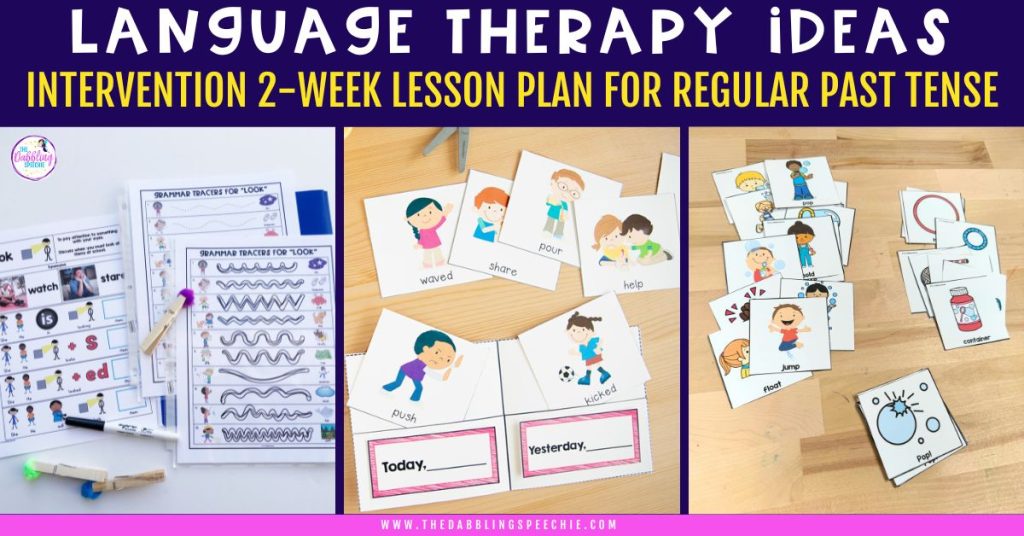
📌 Goal: Introduce regular past tense verbs (-ed rules) and provide structured drill practice.
1️⃣ Teach the Past-Tense Rule
2️⃣ Drill & Repetition with Grammar Tracer Worksheets
3️⃣ Flashcard Sorting Activity
📌 Goal: Reinforce the past-tense concept through drill-based practice and structured application.
1️⃣ Quick Rule Review
2️⃣ Flashcard Drill Game
3️⃣ Past-Tense Writing Activity

📌 Goal: Apply past-tense verbs in storytelling and conversation.
📖 For K-2nd Grade: In the Tall, Tall Grass by Denise Fleming
📖 For 3rd-6th Grade: Camping Spree with Mr. Magee by Chris Van Dusen
📌 Goal: Encourage generalization of past-tense verbs through storytelling and sentence building.
1️⃣ Book-Based Story Retell
2️⃣ Picture Scene Story Creation

The Themed Therapy SLP Membership provides:
✔ 24 unique verb flashcards perfect for sensory bins, games, and sentence strips.
✔ Tools for conversational recasting and explicit grammar practice.
✔ Sequencing short stories, book companions, and vocabulary task cards to target grammar structures while supporting other language domains.
For SLPs who love using seasonal themes, my Seasonal Grammar & Vocabulary Activities include:
✔ Themed vocabulary sets for spring, summer, fall, and winter, allowing for seasonal engagement.
✔ Grammar, syntax, and morphology activities woven into seasonal content to reinforce key skills.
✔ Interactive tasks that connect to real-world themes students encounter throughout the year.
If you prefer timeless, year-round activities, my Evergreen Grammar & Vocabulary Activities are designed for K-2 students and include:
✔ Grammar and vocabulary-building exercises that can be used in any setting, any time of year.
✔ Expressive language activities focused on sentence structure, syntax, and verb use.
✔Low-prep materials to make targeting language skills easier in busy therapy sessions.
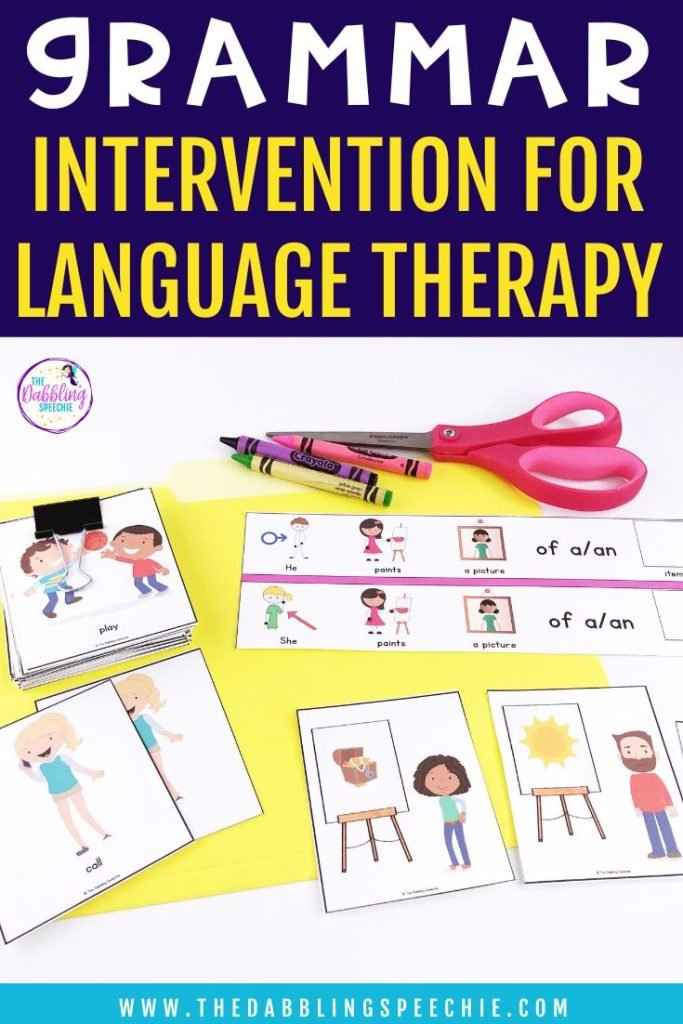
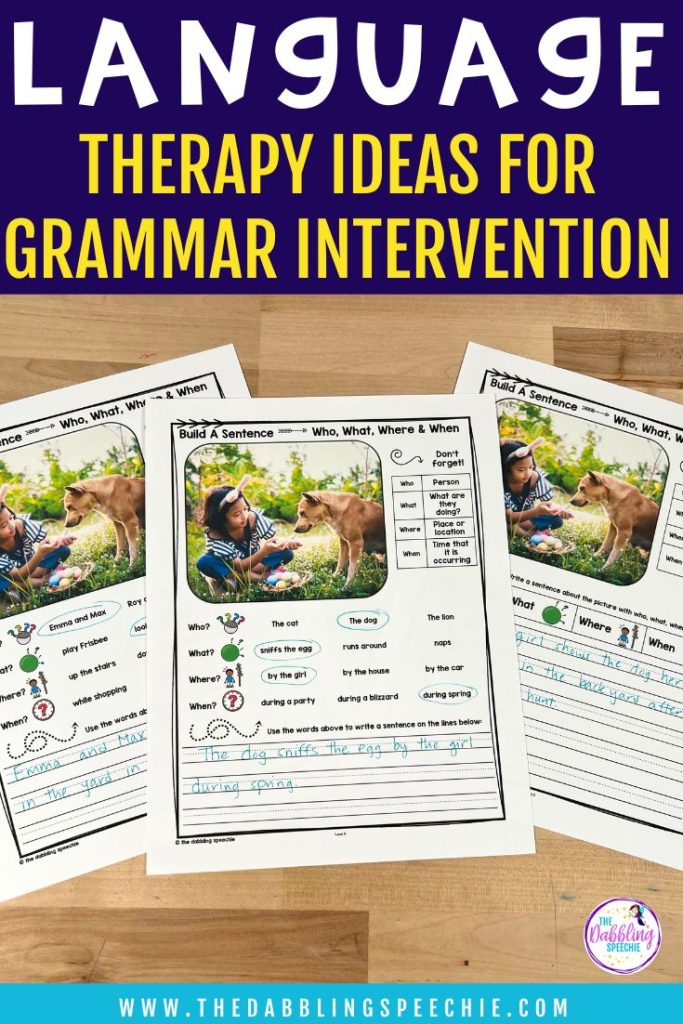
For explicit and implicit grammar instruction, check out my Regular and Irregular Verb Grammar Worksheets:
✔ Easy-to-prep worksheets with visual grammar posters.
✔ Multiple opportunities to practice verb action targets in structured and conversational settings.
Incorporating writing in grammar intervention helps students build confidence in constructing complex sentences. My Build-a-Sentence Grammar Worksheets support:
✔ Sentence structure, WH-questions, syntax, and vocabulary.
✔ Inferencing skills while reinforcing grammar targets in written form.
By integrating these research-backed activities into your speech therapy sessions, you can help students develop stronger grammar skills while working on other key language domains.
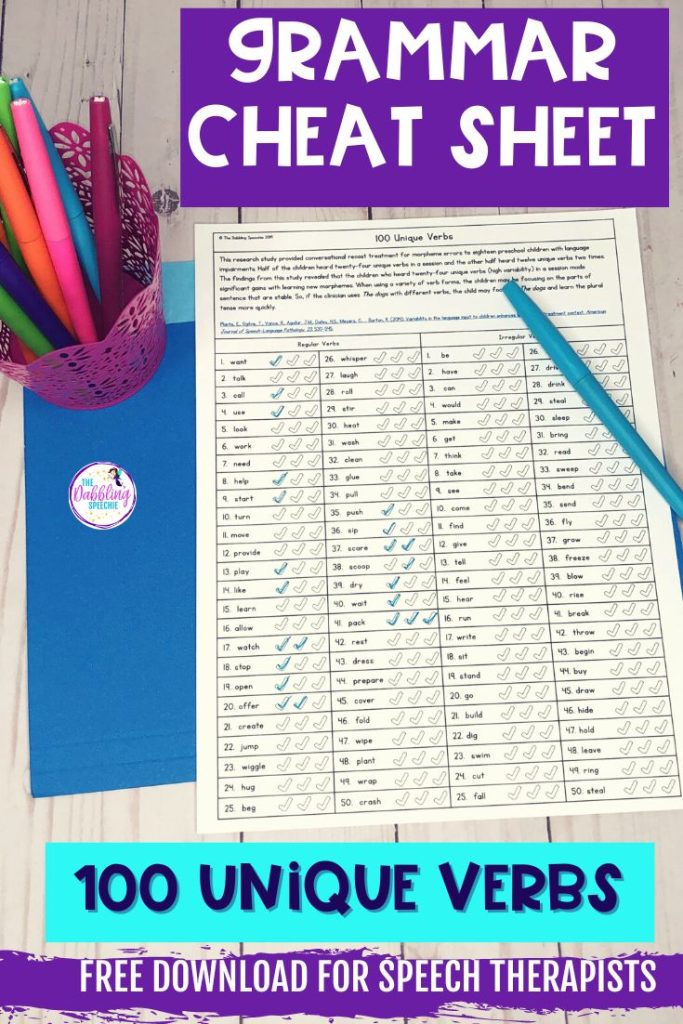
Are you looking for free language therapy ideas to make grammar intervention easier and more effective? Here are three must-have resources to support your students in speech therapy sessions—no prep required!
When using conversational recasting in play-based speech therapy activities, thinking of unique verbs on the spot can be challenging. That’s why I created this free action verbs checklist—so you can track which verbs you’ve modeled during a session!
✔ Easily mark off verbs as you use them in conversation.
✔ Ensure variety by introducing 24 unique verbs per session.
✔ Boost morpheme learning by increasing exposure to diverse verb forms.
📥 Sign up to grab your 100 Unique Verbs Checklist for FREE!
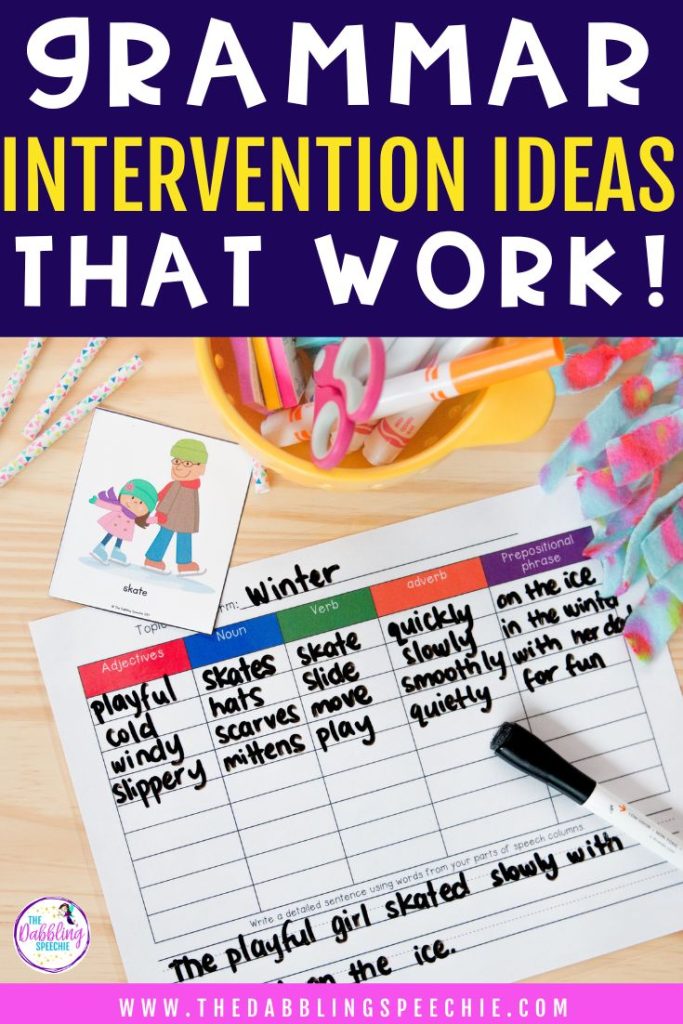
Want to help students visualize sentence structure while working on grammar, syntax, and morphology? You can use my FREE Sentence Frame Graphic Organizer with LOTS of language therapy activities including:
✔ Books, real photos, and videos to support sentence formulation.
✔ Parts of speech visuals to help students see how words fit together.
✔ Grammar intervention activities focused on describing actions and events.
If you love using engaging videos in speech therapy, check out my FREE Simon’s Cat Speech Therapy Cheat Sheet! This resource includes:
✔ Targeted parts of speech and verbs for grammar practice.
✔ Verb tense exercises to reinforce sentence formulation.
✔ Story elements and WH-questions to strengthen language comprehension.
With these free grammar speech therapy resources, you can provide evidence-based language therapy activities while keeping sessions fun and engaging for your students!
📌 Follow these simple language therapy ideas for getting started:
✔ Choose one targeted grammar skill (e.g., past-tense verbs) instead of trying to address multiple rules at once.
✔ Use visual supports, such as sentence frames, grammar rule posters, and structured worksheets.
✔ Incorporate books, storytelling, and play-based activities to make grammar instruction meaningful.
✔ Check out The Informed SLP’s Grammar Guide for additional language therapy ideas based on research.
📌 Use these data-driven language therapy ideas:
✔ Keep a probe list of verbs to track baseline accuracy & growth over time.
✔ Use a tally sheet for correct vs. incorrect productions during structured and naturalistic activities.
✔ Track progress with the Action Verbs Checklist to ensure you’re recasting and modeling a variety of past-tense verbs.
✔ Compare pre- and post-session storytelling samples to measure spontaneous use of correct grammar forms.
📌 Blend structured practice with engaging language therapy ideas:
✔ Start with explicit teaching (rules, visuals, structured drill) to introduce past-tense verbs.
✔ Transition to guided practice using sentence-building activities, interactive worksheets, and structured conversation tasks.
✔ End with naturalistic learning (story retells, book-based activities, and sensory bin play) where students use past-tense verbs in real-world contexts.
✔ Example: Use sentence strips for structured practice, then shift to a book-based recasting activity where students naturally use past-tense verbs while discussing the story.