
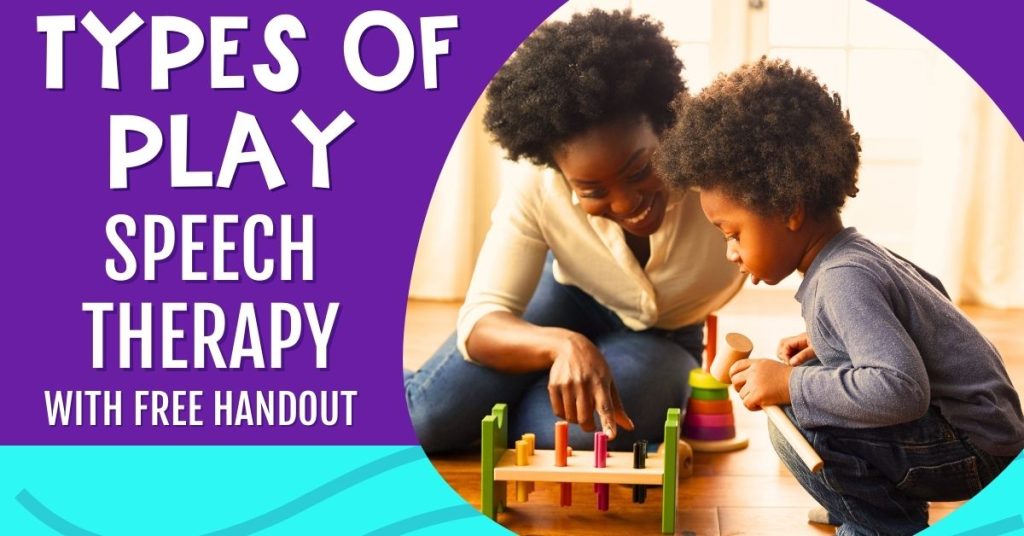
Knowing the types of play speech therapy development of your students will help you select toys, games, and play activities for your sessions. Ever look at your stash of toys in your speech therapy closet and think, “What toys should I even pick for this student?” Or maybe you’ve pulled out a play activity, only for the child to start throwing things or trying to escape your session? We’ve all had those moments when a play-based activity didn’t go as planned.
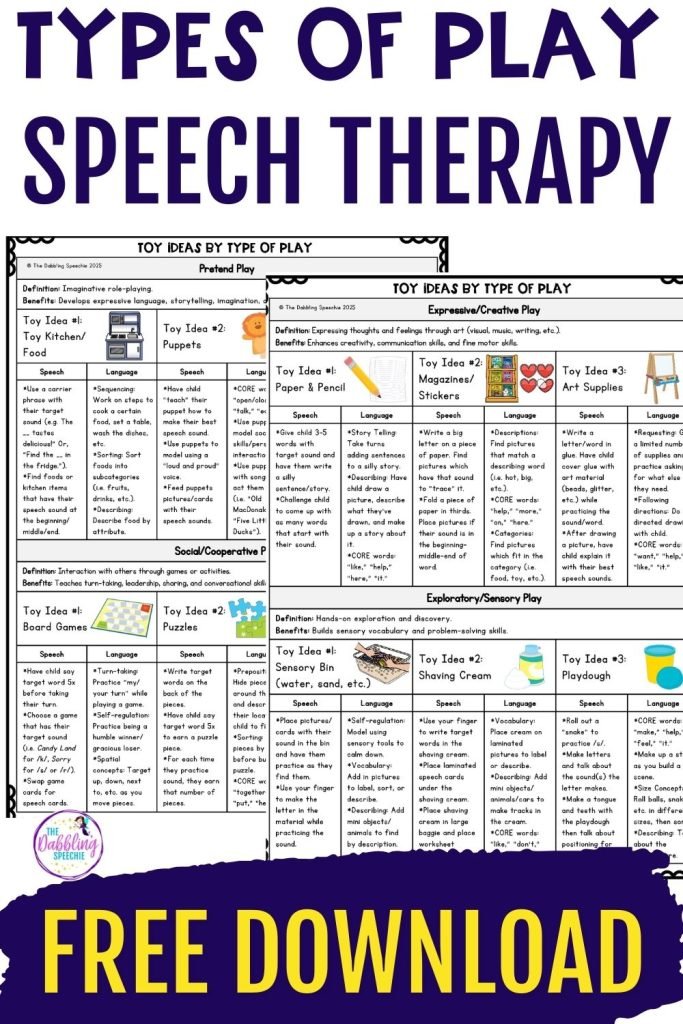
Understanding the types of play children engage in can make planning your speech therapy sessions much easier! Plus, it is essential to pick play-based speech therapy activities that work on types of play skills that your students need to develop or doing play activities at their current play level. In this post, you’ll learn about play-based speech therapy and explore the different types of play. Plus, don’t miss your free types of play speech therapy handout to help you confidently plan activities (scroll down to grab it.)
You’ve probably seen SLPs talking about play-based speech therapy and thought, “What is that exactly?” Play-based speech therapy is when the speech-language pathologist targets speech and language goals through a play activity, toy, or game. Often, with kids working on social communication and language, following the child’s lead to see what they want to play is ideal. On the other hand, for speech sound goals or in group settings, you may choose a play-based activity that’s more adult-directed to ensure you get enough trials and practice in a session.
Bringing play into your speech therapy sessions not only helps you build joint attention and child engagement, but it also naturally targets many skills like vocabulary, asking and answering questions, building syntax and morphology, and teaching social interaction. Understanding the stages of play can take this a step further by helping you choose toys and activities that align with where your students are developmentally. This ensures you’re meeting them at their level and planning play-based activities that are both meaningful and effective.
Click here to get your FREE Types of Play Speech Therapy Handouts
Understanding the types of play children engage in can help you select the right toys, manage behaviors, and make sessions more effective. Below, I’ll break down the different types of play and how they can be used in speech therapy.
Click here to get your FREE Types of Play Speech Therapy Handouts
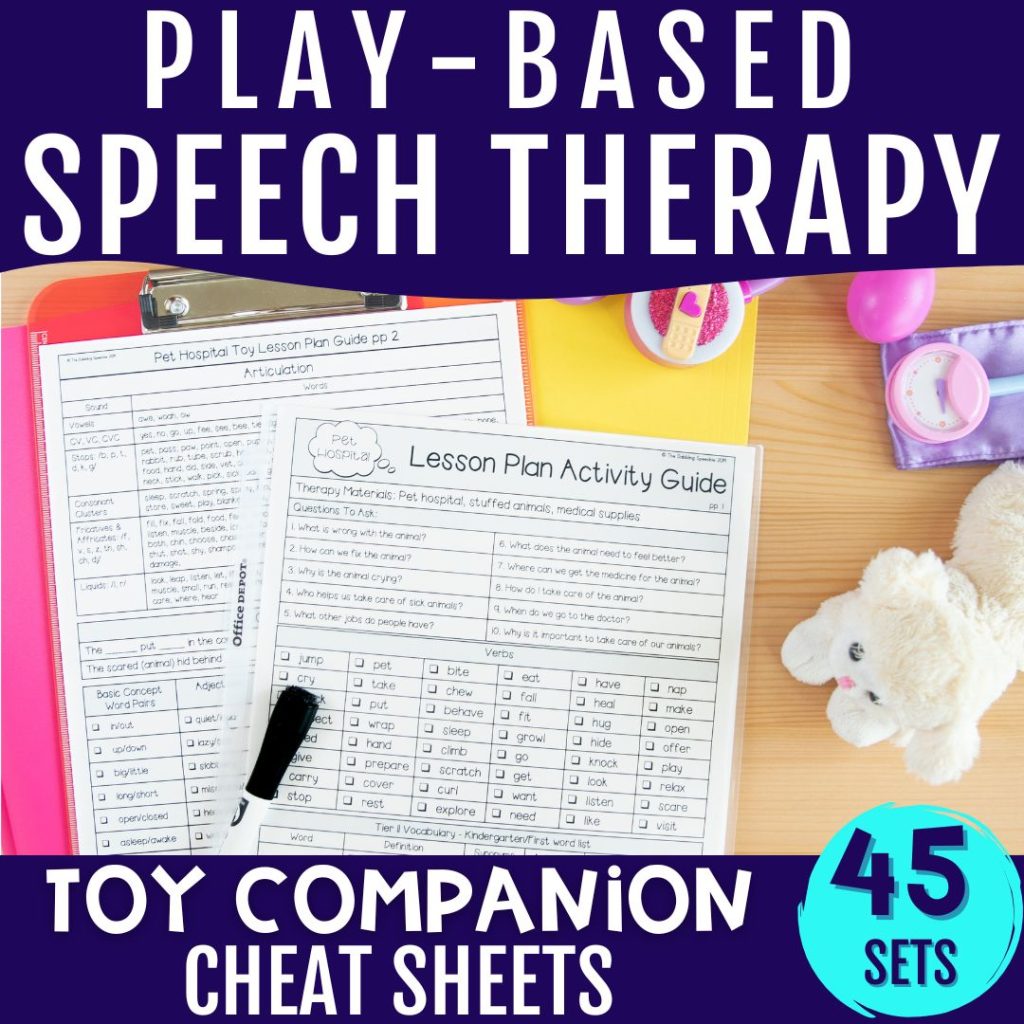
“Want more ideas? My Play-Based Speech Therapy Toy Companion Cheat Sheets make it easy to match speech goals to toys you already have in your therapy room. Save time planning and speech and language targets pre-selected so you can easily model and expand in the session. With 45 two-page cheat sheets using your favorite toys and games, you can adapt how you use the toy or game for your students goals.


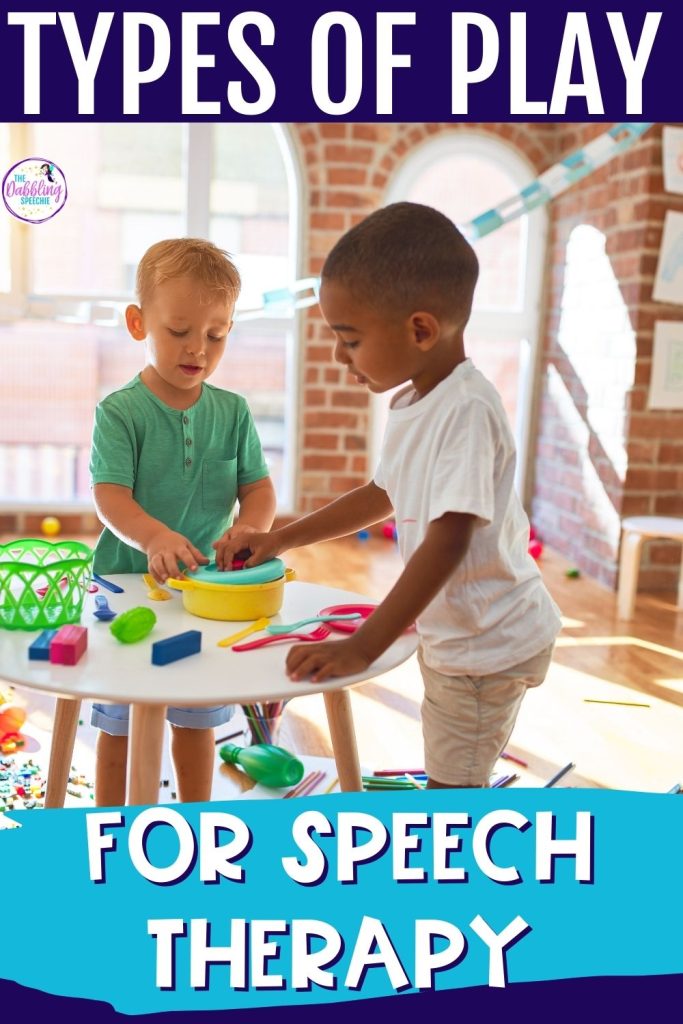

Now that you know the different types of play skills, how do you incorporate them into your therapy sessions? Here are some quick tips:
✅ Follow the child’s lead when working on social and language skills.
✅ Use structured play for articulation or fluency goals to get enough trials in a session.✅ Adapt toys for multiple goals—a single toy or game can be used for articulation, language, and social skills! It’s super easy using the toy companion cheat sheets.
✅ Remember zones of proximal development when choosing toys and play activities. You want to pick toys that will help them develop play skills that are just a little bit challenging but not too overwhelming. For example, if a child is at the functional play level, you wouldn’t want to pick complex pretend play toys because they are still working on functionally playing with toys doing 1-2 actions.
Get more play-based speech therapy ideas with specific toys, games and activities to help you plan for your sessions. And make sure to download your free types of play speech therapy handout for reference when looking for play activities.