
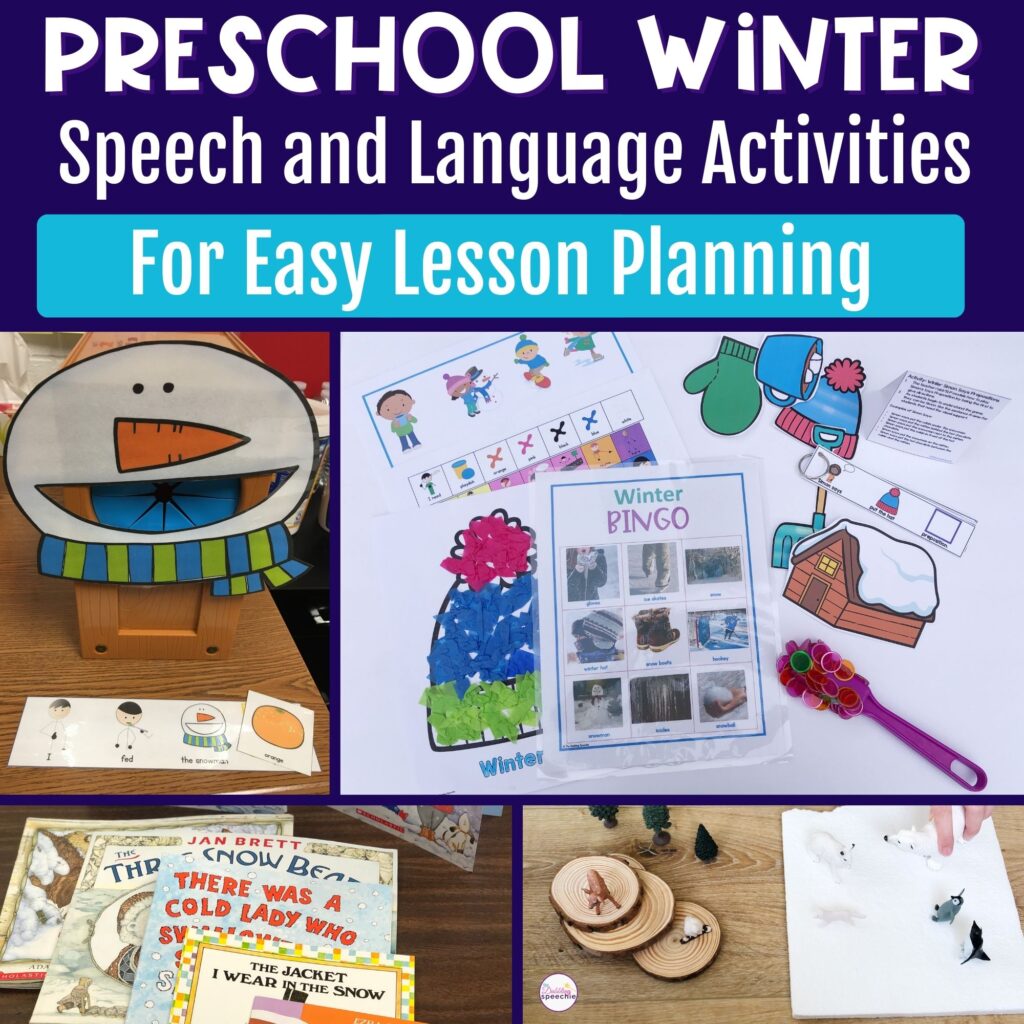
Planning preschool winter speech and language activities doesn’t have to mean spending hours searching Pinterest or buying every toy and material to make a complete unit. Most often, you can get winter books from the library and grab things that you have on hand to support early language, play skills, and communication goals with a winter theme.
In this post, I’m rounding up my best winter speech therapy ideas for preschoolers, all in one place. You’ll find favorite winter themes like snowmen and the winter season, plus easy ideas using books, songs, sensory bins, crafts, toys, and games that work beautifully for mixed groups and busy therapy days.
I will also share additional preschool winter speech therapy themes you can use to that will spark engagement.
Whether you’re working in a preschool classroom, running small groups, or supporting early learners with diverse needs, these winter activities are designed to help you plan less and play more without sacrificing progress.
If you’re looking for winter activities for older students, you can also check out my Winter Speech Therapy Activities for PreK–5th and Winter Speech Therapy Activities for Middle School posts.
Planning preschool winter speech and language activities can be as simple or as elaborate as you want them to be! You really just need a good winter book and another extension activity that you can adapt for a lot of goals. For example, if you wanted to work on winter vocabulary along with wh-questions, grammar, winter clothes, basic concepts, and AAC core words, you could read the book The Snowy Day by Ezra Jack Keats and pair it with a fun snow sensory bin. With these two materials, you can work on a variety of speech and language goals, such as:
Reuse this lesson plan with all your preschool groups, adjusting how you use it based on the students’ goals. For example, if you have someone working on wh-questions, use the book and sensory bin to work on who and what questions. While another student may be working on pronoun + is + verb + ing. Use the pictures in the book to build grammatically correct sentences. Make sure your winter snow sensory bin has some Little People so you can work on wh-questions and the grammar goal.
Also, when doing a winter preschool speech and language theme, you want to use it for 2-4 weeks. It is beneficial to your students and it helps you streamline planning. Plan your winter preschool speech and language activities once and reuse them with all your groups. Get more insights about why using a theme longer than a week is a game-changer in episode 45 of the Real Talk SLP podcast.
Books are one of my favorite ways to plan preschool winter speech and language activities because they naturally support vocabulary, early grammar, play skills, and comprehension, all with minimal prep. They are grab-off-the-shelf, jump-into-therapy material.
Instead of overwhelming you with a long list, here’s a curated collection of preschool-friendly winter books, organized by common winter themes you’re likely already using in therapy.
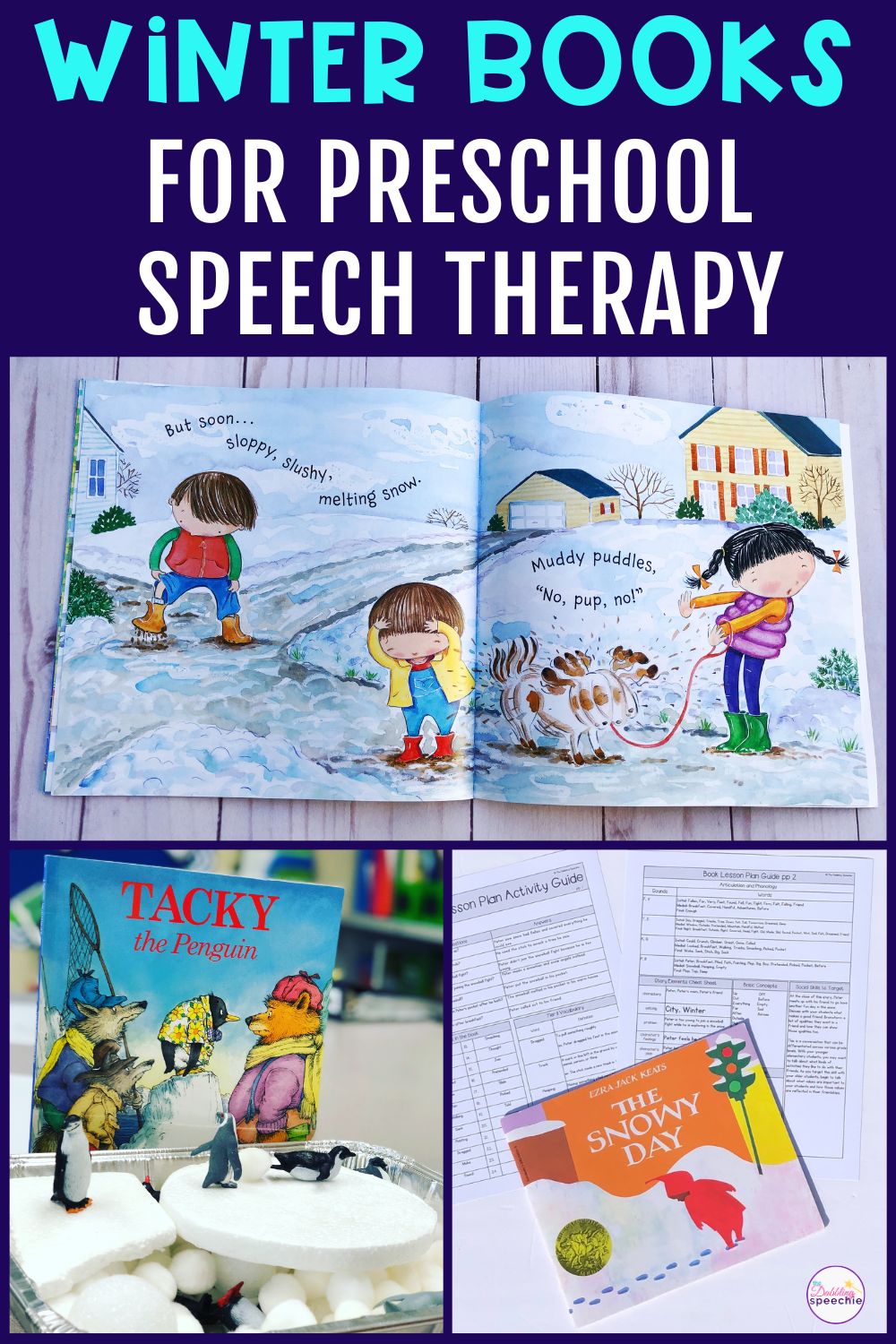
If snowmen are your go-to winter theme, check out my full list of Snowman Books for Preschool Speech Therapy.
We have book cheat sheets, book companions, story maps and other winter extension activities for Prek-1st in the Themed Therapy SLP membership for many of these books. When you get an annual membership, you get access to all the themes at once. The monthly plan for January gives you winter-themed materials for penguins, arctic animals, and space, with mini-themes of hot chocolate and pizza.
Preschool Tip for Picking Winter Books:
When using winter books with preschoolers, focus on repetitive language, clear visuals, and predictable routines. One book can easily support requesting, commenting, core vocabulary, early verbs, and simple story retell especially when paired with play or a sensory activity.
Songs and movement activities are a great way to build winter preschool speech and language activities that support engagement, attention, and language development, especially for young learners who benefit from movement and repetition. Winter-themed songs encourage preschoolers to follow directions, learn new vocabulary, imitate actions, and expand expressive language through predictable routines. Movement breaks, such as Winter Movement Break by Your Therapy Source, are great for targeting listening skills and basic concepts, while Winter Song for Children reinforces winter vocabulary through simple lyrics and visuals. High-energy favorites such as Brrrrrrrrr Dance-A-Long by Koo Koo and The Ice King Freeze Dance by Danny Go are ideal for practicing action words, sequencing movements, and joint attention all while giving preschoolers a much-needed movement break during therapy or classroom sessions.
In addition to using recorded music, many winter songs can be led directly by the SLP or teacher, which is especially helpful for preschoolers who benefit from visual cues, slower pacing, and repetition. Simple call-and-response songs and fingerplays allow you to model gestures, pause for imitation, and adjust the language level in the moment. Songs like this, “Icicles” song byThe Laurie Berkner Band or “My Mittens” song by Miss Nina are perfect for targeting early vocabulary, body movements, clothing words, and following directions while keeping students actively engaged. Leading songs independently also facilitates support for joint attention, turn-taking, and expressive language during whole-group or push-in sessions.
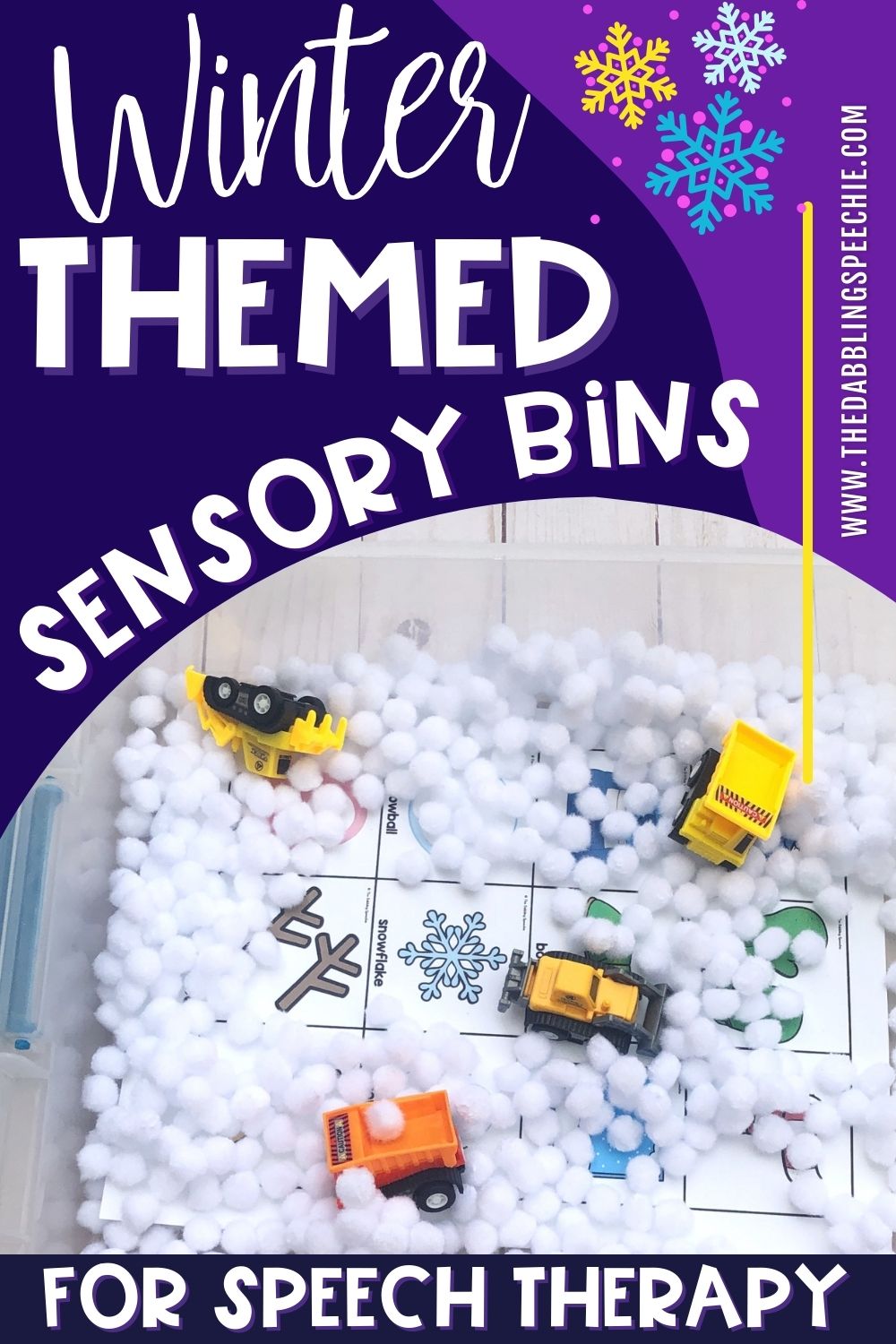
Sensory bins are one of the easiest ways to plan winter preschool speech and language activities that keep young learners engaged while naturally targeting early communication goals. With simple materials and lots of hands-on play, sensory bins support vocabulary development, requesting, commenting, following directions, and early sentence expansion—all through play. Winter themes such as snow, penguins, and Arctic animals are particularly motivating for preschoolers and facilitate the development of language for describing, sorting, and pretend play.
If you’re looking for ready-to-use ideas, you can explore my Snow Sensory Bin and Penguin Sensory Bin, which are perfect for targeting early language skills during winter therapy sessions. I also share more low-prep inspiration in my Winter Sensory Bin Ideas and Winter Sensory Bins posts if you want additional themes to rotate throughout the season.
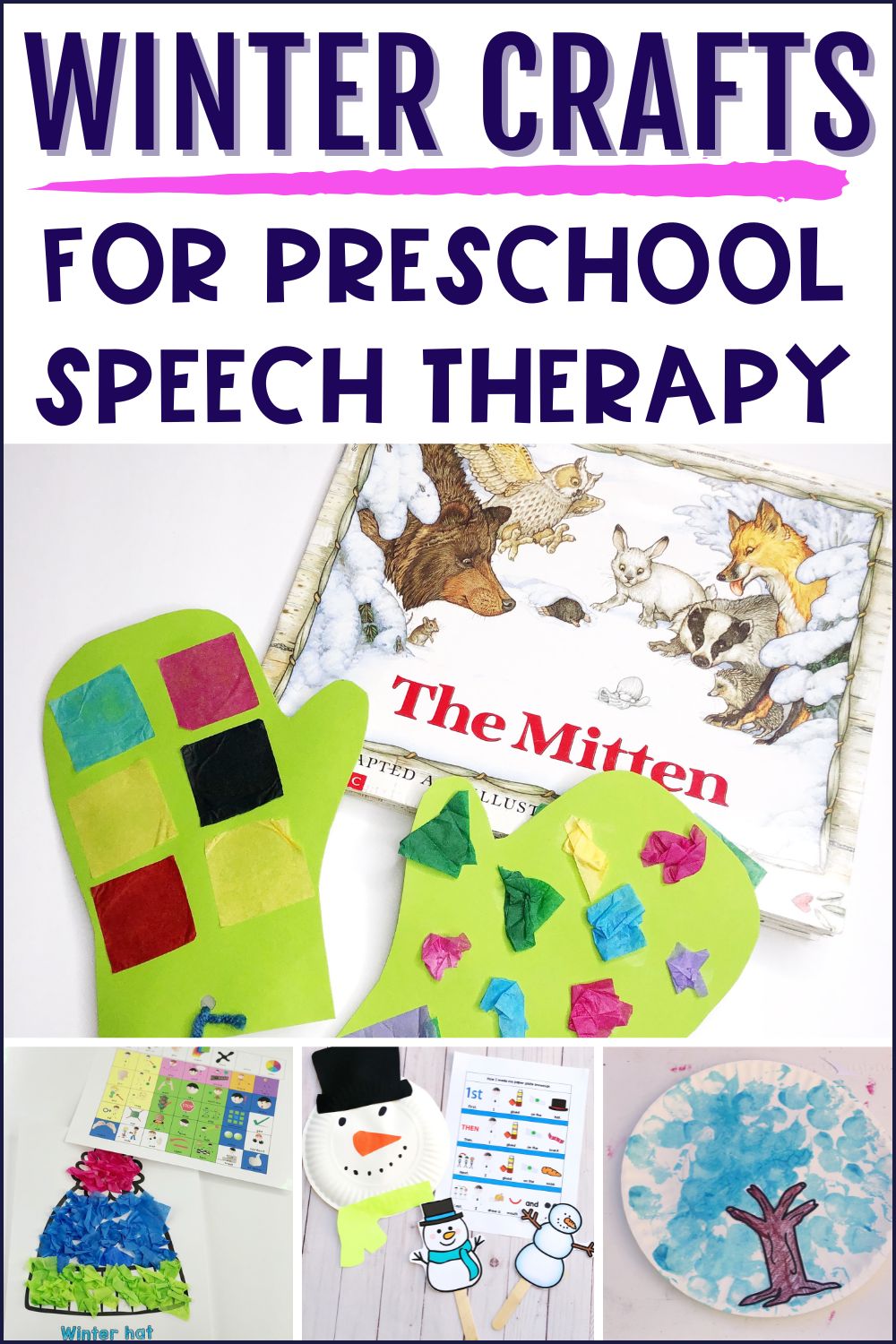
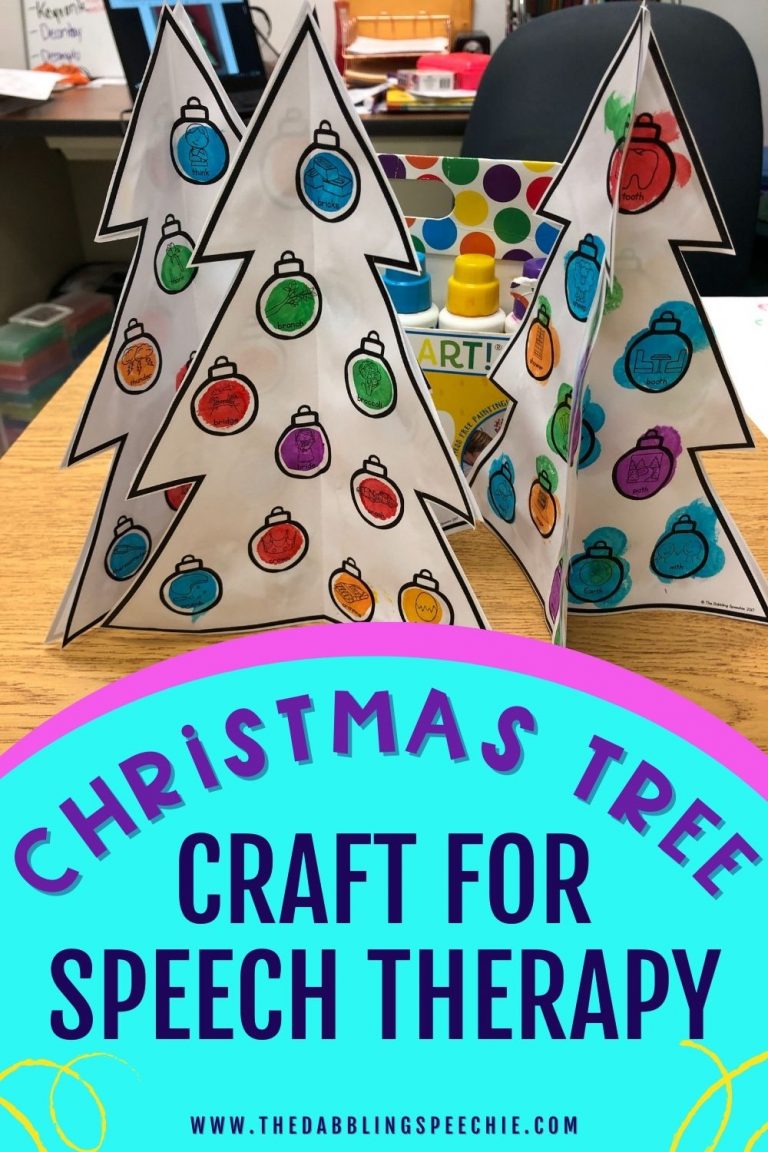
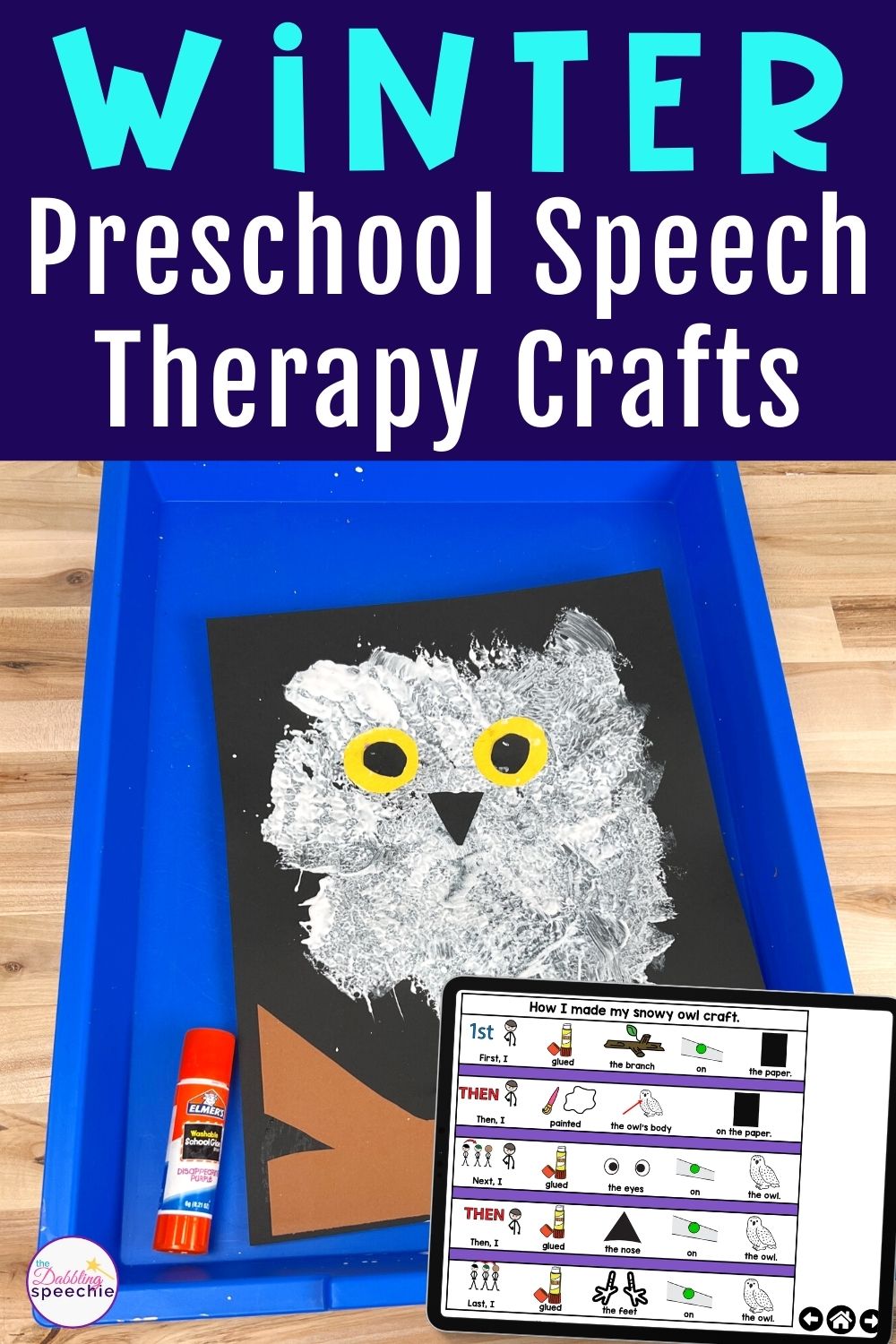
Crafts are a natural extension of winter preschool speech and language activities because they allow preschoolers to apply vocabulary and concepts they’ve already been exposed to through books, songs, and play. Simple, low-preparation winter crafts are effective for targeting following directions, AAC core words (more, help, put, on, off, want, look), social communication, and retelling how they made their craft. After completing the craft, preschoolers can practice explaining the steps to a peer, teacher, or family member making crafts a meaningful way to build expressive language and narrative skills.
When planning crafts, look for activities that are easy to prep and visually clear. In my winter crafts blog post, I share low-prep options that pair well with winter books and themes. Inside the Themed Therapy SLP Membership, we also provide visual step-by-step, no-print PDF crafts paired with lesson plans that can be used for whole-class instruction or small groups. These visuals help SLPs scaffold prompts, model language, and fade cues while leading the lesson, especially helpful for preschoolers and AAC users.
One of my favorite pro tips is to have students draw or glue pictures of their speech or language targets on the back of their craft to take home for practice. You can easily do this using visuals from the Speech Therapy Crafts Companion with Articulation, Grammar, and Vocabulary Targets. This turns the craft into a built-in homework activity and encourages carryover beyond the therapy session.
I also love easy-to-prep painting crafts, such as printing a winter vocabulary picture and letting students decorate it using paint with Q-tips, sponges, or tissue paper. These activities support fine motor skills while reinforcing vocabulary and giving preschoolers repeated opportunities to label, describe, and request materials. You’ll find winter craft templates that work perfectly for this approach in my Winter Speech Therapy Push-In & Small Group Language Lesson Plans for PreK–2nd.
Pretend play is one of the most powerful ways to plan winter preschool speech and language activities because it creates meaningful, repeatable opportunities for communication. Winter-themed toys and dramatic play setups support vocabulary development, early grammar, WH-questions, social routines, AAC core words, and functional communication, all through play. With the right toys, preschoolers can practice requesting, commenting, turn-taking, problem-solving, and retelling while staying engaged and motivated.
Snowman toys and winter figurines are an easy entry point for pretend play. You can build simple play routines around decorating a snowman, helping it melt, or fixing it after it falls. I share several ways to use snowman toys for speech therapy in this post. These types of toys work well for modeling action words, describing attributes, answering WH-questions, and expanding utterances during play.
Dramatic play sets are also ideal for winter-themed routines. A hot chocolate pretend play set can be created by repurposing a coffee play set or making a DIY version using household materials. Pretend play activities such as making, pouring, and serving hot chocolate naturally target verbs, sequencing, requesting, and social exchange. For inspiration, you can turn a coffee play set into a hot chocolate station or try this DIY hot chocolate dramatic play idea from Turner Tots.
Pretend baking is another preschool favorite that easily connects to winter themes. Baking cookie toy sets are perfect for working on early grammar, following directions, turn-taking, and functional language such as “I need,” “your turn,” and “all done.” I share how to use a cookie baking toy set in play-based speech therapy.
For SLPs who want extra support planning play-based sessions, the Themed Therapy SLP Membership includes a toy guide for every theme, with links to suggested props, materials, and play ideas. Members also receive either a sensory bin cheat sheet or a toy companion cheat sheet to make it easier to adapt one toy across multiple goals and ability levels.
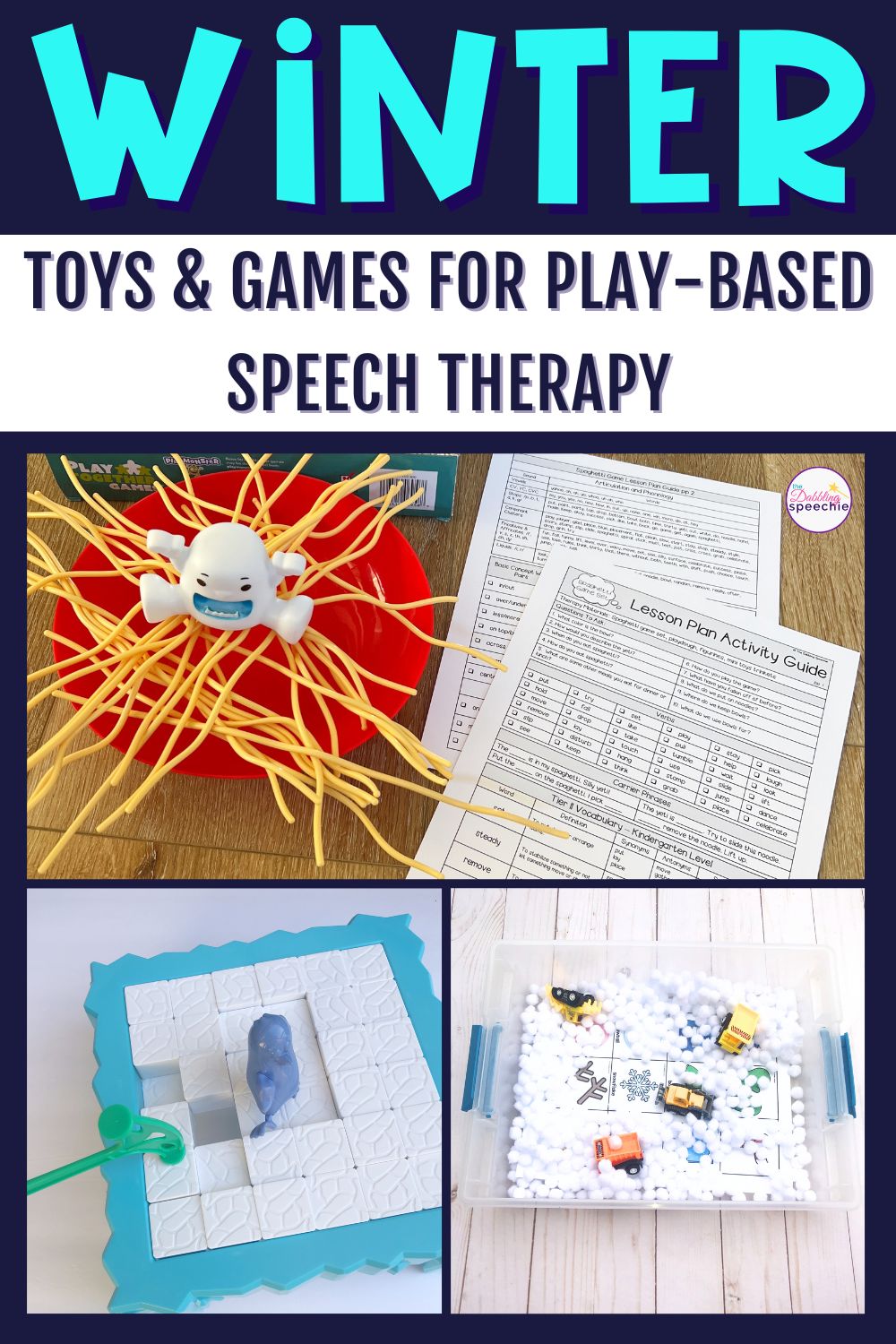
If you prefer ready-to-use supports, my Play-Based Speech Therapy Toy Companion Cheat Sheets include two-page guides for popular toys and games such as Don’t Break the Ice, baking cookies, fishing toy sets (which can easily be adapted for “ice fishing”), and Yeti in My Spaghetti. These cheat sheets help SLPs target vocabulary, grammar, WH-questions, speech sounds, AAC core words, and social routines using toys they may already have.
If you have friends that like to build, I found this cool ice blocks set that can be adapted for cooperative play, turn-taking, and shared problem-solving. And, you can work on functional communication, yes/no questions, verbs, basic concepts, and more! You can also extend pretend play by building winter dens for animals using blocks or foam blocks, encouraging preschoolers to narrate what they are building and why.
Spatial and basic concepts are important for understanding directions, math language concepts, and problem-solving. Why not working on these concepts with your winter themes! Through hands-on play, sensory exploration, and pretend scenarios, preschoolers can practice concepts such as in/out, on/off, under/over, big/little, up/down, and near/far with winter themed props, toys and activities.
If you are doing a penguin theme, use a penguin, some styrofoam, and a plastic egg to work on early basic concepts.
Plush winter toys, such as a snowman or yeti, are also helpful for teaching size concepts like big/little or tall/short. These toys can easily be incorporated into pretend play routines. For example, helping the big snowman sit next to the little one, or placing the yeti on or under different objects while modeling short, repetitive phrases that support comprehension.
Sensory bins offer another engaging way to work on spatial concepts. A snow sensory bin with winter animals allows preschoolers to place animals under the snow, on top of the snow, or behind objects while practicing listening and following directions. Sensory play also supports AAC users by giving repeated opportunities to model core words such as put, in, out, and more.

Winter routines and real-life experiences are also rich opportunities for concept language. Pretend play with winter clothing such as putting coats on and taking them off, or placing clothes in and out of the laundry after a snowy day 1helps preschoolers connect spatial language to familiar activities. Similarly, ice fishing pretend play naturally supports in/out concepts as children “catch” fish and place them back into the ice hole.You can also target movement-based concepts through winter play scenarios. Pretend sledding or skiing down a snow hill can be set up using a cardboard box, Little People figures, or stuffed animals. Using a Tot Tube or similar prop as the “snow hill,” preschoolers can practice up/down, fast/slow, near/far, and first/last as characters slide or ski down the hill. Stuffies won’t fit in the Tot Tube, but you can do that with a cardboard box at a slant from the table in your speech room. These activities work especially well for modeling verbs, describing actions, and answering simple WH-questions during play.
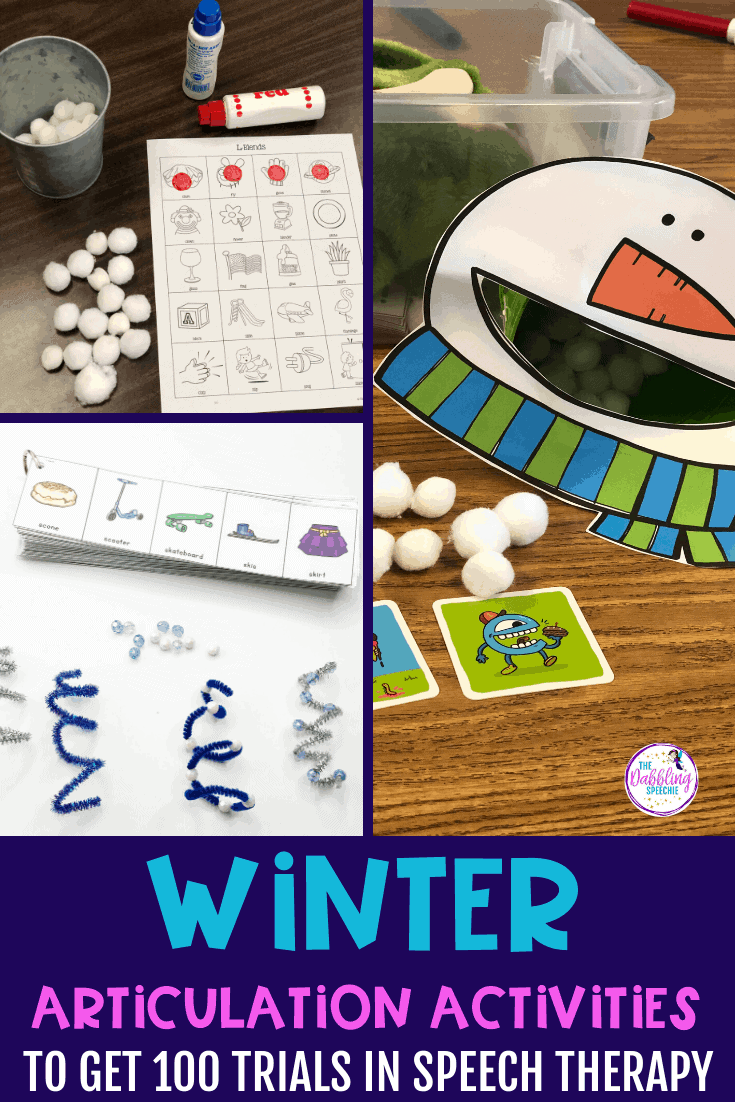
If you’re looking for ideas to target speech sounds during the winter months, I’ve put together a separate post dedicated to winter articulation and phonology activities for speech therapy. That post shares play-based ways to work on speech sounds using winter themes that can be easily adapted for preschoolers, including activities for mixed groups and carryover.
Planning winter preschool speech and language activities doesn’t have to mean reinventing your therapy plans every week or buying all new things to implement ideas. First, look through your materials to see what you have! Go to the library or borrow winter books from teachers at your site. Instead of buying specific toy sets, do the DIY version with stuff you already have. Some of the easiest winter sensory bins are just flashcards, figurines you have and white pom poms.
It’s not about having everything to get started with implementing winter themes with your preschoolers, but putting together a few core materials that can be easily adapted across your caseload. Using seasonal themes provides preschoolers with repeated exposure to the same vocabulary and concepts they are experiencing at home and in the community, so using a winter theme deepens their background knowledge and language that is functional for their lives!