
Let’s be real. There are seasons in SLP life when you have 100 million tabs open, piles of materials next to your desk, and IEPs being finalized an hour before the meeting. Spring speech therapy planning can easily turn into one more thing on your never-ending to-do list.
Have you ever had five minutes before your next speech therapy group and tried to remember the name of that ONE spring YouTube video you used last year? Because your caseload was wild and you didn’t save it anywhere? Same.
Between paperwork, meetings, high caseloads, and mixed articulation and language groups, we don’t always have time to curate and organize the perfect spring YouTube playlist for speech therapy sessions.
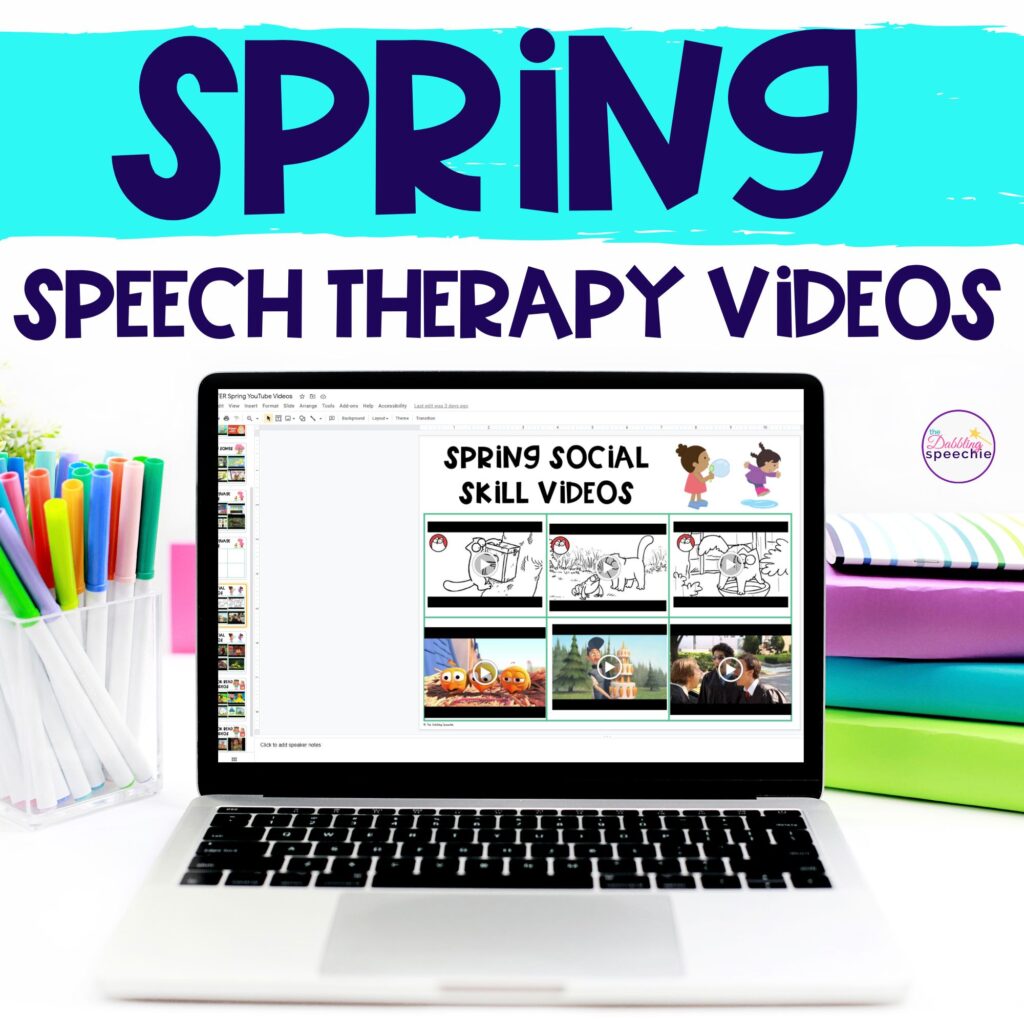
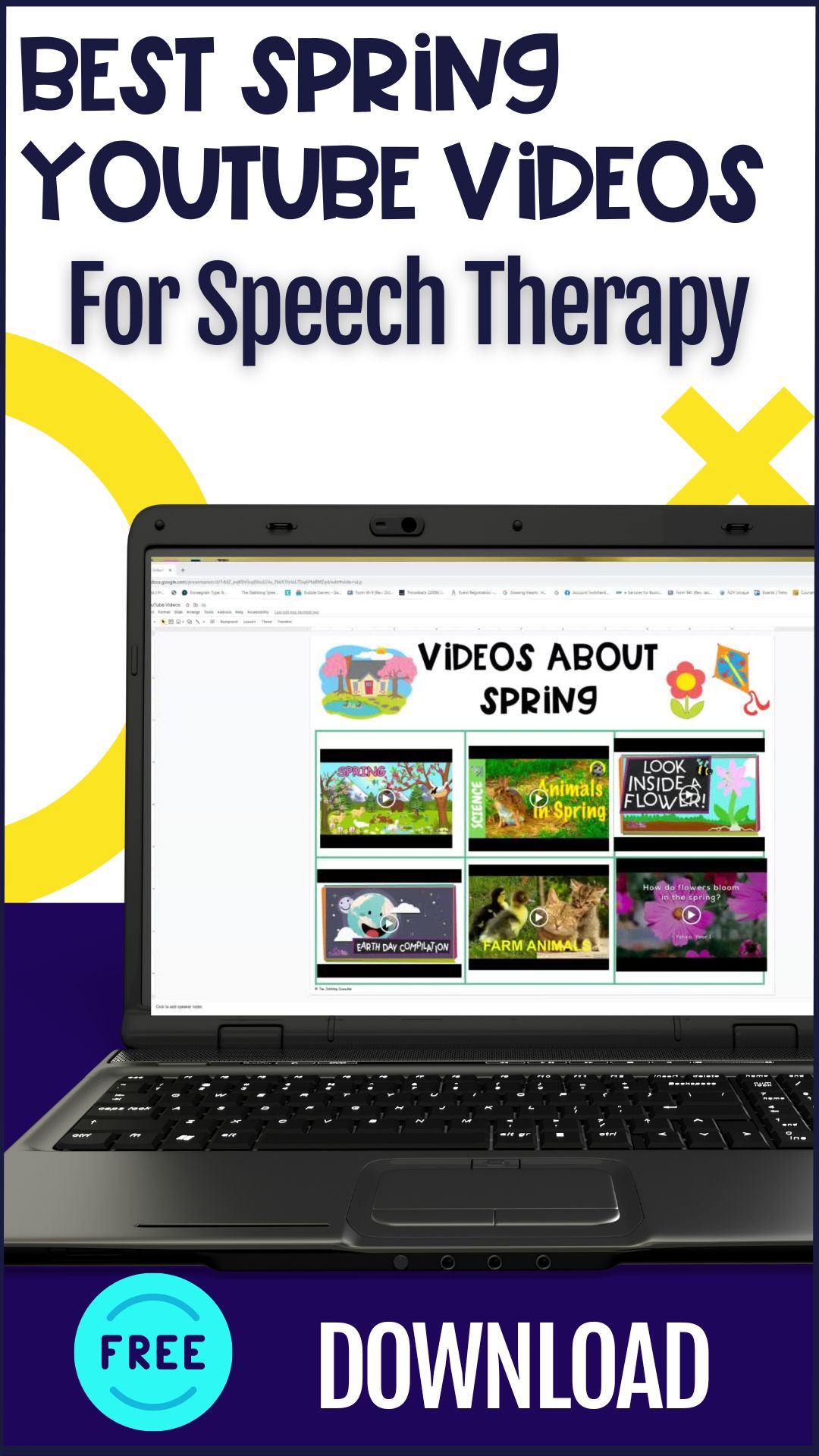
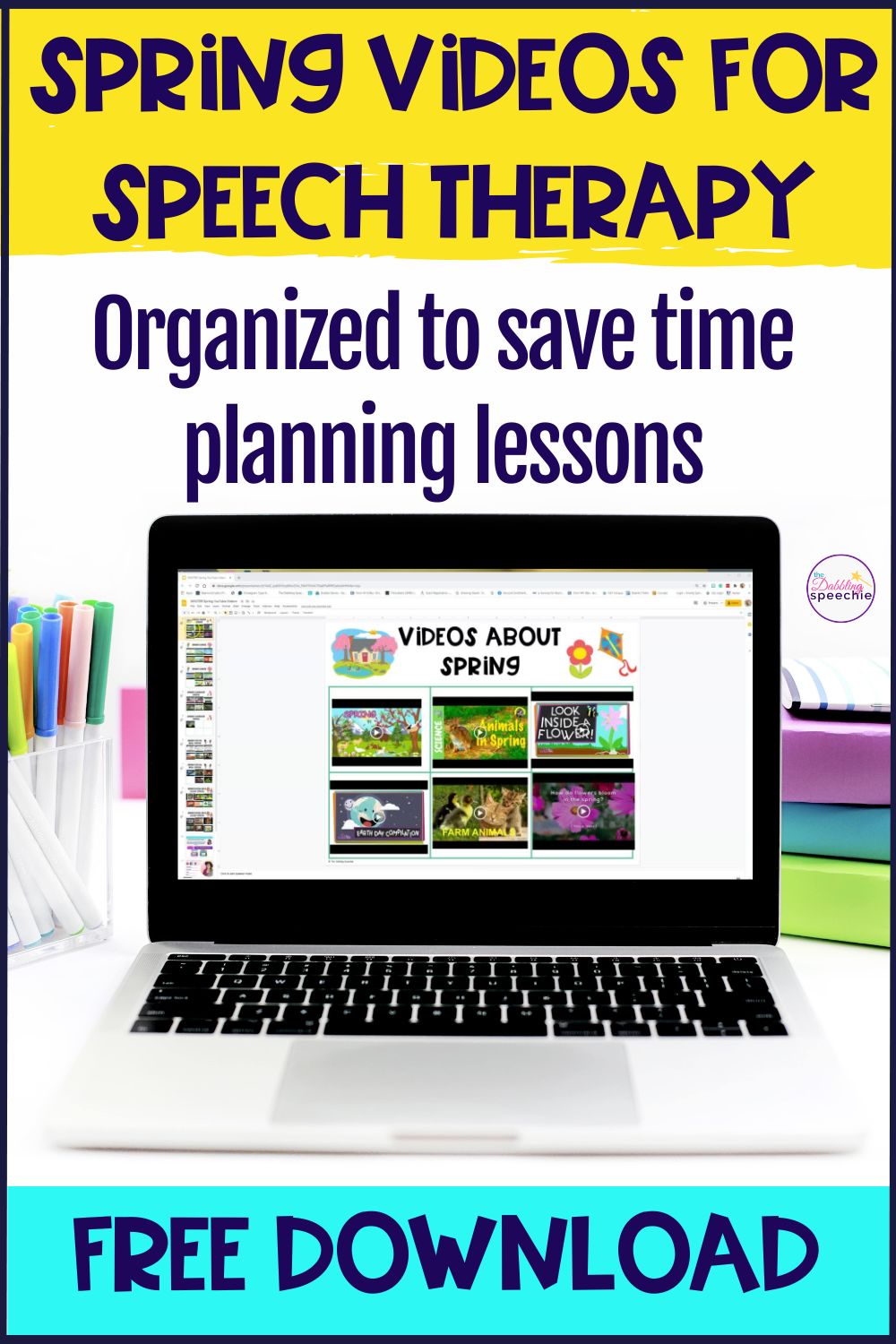
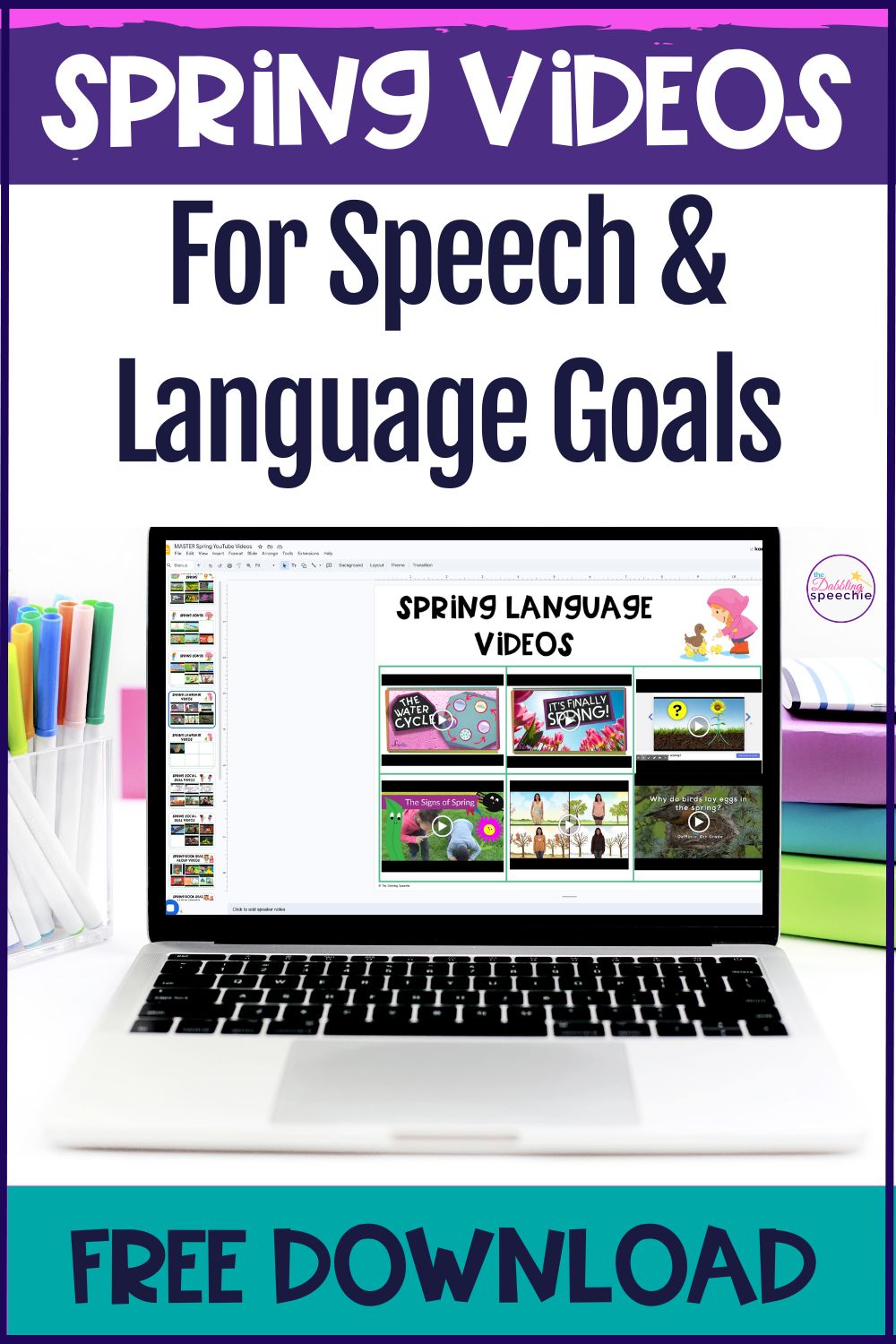
That’s exactly why I created a free organized Google Slides filled with spring YouTube videos for speech therapy, so you can open one file, click, and go.
Inside, you’ll find spring songs, nonfiction videos about spring, read-aloud book options, and wordless shorts that are perfect for targeting articulation, vocabulary, sequencing, inferencing, and mixed-group goals.
YouTube videos can be so much more than a “filler” activity in speech therapy sessions. When used intentionally, spring speech therapy videos can anchor an entire lesson while targeting articulation, language, and social communication goals.
Here are a few ways to use spring YouTube videos in your speech therapy sessions:
1. Use the video as an anchor activity.
Start your session with a short spring-themed video to introduce vocabulary, background knowledge, or a narrative structure. This gives your students a shared context before moving into targeted practice.
2. Pause to target specific goals.
Don’t just press play and watch. Pause the video to:
You can use EdPuzzle to add in questions or stimulus items that pause the video for natural transitions to discussion with the group.
3. Differentiate within mixed groups.
While one student answers comprehension questions, another can practice articulation words related to the video theme. For example, during a plant life cycle video, one student might retell the steps while another practices /pl/, /fl/, or /sp/ blends from vocabulary in the lesson.
4. Reuse the video across multiple sessions.
You don’t have to use the entire video in one day. Watch part of it on Monday, retell on Wednesday, and extend with writing or articulation carryover on that next Monday. Or, watch the video on Monday, and then do an extension activity that relates to the video. For example, if watching a video about “Why springtime makes me sneeze?” show the video the first time as exposure to vocabulary and concepts. Then, in the second half of the session, you are reviewing the vocabulary with evidence-based practices such as kid friendly definitions, explicit instruction and repeated exposure. This keeps your spring speech therapy sessions cohesive and reduces planning time.
5. Use for push-in or teletherapy lessons.
Spring YouTube videos are especially helpful for push-in services or teletherapy. You can screen share, use digital graphic organizers, and guide discussion while keeping all students engaged. Or you can use fun songs or movement breaks throughout your whole-class lesson that relate to the book or spring concepts!
That’s exactly why I organized all of these spring speech therapy videos into one free Google Slides, so you can click, teach, and move on with your day.
To make planning your spring speech therapy sessions even easier, I organized all these spring speech therapy videos into a Google Slides presentation.
Instead of bookmarking random links or searching YouTube five minutes before your group, you’ll have one organized file with clickable videos ready to go.
Inside the free Spring Speech Therapy Video Google Slides, you’ll find:
Everything is organized in one place, so you can open the slide, click the video you need, and start your session with confidence.
You can reuse these slides year after year, whether you’re working in small groups, push-in services, or teletherapy sessions. Get the free download and start planning effective spring speech therapy activities.
Simon’s Cat videos are some of my favorite spring speech therapy videos to use for mixed groups. Because they are wordless, students have to generate the language themselves — which makes them perfect for targeting narratives, inferencing, perspective-taking, and articulation carryover.
There are several spring-themed Simon’s Cat episodes that work well during the spring months, especially those featuring gardening, insects, allergies, and outdoor adventures.
Here are some ways to use Simon’s Cat videos in your spring speech therapy sessions:
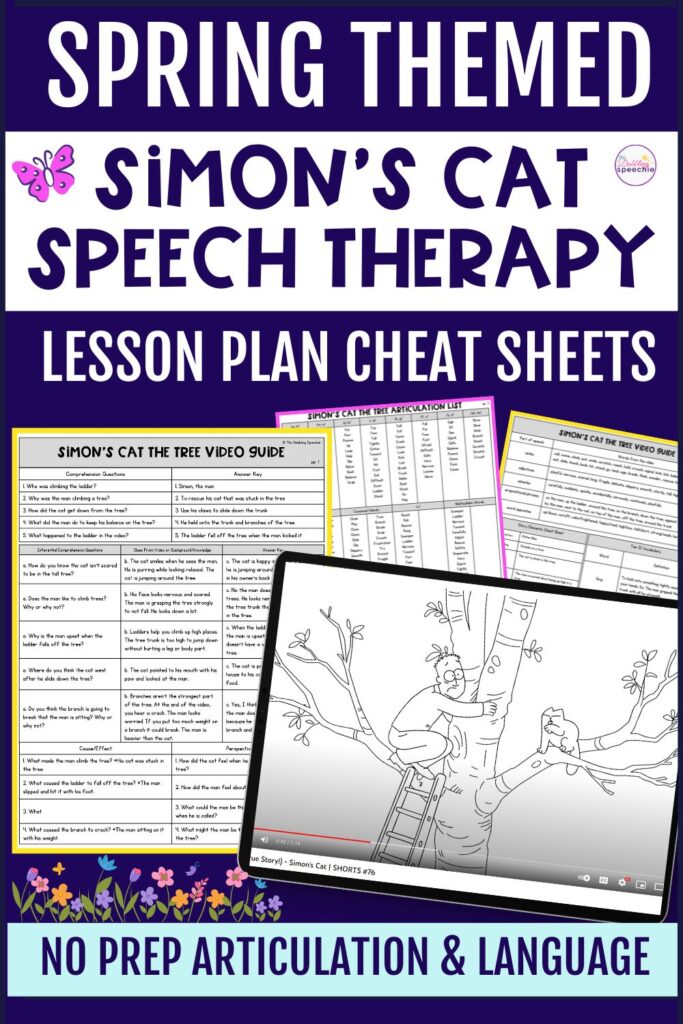
Because there is no dialogue, students have to use spring vocabulary and descriptive language to explain what is happening, which naturally increases expressive language practice.
If you love using Simon’s Cat in your sessions, I have a Spring Simon’s Cat resource with organized Google Slides and cheat sheets to make planning even easier.
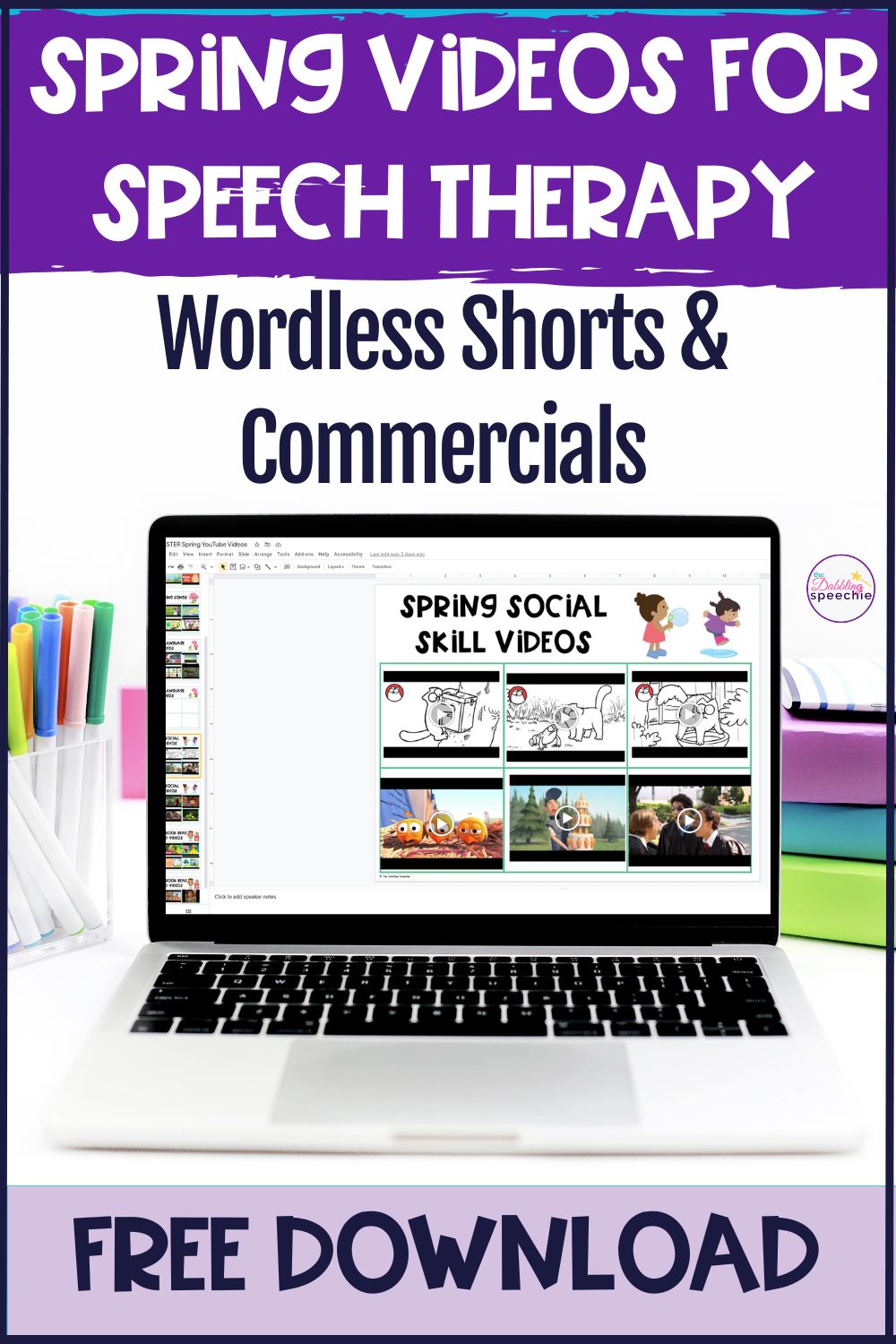
In addition to Simon’s Cat, there are several other spring-themed wordless shorts that work beautifully in speech therapy.
Wordless videos are especially helpful when you want to:
Because students must generate the dialogue and narration themselves, you can easily adapt the activity for mixed groups. One student might retell the story, while another practices articulation words related to the spring theme (flowers, bees, rain, bugs, etc.).
Wordless shorts are also great for push-in lessons because the entire class can watch together, and then you can scaffold language for different students based on their goals.
Here are a list of a few spring themed wordless shorts:
Nonfiction spring speech therapy videos are powerful tools for building background knowledge, tier II vocabulary, and comprehension skills. Short science-based videos about spring topics allow students to engage with real-world concepts while practicing expressive and receptive language goals.
Here are some spring themes that work especially well in speech therapy:
Spring is the perfect time to teach the plant life cycle. Short nonfiction videos about seeds, sprouting, and growth are excellent for targeting:
After watching a plant life cycle video, you can extend the lesson with graphic organizers or hands-on activities. I share several ideas for plant life cycle videos and extension activities in this blog post.
Bee videos are another great spring speech therapy activity. They naturally support vocabulary development, inferencing, and problem-solving discussions.
You can target:
If you’re looking for ideas to pair with bee-themed videos, I share several activities and resources in this post.
Ladybug videos are perfect for younger students and mixed groups. After watching a short nonfiction video about ladybugs, students can:
You can also pair nonfiction videos with sensory-based extension activities. I share how I combine ladybug videos with hands-on activities in this blog post.
Short spring-themed commercials and mini clips are fantastic for upper elementary and mixed K–5 groups. Because they’re brief and often packed with visual clues, they naturally support inferencing, perspective-taking, and higher-level language skills. Plus, you can adapt for articulation carryover, complex grammar, vocabulary, and summarizing.
Unlike longer videos, commercials usually focus on one clear problem and solution, which makes them perfect for structured discussion in speech therapy.
Here’s how you can use spring-themed commercials in your sessions:
For younger students, you can simplify by focusing on:
For older students, you can work on all the skills mentioned above, then use commercials to compare and contrast, or build personal connections to the spring season.
The Man’s Best Friend Doritos commercial is set during the spring season with a man gardening when he sees a dog covering up dirt with a cat collar. The man makes a connection that there is a missing cat when he sees a poster on the light pole, but doesn’t tell anyone because the dog bribes him with Doritos.
This commercial is perfect for targeting inferencing, interpreting nonverbal cues, making predictions, and perspective taking. You can pause the video to discuss what clues helped the man realize something happened, what the dog might be thinking, and how the situation could turn out differently.
Since college and high school graduation usually happens in May, this theme still fits within the spring season and is relatable to many students.
This graduation commercial shows a student preparing for a big milestone, highlighting emotions, anticipation, and the transition into something new. It works well for targeting inferencing, perspective taking, and discussing character emotions. For older students, you can expand the discussion to include identifying the theme, discussing life transitions, or connecting the message to their own experiences.
The recycling commercial shows the importance of taking care of the environment and making responsible choices with trash and materials. It highlights a clear problem (waste and pollution) and presents recycling as a solution.
This commercial works well for targeting cause and effect, identifying the problem and solution, and discussing the main message. For younger students, you can focus on sequencing what happened and identifying key vocabulary like recycle, trash, environment, and pollution. For older students, you can expand into persuasive language and discuss why the creators made this commercial. Work on grammar, wh-questions, background knowledge and vocabulary.
This Earth Day commercial focuses on caring for the planet and making small changes that can make a big impact. It connects well to spring because Earth Day takes place in April and many classrooms are already discussing environmental awareness.
This video is great for inferencing, perspective taking, and identifying theme. For mixed groups, one student could retell the events in order while another practices articulation words related to the theme (earth, clean, plant, recycle, green).
Learning about the spring season is a great way to increase background knowledge about the time of year and incorporate a variety of speech and language goals. For some of the best spring speech therapy videos for mixed groups, I tend to look for science type videos that answer a question. Here are some of my favorite videos talking about spring:
Spring-themed songs are an easy way to build engagement while targeting articulation and language goals. Whether you’re working with preschoolers, planning co-teaching lessons, or mixed groups, short spring songs can reinforce vocabulary and provide natural opportunities for repetition.
Here are some ways to use spring songs in speech therapy:
Target Verb Actions and Basic Concepts
Many spring songs focus on actions like grow, jump, hop, rain, plant, bloom, and fly. As students sing or watch, pause the video to:
I include some of my favorite spring songs in the free Spring speech therapy videos Google Slides.
Songs are excellent for increasing articulationrepetitions without it feeling like drill practice. Choose songs that contain:
You can pause after key lines and practice their speech sounds with cueing to make sure you get accurate productions. Add in hand gestures or visuals to help with learning the song.
For example, this “Singing the rain” song is perfect for initial S, initial r, and initial Ch. Furthermore, this Sing a Song of Flowers by The Kiboomers has natural opportunities for initial s, gr-blends, and fl-blends.
Spring songs are especially helpful for younger students who need movement breaks. During whole-class or push-in lessons, you can:
Movement-based spring songs keep students engaged, help with their attention span, and also have opportunities for language and communication.
You don’t have to use a new song every session. Repeating the same spring song across multiple days allows students to:
This keeps your spring speech therapy sessions cohesive and reduces planning time.
Many of these spring songs are included in the free Spring Speech Therapy Video Google Slides so you can quickly pull them up during your session.
Spring speech therapy doesn’t have to mean scrambling for last-minute ideas or digging through old bookmarks to find that one video you used two years ago. When your spring speech therapy videos are organized and intentional, they can anchor articulation, language, and mixed-group sessions with very little prep.
If you haven’t grabbed the free Spring Speech Therapy Video Google Slides yet, be sure to download your copy so you can have the video you need in minutes.
And if you’re looking for even more spring speech therapy activities — including crafts, book pairings, articulation ideas, and lesson planning support, check out my complete guide to Spring Speech Therapy Activities for PreK–5th grade.
What spring speech therapy videos have been a hit with your caseload? I’m always adding to my collection, so feel free to share your favorites in the comments!