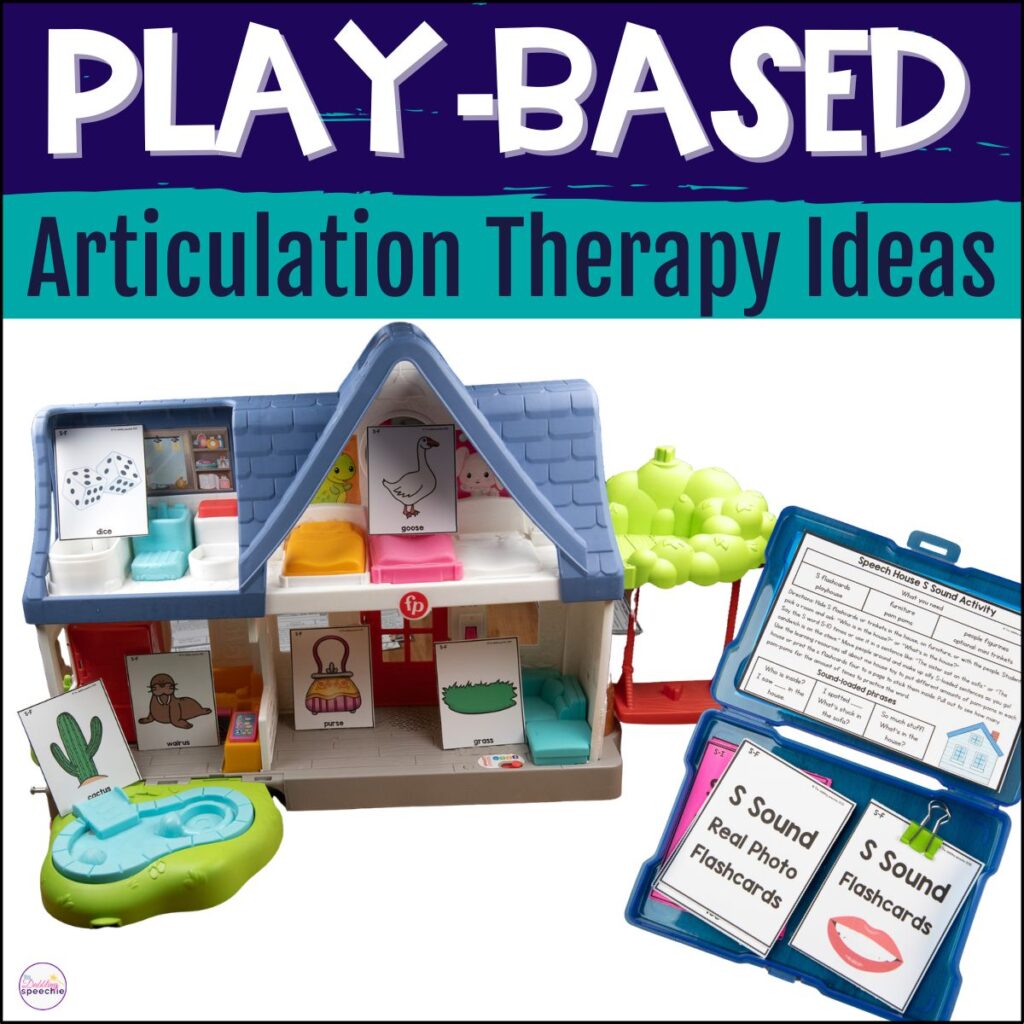
When working with preschool and elementary students with speech sound disorders, drilling with flashcards and worksheets can work for some kids and not for others, especially with preschool-aged students. They have limited attention spans, can be reluctant to practice, and want to move. That’s why play-based articulation therapy, which uses structured play to practice speech sounds, can help you plan effective and engaging sessions while still getting high-trial drill practice.
With some strategic tips and ways to use toys and games to target any speech sound, you can plan play-based articulation therapy sessions in limited time with less stress and more smiling faces from your students. Plus, I will share simple tips for data collection and session setup so planning is easier and more efficient.
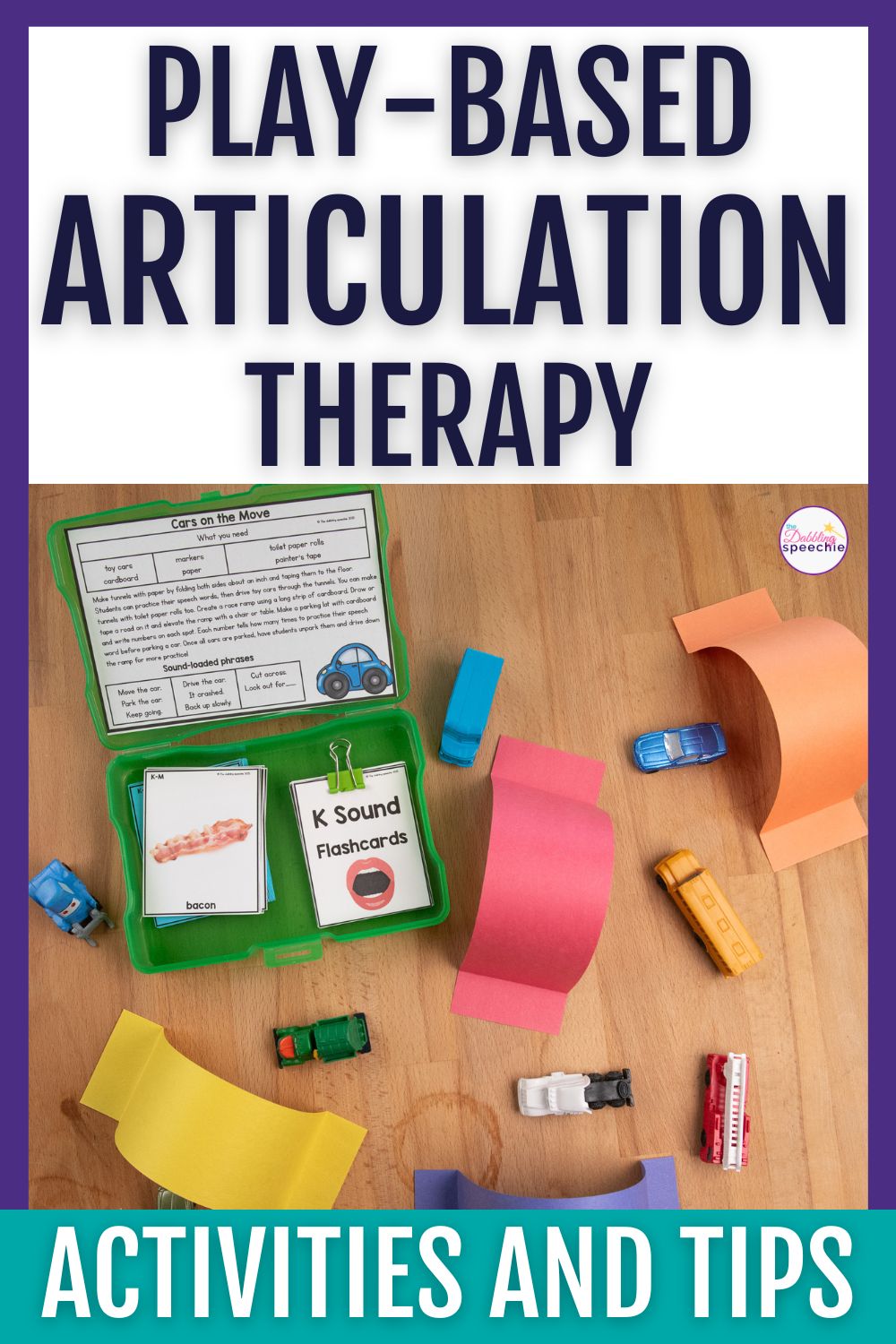
There is always a place for structured drill activities in the speech therapy room. When working with students with speech sound disorders, many approaches require high trial drill practice, and one of the easiest ways to do that is with flashcards and worksheets.
However, we work with a wide range of ages, needs, and interests, so one style of therapy activity does not work for every student. That is where play-based articulation therapy can be helpful. With the right play activities and sound-loaded words, you can still get in a high number of speech sound trials without students feeling like they are doing boring drill work.
Play-based articulation therapy does not mean giving up structure. It is about looking at toys, games, and pretend play as tools for intentional speech sound practice. You can easily incorporate articulation and phonology flashcards or word lists into play activities, which keeps planning simple and efficient. Often, you can pull something off the shelf and start targeting speech sounds right away.
The key is knowing how to set up your sessions so effective drill practice is happening and recognizing opportunities within play to increase speech sound productions.
In the next sections, I will break down the tools and strategies that make play-based articulation therapy easy to use across many different speech sounds.
With a traditional play-based speech therapy approach, the SLP follows the child’s lead and incorporates modeling while creating natural opportunities for communication without pressure. This often includes modeling language, conversational recasting, and pausing during play to see if the child fills in language independently.
Play-based articulation therapy looks different. Instead of fully following the child’s lead, the SLP is intentionally selecting toys and structuring the session to create repeated opportunities for speech sound practice. While following a child’s interests can increase engagement, articulation and phonology therapy often require intentional setup. The SLP may require the child to produce a specific word or phrase before moving to the next part of the activity.
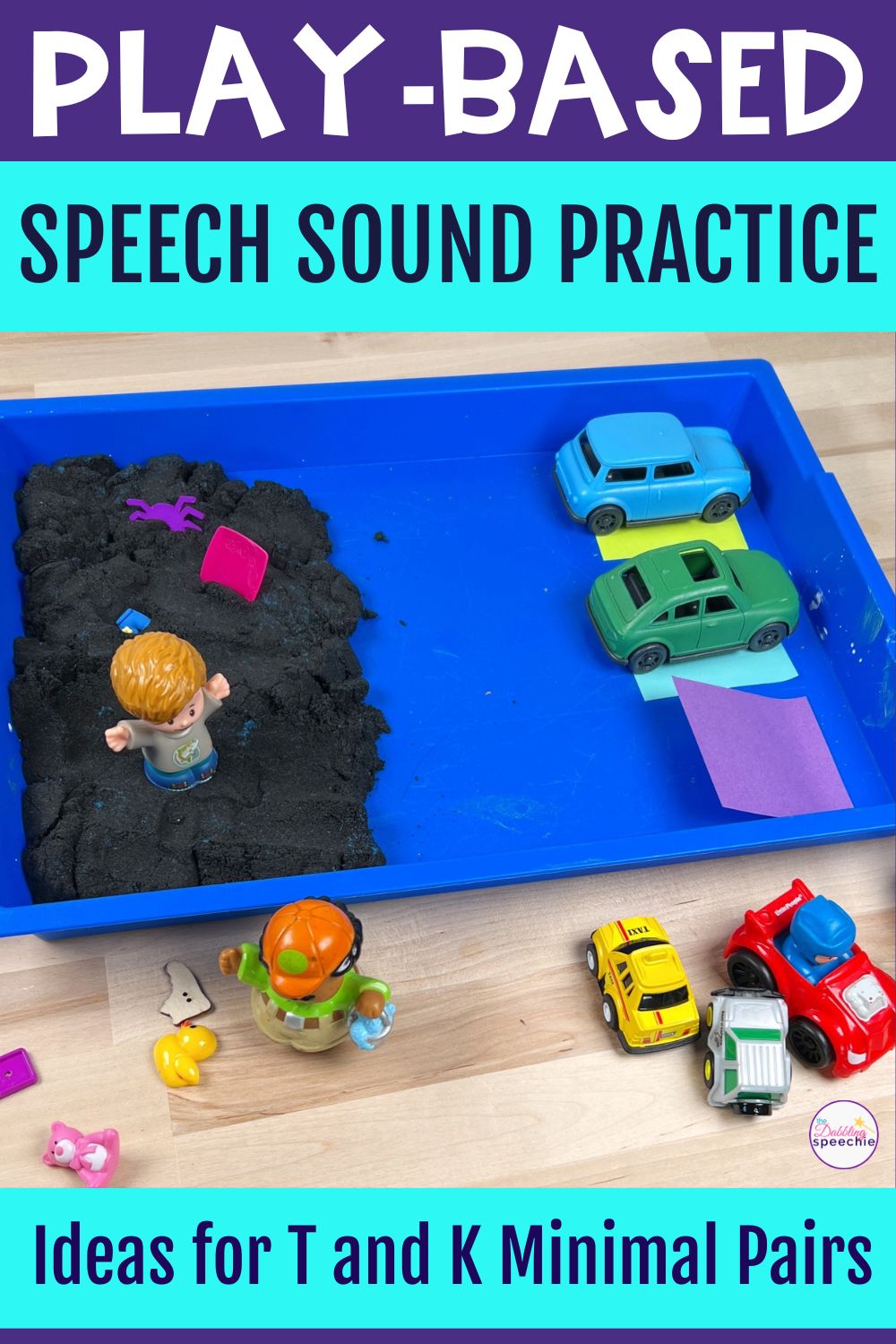
When targeting specific speech sounds or using approaches like minimal pairs, materials must naturally create opportunities for contrast. For example, if working on fronting with T and K sounds, you might use black playdough or kinetic sand as “tar” and create a parking lot for “cars” to park. This allows you to repeatedly contrast words like “tar” and “car” in a meaningful and playful way.
In these situations, you are still using play, but the activity is carefully chosen to support the speech sound goal. The key is balancing engagement with structured opportunities for high-quality drill practice.
Structuring your session is what allows play-based articulation therapy to remain effective. When there is a clear plan in place, you can confidently use toys and games without worrying about whether you are getting enough speech sound practice.
Many times, I divide my sessions into short segments. We may begin with focused drill practice to establish accuracy and build momentum. After that, we transition into play while continuing to target the same speech sound within the activity. This allows students to experience both structured repetition and motivating interaction.
With students who are reluctant to practice or hesitant to say their speech sounds, I often reverse the order. We start with play, modeling, and even auditory bombardment to reduce pressure. As their confidence builds, I gradually increase expectations for independent productions.
The goal is not to choose between drill and play. The goal is to blend them intentionally. When you structure your sessions thoughtfully, you can increase engagement while still maintaining high-quality, high-trial speech sound practice.
For example, here is a potential framework for planning a session:
For example, you could use blocks to build towers and knock them down with cars or figurines. Students can say their speech sound to earn a block and then use a sound-loaded phrase when they knock it down. Building towers naturally supports repeated practice for sounds like K, L, P, and B because it includes words such as block, knock, keep going, build, up, and put.
Although you can adapt this activity to many speech sounds, I may intentionally choose to build towers with a student working on the K sound because I know I can get a high number of accurate productions on every turn.
You do not need a room full of specialized toys to implement play-based articulation therapy effectively (though having lots of options is always a bonus). What you need are flexible materials that can be adapted across many speech sounds and used in different ways.
When I choose toys or materials for articulation sessions, I think about whether the item naturally creates repeated opportunities for speech sound productions. If a toy allows for turn-taking, repetition, simple phrases, and quick resets, it can usually be adapted for many students and sound targets.
Here are some of my go-to materials that make planning easier.
These are foundational items that can be used again and again with different students and goals.
Magnetic tiles or building tiles
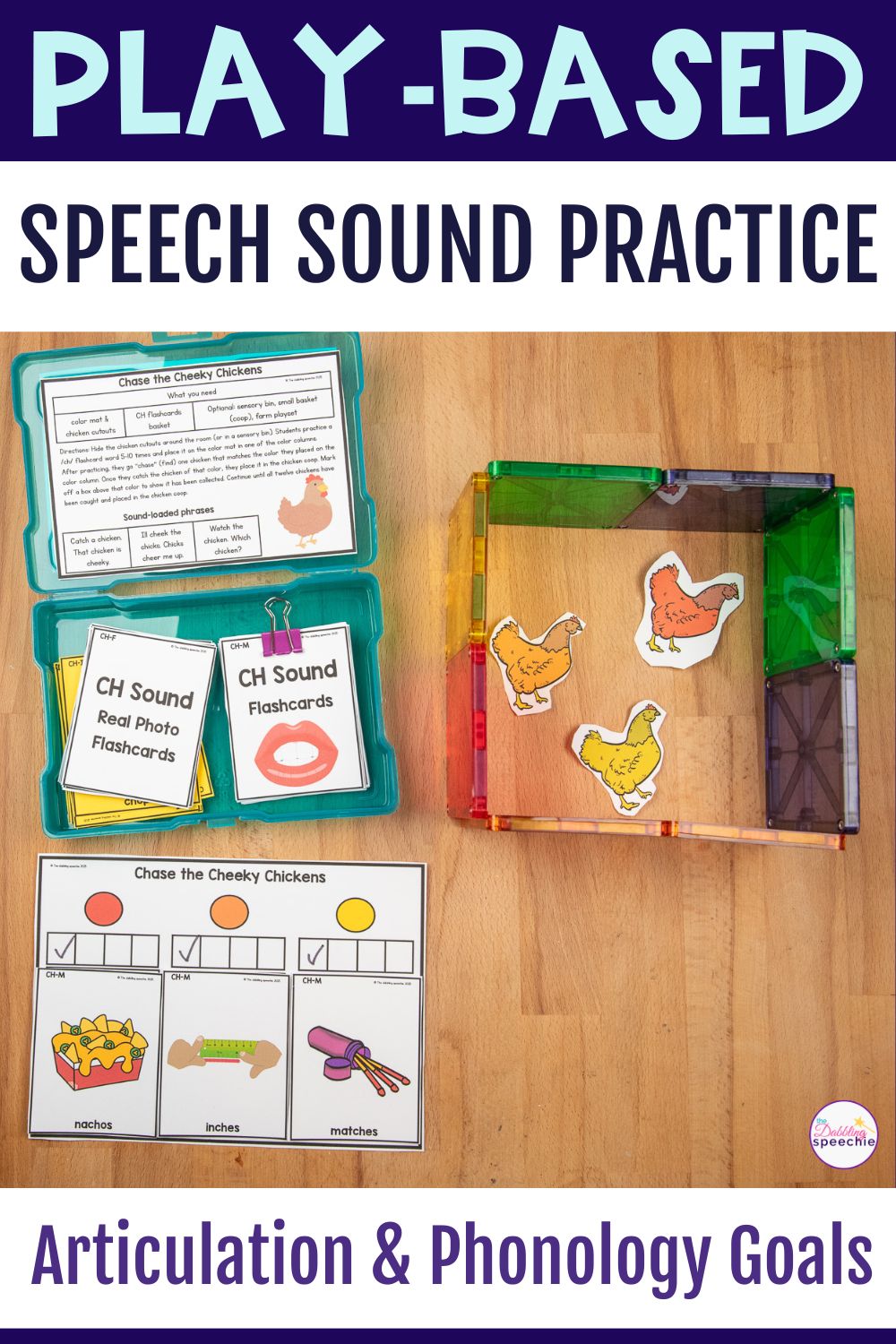
Open-ended building materials like magnetic tiles are incredibly versatile. Students can build towers, walls, parking lots, cages, mazes, car tracks, gates, or lily pads to hop across. Because you can create almost any structure, these tiles easily support sound-loaded environments. For example, making a path or track for cars, trains, or animals to travel can work on TH, R, P sounds while also making it versatile for any set of flashcards by having the student lay flashcards on the path for the cars to drive over or animals to meet along the way.
Mini objects and small trinkets
Mini animals, food items, vehicles, or community helpers are easy to hide in sensory bins, sort, feed to printable animal mouths, use with toy sets, or in pretend play. These small props make it easy to incorporate repetition, as each object offers an opportunity to practice a target word or phrase. If you need speech sound-specific trinkets, check out Speech and Smile.
Quick Turn Games
Having articulation games that are quick to play so you can get in high-drill while also making it easy for adding in sound-loaded phrases are good to have on hand. For example, Sneaky Snacky Squirrel you can use the acorns to have students earn them by saying their speech sound. Once they earn them all, you can play the game. Then, use phrases with their speech sound at every turn such as “Spin it.” for s-blends, or “Give it to me.” for g.
Sensory bin materials
Beans, rice, kinetic sand, or other fillers can transform simple word practice into a hide-and-find activity. Bury mini objects or cards inside the bin and have students practice their speech sound as they search and retrieve items. Sensory elements can increase engagement while maintaining structure. Making an “I Spy” sensory bin is one of my favorite ways to incorporate speech sound practice.
Toy sets that can be used across many goals are worth having in your therapy room. Farm sets, play houses, race car sets, train tracks, or a critter clinic can be adapted for articulation practice.
These sets naturally create repeated opportunities for words and phrases. For example, train tracks support phrases like “go,” “stop,” “right there,” or “back up.” Or, you can put their articulation flashcards on the track and every time the train stops, it has to say the speech word. Plus, students can earn train tracks for every production, then build the track with sound-loaded phrases. Similarly, with toy sets like a farm toy, you can jot down words with your student’s speech sound to create opportunities to use. For example, if the student is working on the SH sound, you can use sheep, show, she, shed, shovel, shut, show, share, brush, wash, push.
Playdough is another highly adaptable material. Students can roll, press, cut, hide objects, or create shapes while producing their target speech sounds. You can create sound-loaded themes, such as making “cars” for a parking lot, rolling “rocks,” or pressing “buttons.” Because playdough is open-ended, it works well for both structured drill and play-based articulation activities.
Many SLPs already have flashcards. The challenge is not whether you own flashcards. The challenge is how to use them in ways that feel engaging while still getting high speech sound trials.
When flashcards are organized clearly, include sound-loaded word targets, and are easy to pair with games, they become a flexible therapy tool rather than just a drill activity.
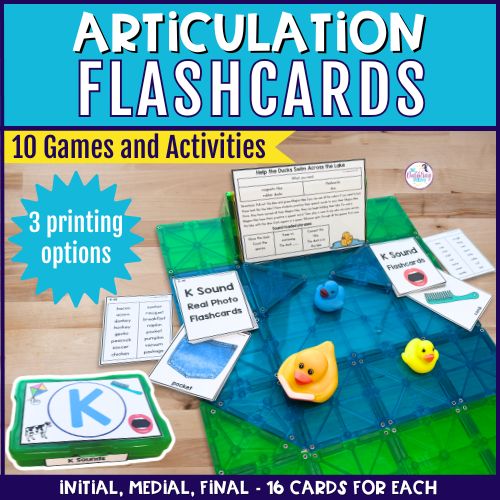
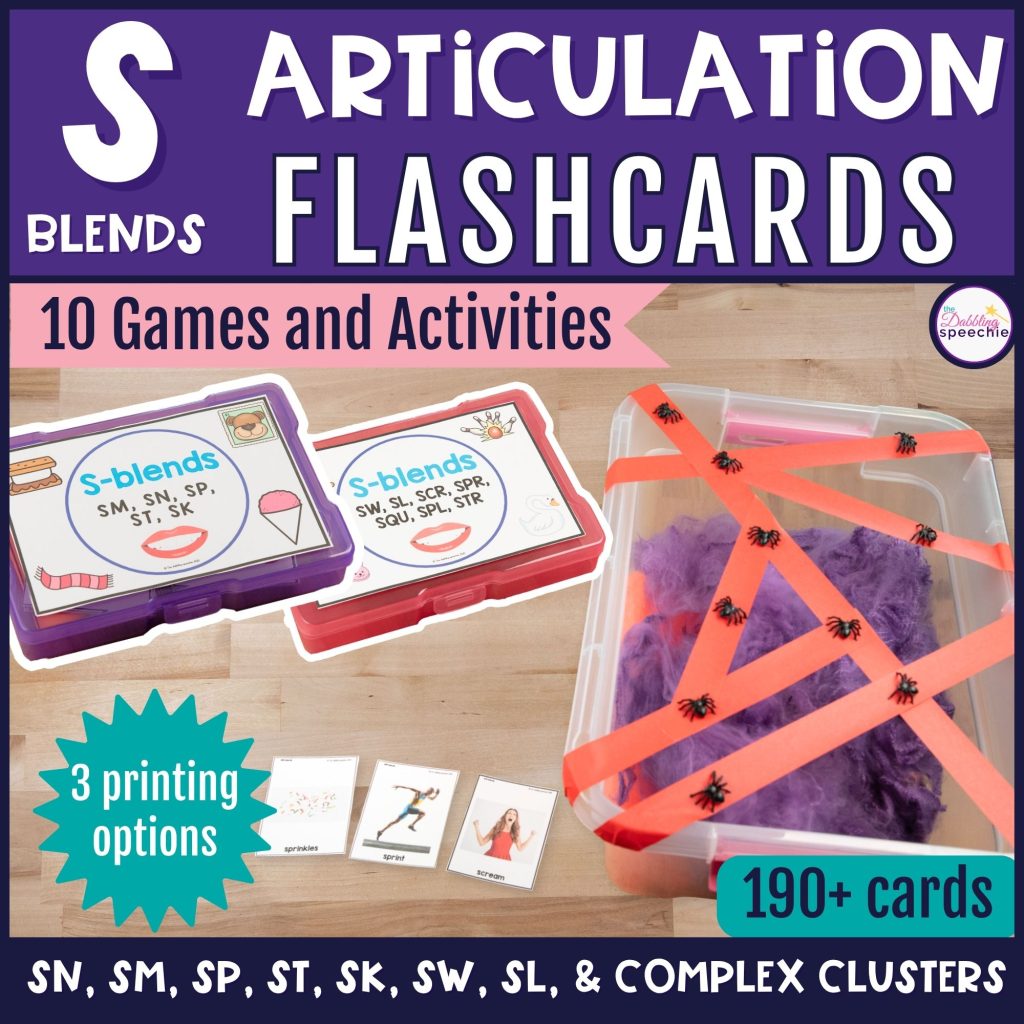
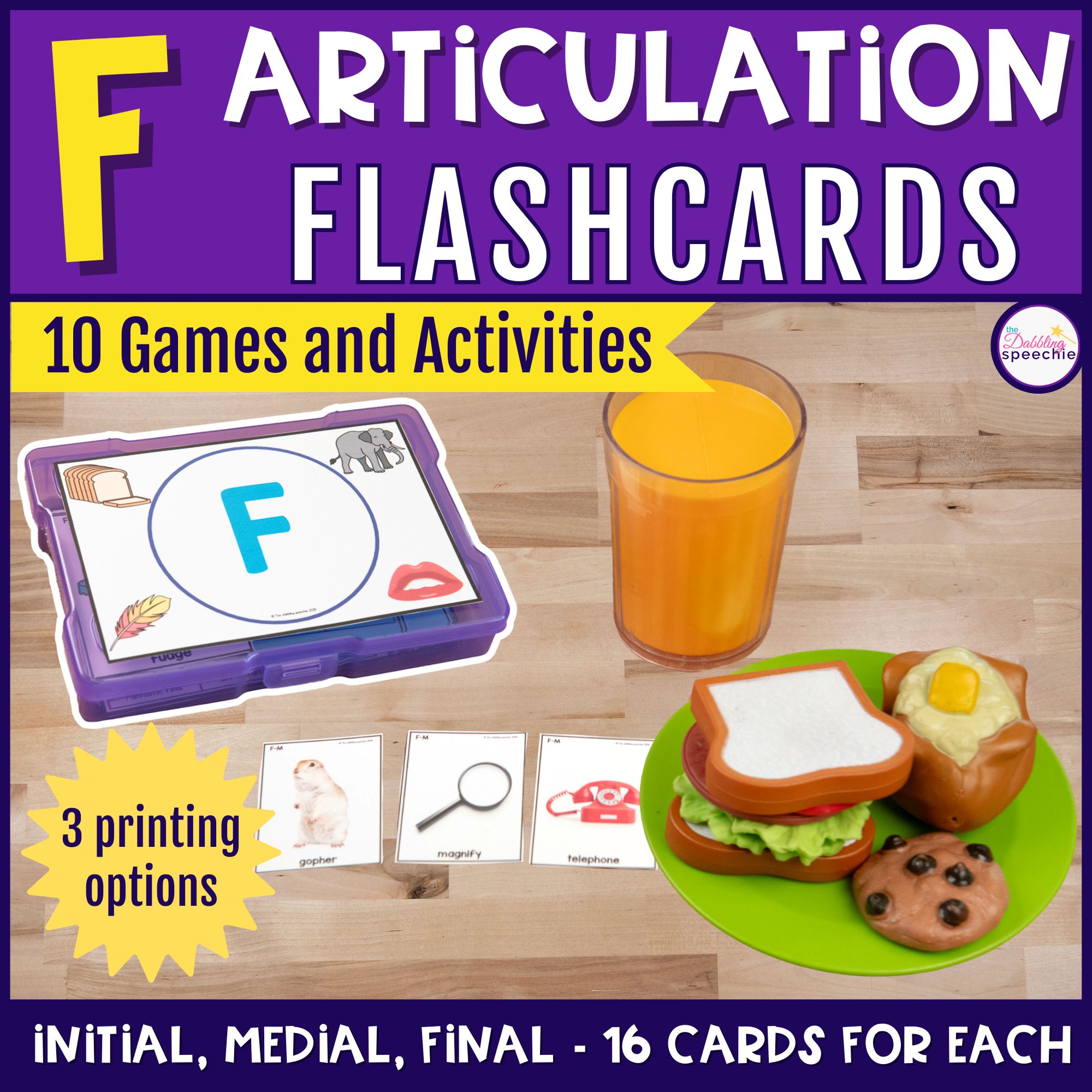
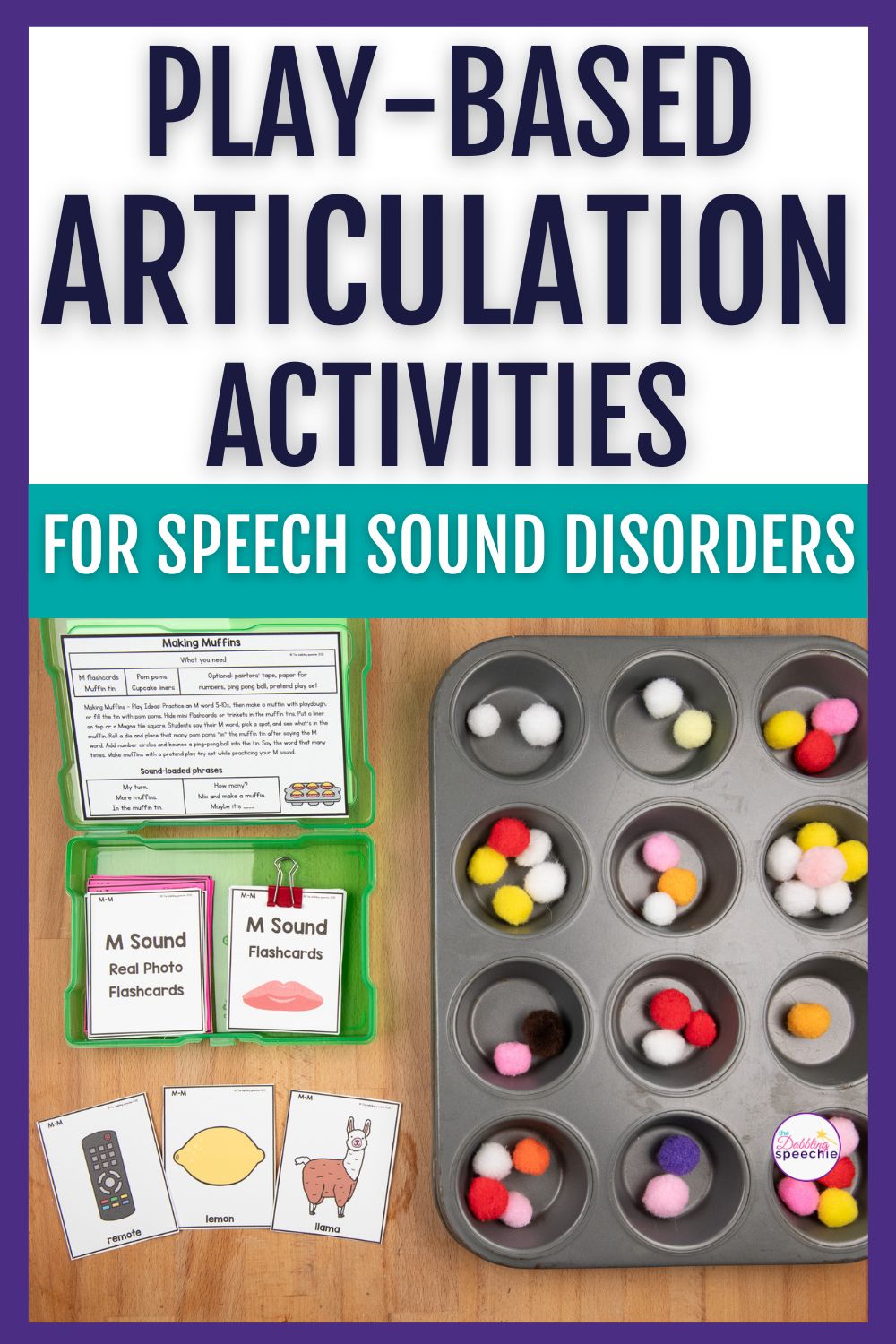
I created my articulation and phonology flashcards to support both structured drill and play-based activities. Each set includes real photo, black-and-white, and color options so you can adapt for different ages and settings. Whether you are working with younger students who benefit from colorful visuals or older students who prefer more age-appropriate real photos, the cards are designed to meet those needs.
The flashcards can be used for traditional drill, but they are also designed to pair easily with ten sound-specific games and play-based activities so you can keep your students motivated to practice without having to come up with ideas on your own! To make play-based articulation therapy easier, having ideas ready-to-go makes for quick lesson planning!
You can grab speech sound flashcards and play activity sets in my TPT store or website store.
Let’s look at how this works with one speech sound.
When targeting the G sound, you want to provide repeated opportunities for students to produce it accurately during a session. Resources like The Informed SLP provide helpful guidance on recommended therapy approaches and dosage. While the number of trials varies across approaches, many suggest aiming for 50–100 or more productions per session.
To achieve that high trial number, you can structure your session intentionally.
Start with a brief drill activity. For example, use an articulation mat with magnetic chips, a magnetic wand, and a die. The student rolls the die to determine how many chips they earn, then practices their G sound words until all the pictures are covered. This can easily provide several minutes of focused, high-quality repetitions.
Next, transition into a structured play activity like the Go, Go Garage game.
All you need are:
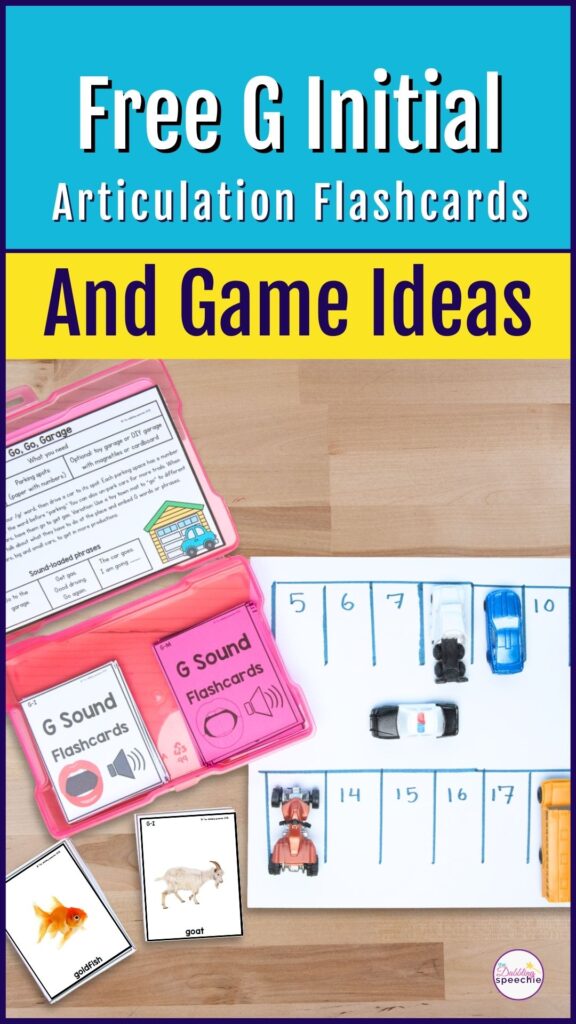
Students practice their target word before driving into the garage. You can add sound-loaded phrases at each turn such as:
To increase repetition, add numbered parking spaces or require a phrase before each turn. You can also place flashcards on each parking space so students practice a word as they park the car.
If you are targeting phrase- or sentence-level productions, have students combine their flashcard word with a play phrase. For example:
The structure of the activity stays the same. The word list and sound-loaded phrases change.
This is the power of pairing intentional flashcards with flexible play. You are still achieving high-trial speech sound productions, but the activity feels motivating and interactive.
If you would like to try this with a ready-to-use set of G articulation flashcards that includes the Go, Go Garage game and ideas for adapting the activity across different sounds, you can download the free set here.
It gives you a clear example of how one structured play format can support meaningful speech sound practice without adding more prep time.
You do not need a brand-new activity for every speech sound. Instead, you can use the same play format and adjust the word list and sound-loaded phrases.
Here is a simple framework you can use to plan a play-based articulation activity for any sound.
1. Choose Your Target Sound and Production Level
Decide whether you are targeting isolation, word, phrase, or sentence-level productions. Consider your therapy approach, then select words that align with that goal.
2. Identify 3–5 Sound-Loaded Phrases
Think about short phrases that naturally fit into the play activity. For example, when using the parking garage activity for S-blends, you might use phrases like “Swerve,” “Stop here,” or “Speed up.” These phrases increase repetition without making the activity feel like drill.
3. Select a Flexible Play Format
Choose a format that supports turn-taking and repetition, such as building, racing, feeding, or hide-and-find. The format stays the same. The words change.
You might structure the first half of the activity with more adult-directed practice to ensure a high number of trials. Then, transition into a more open-ended portion of play, where the child continues practicing more naturally while you model or prompt for accurate productions as needed.
4. Embed Practice Before Every Turn
Require a production before the student earns a piece, moves a car, feeds an animal, or takes a turn. This maintains structure and helps you reach a high number of speech sound productions.
Balancing structured practice with open-ended play helps preserve the “play” element while still maintaining intentional articulation therapy. Too much adult-directed drill can take away from engagement, but too little structure can reduce meaningful repetition. The key is blending both thoughtfully.If you prefer having ready-to-use word lists and built-in play ideas for each speech sound, my articulation flashcard sets include 10 structured games and play-based articulation activities per sound. The system is already organized to help you move between drill and play while maintaining high-trial practice. Check these sets out on my website shop, or on TPT.
Play-based articulation therapy does not mean lowering expectations or abandoning structure. It means being intentional about how you use toys, games, and materials to create meaningful, repeated opportunities for speech sound practice that your students dig!
You do not need a completely different activity for every student or every sound. When you understand how to structure your sessions, choose flexible play formats, and embed sound-loaded phrases, planning becomes much easier.
Some students will thrive with a blend of structured drill and play. Others may need more modeling and confidence-building before increasing expectations. The key is having a framework that allows you to adjust while still maintaining high-quality, high-trial articulation therapy.
If you would like a ready-to-use system that includes word lists, structured games, and adaptable play-based activities for each speech sound, you can explore my articulation flashcard sets. Or start by downloading the free G-sound set and try the framework in your own therapy room.
With the right structure in place, play and productivity can work together to create meaningful speech therapy sessions!