Ever feel like your students are stuck in “word-level limbo” during articulation therapy? You’re not alone. Getting them to generalize their articulation speech sounds into reading and conversational tasks can feel like trying to nail Jello to a wall. But here’s the good news: articulation carryover activities are here to save the day (and your sanity)!
These fun, practical ideas are designed to help your students take that final leap—so they can confidently graduate speech therapy (and you can finally celebrate their success!). Plus, I’ve got a free articulation carryover activities resource you can grab to make the process even smoother—because who doesn’t love free stuff? (Spoiler: It’s packed with simple, effective articulation activities that work.)
Let’s make speech therapy fun, rewarding, and, dare I say, exciting. Ready? Let’s dive in!
This resource is a game-changer for helping students move their speech sound productions from words to generalizing with reading and conversation. Here’s what you’ll get:
Articulation carryover is the ability to use correct speech sound production in connected speech across different tasks, such as reading, and with various communication partners, including teachers, parents, siblings, and community members. When a child successfully generalizes their correct speech sound production beyond words and sentences into natural conversation, it’s a strong indicator that they may have remediated their speech sound errors and are ready to graduate from therapy!
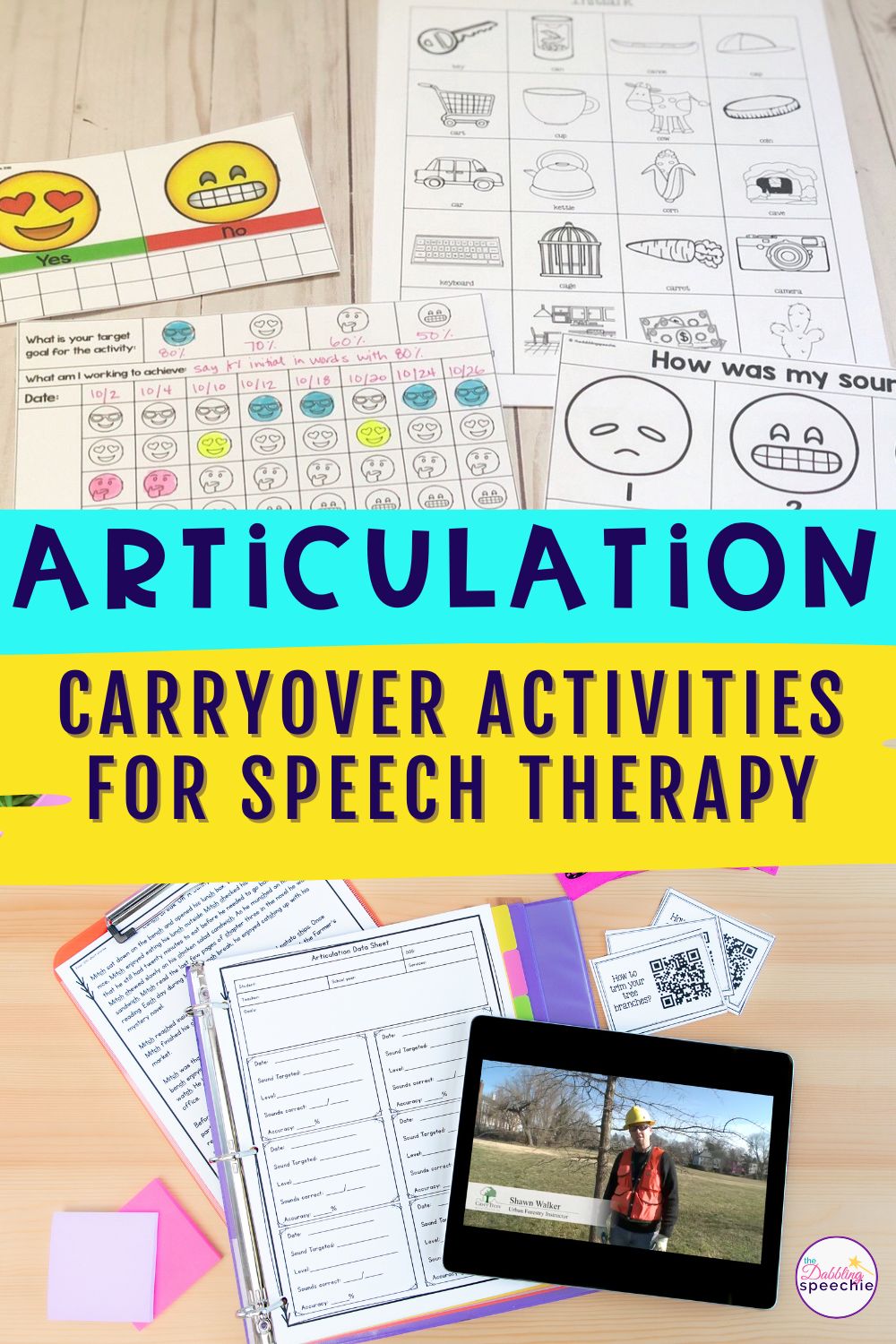
Helping students generalize their articulation skills into real-world tasks is essential for lasting success. Whether you’re targeting R, S, L, SH, Z, or any other sound, these activities can help students take their speech from practice to natural conversation:
Use stories or non-fiction passages loaded with your target sound. Students can read aloud, focusing on their articulation, and then answer comprehension questions. For free options, check out ReadWorks.org or NewsELA. Want pre-made resources? My Articulation Carryover Activities Bundle includes:
Boost articulation and critical thinking with compare-and-contrast tasks. Choose two words or objects containing the target sound (e.g., “lighthouse vs. lamppost” for L or “ship vs. shore” for SH) and ask students to describe their similarities and differences. My bundle offers Compare & Contrast Cards tailored to later-developing sounds.
Encourage spontaneous speech with “What would you do?” conversation prompts. These activities let students practice their sounds in everyday scenarios. My bundle includes conversation starter cards for later-developing sounds like CH, TH, J, and R.
Help students build storytelling and articulation skills with picture-sequencing visuals. Have them describe each step of the sequence while practicing their target sounds. This works great for L, R, S, and SH sounds, and my bundle includes sequencing visuals designed for carryover practice.
Incorporate technology by having students watch “how-to” videos on YouTube. They can summarize and sequence the steps while focusing on their articulation. My bundle includes QR code cards with video links and comprehension prompts, perfect for SH, CH, and TH sounds.
Digital resources save time and are perfect for teletherapy or home practice. My bundle offers Google Slides™ versions of all activities, so you can target any sound with ease.
One powerful way to help students develop self-awareness of their articulation is through yes/no visuals. These tools allow students to reflect on whether they produced their target speech sound correctly. With a simple “Yes” or “No” decision, they can actively participate in evaluating their progress, making therapy sessions more engaging and empowering.

To create your own sound-loaded tongue twisters or silly questions to ask the group to work on carryover, use speech word lists to help generate these in therapy. Keep the tongue twisters or silly questions in a notebook or on flashcards to reuse in articulation therapy with your student. In the Themed Therapy SLP membership, we provide themed speech-sound word lists for all our themes, so you can use a theme-based approach.
My articulation carryover activities sets have sound-loaded would you rather questions already created for you to save time.
You can also use AI tools to put in your students’ speech sounds with words and ask them to create would you rather questions, or sound-loaded tongue twisters.
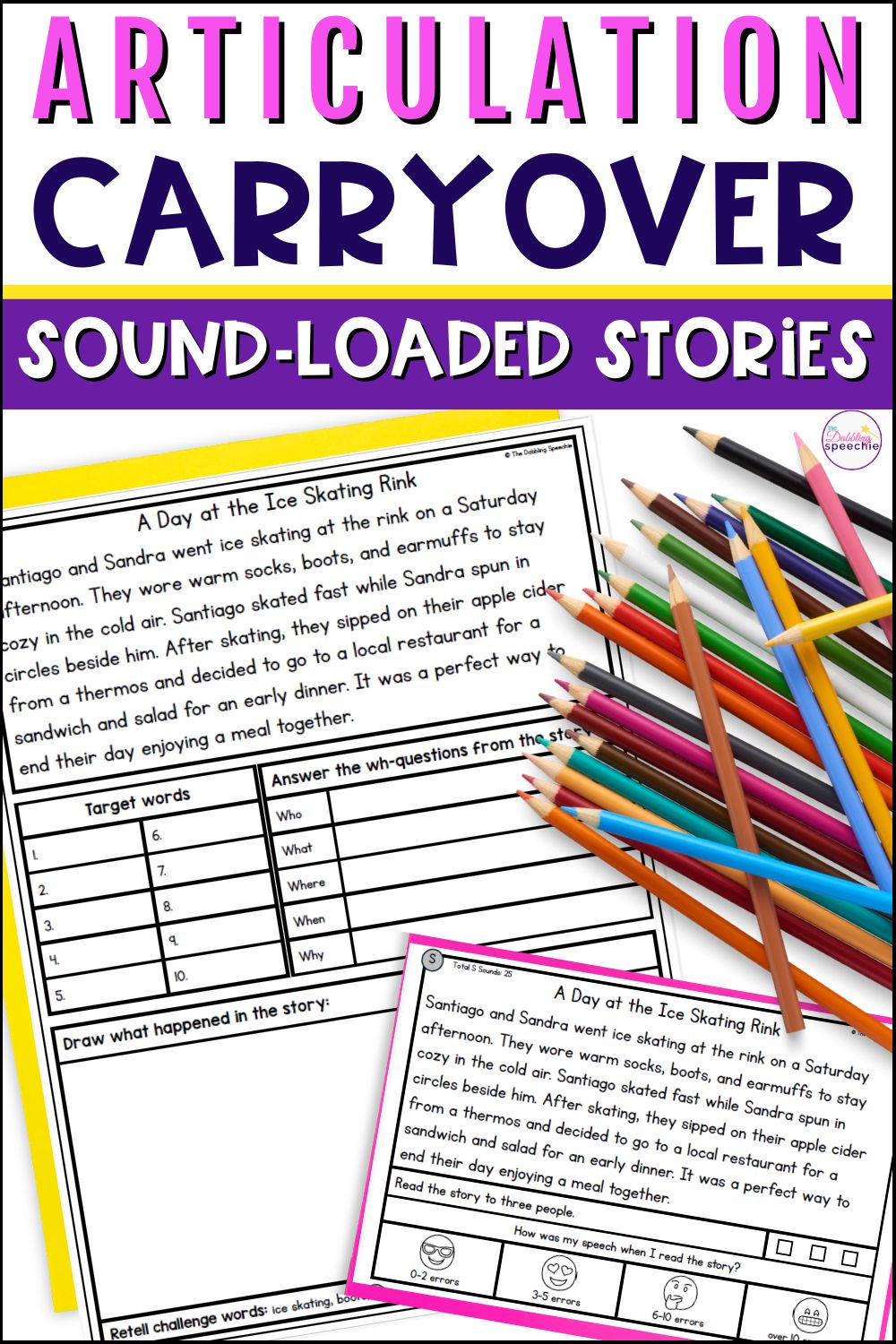
Some of the easiest articulation carryover activities revolve around using books! You can make sure students get plenty of repetition by choosing books that include their sounds. For example, if your student is working on s-blends, using the book Spring Stinks by Ryan Higgins or Slowly, Slowly, Slowly,” Said the Sloth by Eric Carle would allow your students to hear the correct production when you read it (auditory bombardment). When you work on wh-questions, story retell, or extension activities with the story, its target sound naturally comes up for practice.
In the Themed Therapy SLP membership, we provide sound-loaded short stories for all the sounds in each themed unit. You can also use non-fiction and fictional articulation stories in my carryover bundle. Some of my themed articulation stories in the membership are also in my TPT store.
Another resource to find articulation stories is to look for books with sound-loaded words. Here are two tools you can use to find sound-specific speech therapy books:
If you are looking to expand your clinical skills with carryover techniques for articulation and phonology goals, check out these speech therapy resources: