
If you’ve ever tried to work on morphology in speech therapy, you know it’s not always easy to keep students engaged while targeting skills like plurals, verb tense, and subject-verb agreement.
You can drill grammar worksheets all day, but many students struggle to actually use those forms when they are talking or telling a story.
That’s why I love using picture books to teach morphology in speech therapy. With the right books, you can model grammar naturally, get tons of repetition, and target multiple goals at once without planning separate activities for every group.
In this post, I’m sharing my favorite books for targeting morphology skills like plurals, past tense verbs, and present progressive. I’ll also give you simple ideas for how to use these books in your sessions so you can move beyond worksheets and into meaningful language practice.
If you’re also working on sentence structure and syntax, my friend Allison has a great list of books to support those skills, you can check that out here: Books to Target Syntax.
Sometimes hearing all these fancy terms for language and grammar development can have your head spinning. But when we understand the concept better and HOW working on the skill can help your speech therapy students, it’s worth taking a deep dive in grasping “What is morphology?” Not only can your students improve their reading comprehension and vocabulary with morphological approaches in therapy, it can also improve their spelling and phonology skills.
Morphology is the study of the form of words. It is the structure and meaning of those words and how they can be put together to form new meanings of words. For example, if you have two root words “lunch” and “box.” These two words are considered root words, they are morphemes that can stand alone meaning they don’t need anything to help them have meaning. When you put those words together, it creates a new word, “lunchbox,” which means a box for someone’s lunch. When those two words are used separately, they have a slightly different meaning.
In speech therapy, we often focus on these smaller parts of words like “-s,” “-ed,” or “-ing” because they help students use grammar more accurately when speaking and writing. Errors with bound morphemes can impact a listener’s ability to understand when something is happening (past, present, future tense), how many (singular or plural), or who they are talking about (pronouns). Another example is the word “jumped.” The root word “jump” has meaning on its own, and when we add “-ed,” it changes the word to show that the action has already happened.
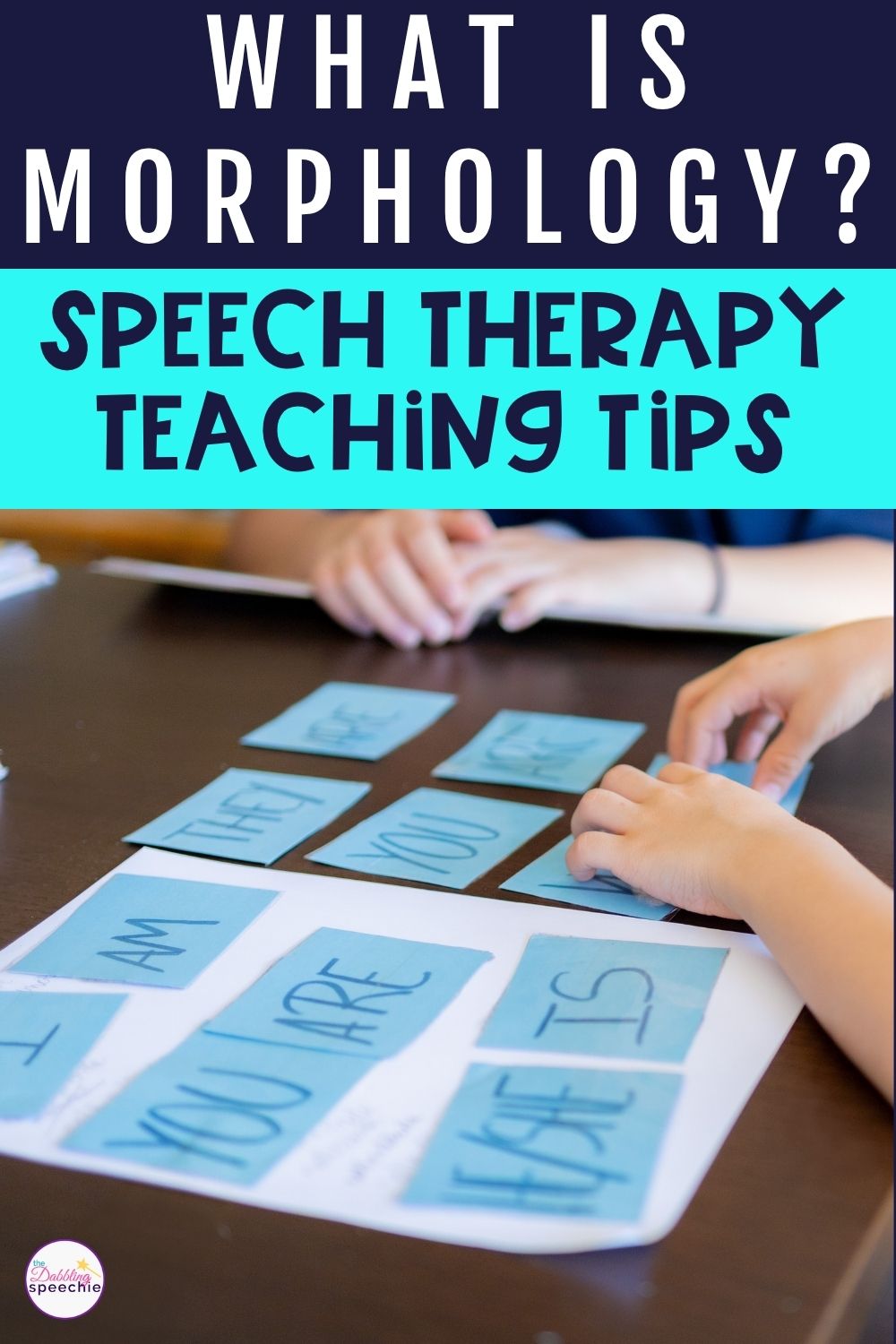
Similarly, we have other morphemes such as prefixes, affixes, and suffixes that are added to root words. When these are used, they create a new meaning or context for that word. For example, if you have the root word happy and add the prefix “un”, the word changes to “not happy.”
If we work on morphology in speech therapy, breaking down the word forms will help your students build better vocabulary, phonology, decoding, and reading comprehension, which then translates into better writing and oral communication.
So, if morphology is the study of the structure and meaning of words, why not use books to work on these skills!? Worksheets are great and can be effective, but with books, you can create so many opportunities to practice morphology and other skills!
Using picture books in speech therapy to teach morphology offers many benefits for you and the student. First off, picture books are way more engaging than worksheets and flashcard drills. Of course, both of those types of materials can have their place, but if you are striving for better engagement with morphology instruction, switch it up with picture books.
Many picture books allow you to naturally model and work on morphemes through repetition without feeling like you are drilling. And, picture books add more context for your students. They aren’t just creating random sentences; they’re learning morphology through the lens of a story and its concepts from the book.
The last reason why you should use picture books to teach morphology in speech therapy is that they are easy to use with mixed groups. Which means speech therapy lesson planning is easier for you. Books have so much depth, can be pulled off a shelf, and have vibrant pictures, giving you opportunities to target a variety of speech and language goals without prepping a bunch of materials.
Using picture books in speech therapy allows you to model grammar in context, get natural repetition, and target multiple goals at once. Instead of planning separate activities for each group, you can use one book and adapt it for different students.
Before jumping into specific books, here are simple strategies you can use to target morphology during your sessions:
Morphology and syntax work together to build grammar skills. While morphology focuses on word parts such as endings and prefixes, syntax helps students organize words into meaningful sentences.
If you want more ideas and examples for teaching grammar in speech therapy, you can download the free grammar treatment strategies list here: Free Grammar Strategies.
When it comes to teaching morphology in speech therapy, using picture books makes it easier to model and practice grammar skills in a meaningful way. Instead of drilling word endings in isolation, students can hear and use morphemes like plurals, verb tense, and pronouns within the context of a story.
Below are some of my favorite books for teaching morphology in speech therapy, along with simple ideas for how to target specific skills during your sessions.
If you have students working on plural “-s” or irregular plurals, picture books are a great way to provide repeated exposure and practice. Many books naturally include opportunities to model singular versus plural nouns, helping students hear and use these forms in context instead of just repeating them in drills. Here are some good picture books you can use:
If you have students working on pronouns, picture books are a great way to model and practice forms like I, you, he, she, and we in context. Many stories naturally repeat pronouns, which helps students hear and use them more accurately during structured activities and conversation.
When reading, you can emphasize the pronoun being used, ask students to describe what a character is doing using the correct pronoun, or model expanded sentences with pronouns throughout the story. Here some great picture books for teaching pronouns in speech therapy:
If you have students working on present tense verbs, picture books are a great way to model actions and verb endings in context. Many stories include repeated actions, making it easier for students to practice forms such as the present progressive (“-ing”) and subject-verb agreement during shared reading.
When reading, you can emphasize action words, model correct verb forms, and have students describe what characters are doing using complete sentences.
Past tense verbs can be tricky for many students, especially when learning to use “-ed” endings or irregular verb forms. Picture books provide meaningful opportunities to model and practice past tense within a story, helping students understand when actions have already happened. Research has shown that conversationally recasting a morphological rule with 24 unique verbs can support learning that morphological target more effectively (Plante et al., 2014). It’s a bit overwhelming to think about using 24 different verbs in a session. Well, using books can help with that, especially if they have 24 or more verbs in the story. That’s why the book cheat sheets in the Themed Therapy SLP membership list 24 verbs from the books in each theme to help you with recasting.
As you read, you can highlight past tense verbs, ask students to retell events using correct verb forms, and model expanded sentences using past tense markers. If you need visual sentence strips for grammar, check out this set with visual supports for pronouns, noun-verb agreement, third-person singular, and more!
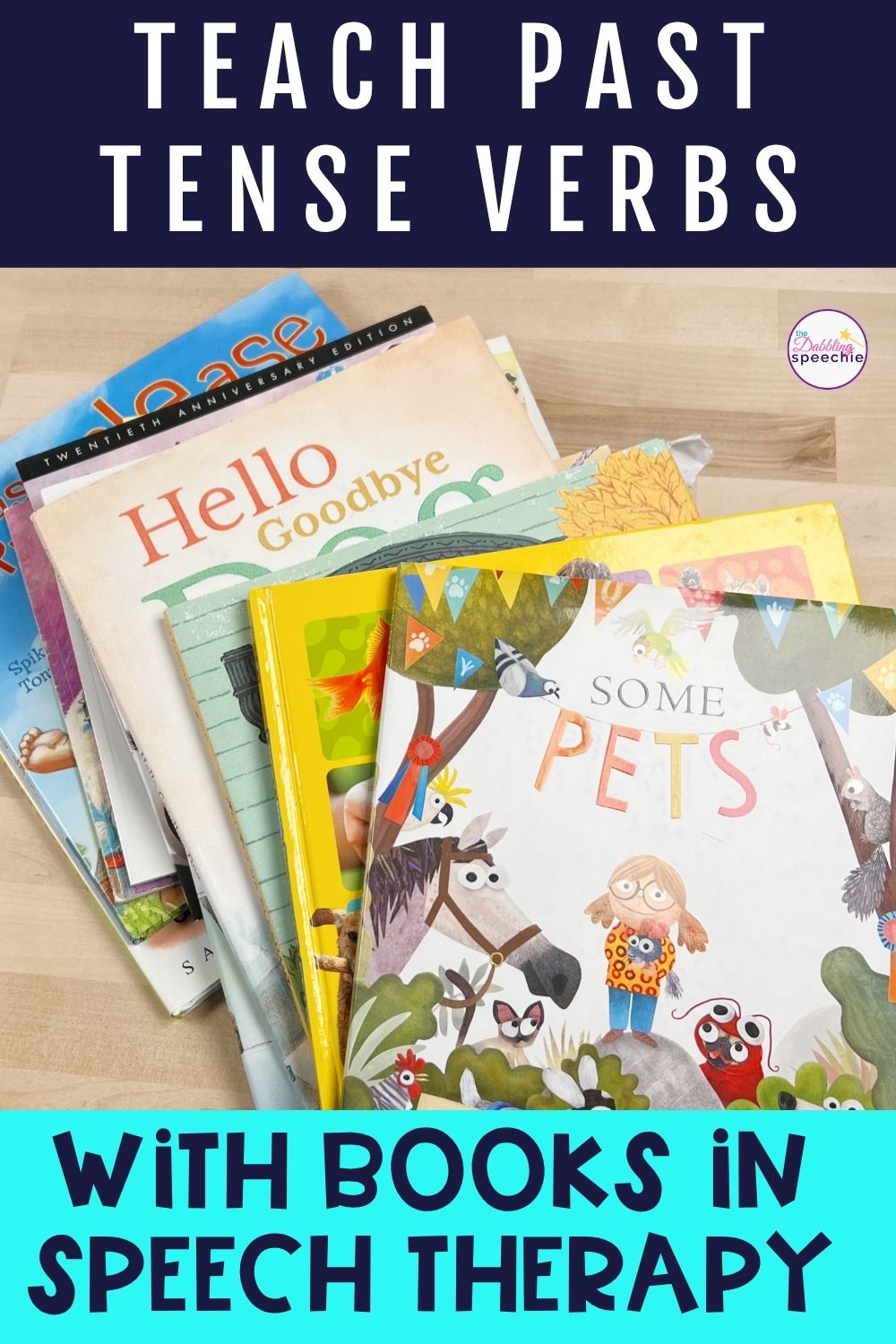
You can also use books you already have in your speech room to target past tense verbs. As you read through a story, jot down a list of verbs you hear and think about which ones align with your students’ goals. This can help you quickly decide if a book will work for targeting specific grammar skills.
If you don’t want to take the time to do that, I’ve included book cheat sheets in Themed Therapy SLP that list verbs, vocabulary, and language targets from each book, so you can quickly plan your sessions.
You don’t need a brand new activity for every session to target morphology. With the right strategies, you can use any picture book to work on grammar goals like verb tense, plurals, and pronouns.
Here are some simple ways to target morphology in speech therapy using books:
If you want more ideas for targeting grammar and language goals in your sessions, check out these language therapy ideas for books, games, and hands on activities.
Teaching morphology in speech therapy doesn’t have to mean pulling out worksheets or planning separate activities for every group. Picture books give you a simple way to model grammar in context, provide repetition, and target multiple goals at once.
Whether you’re working on plurals, noun-verb agreement, third person singular, or pronouns, you can use the same book across groups and adjust your questions, modeling, and extension activities based on your students’ needs. That means less planning for you and more meaningful practice for your students.
If you want more support with teaching grammar and morphology in your sessions, including step-by-step strategies you can use with any activity, make sure to grab the free grammar treatment strategies here: Free Grammar Strategies.