
If you’ve been searching for spring sensory bin ideas that actually keep your students engaged AND help you target multiple goals, you’re in the right place.
Some of my biggest struggles in the therapy room have always been the same: How do I keep my students engaged during the entire session? How can I target multiple goals at once without it feeling overwhelming?
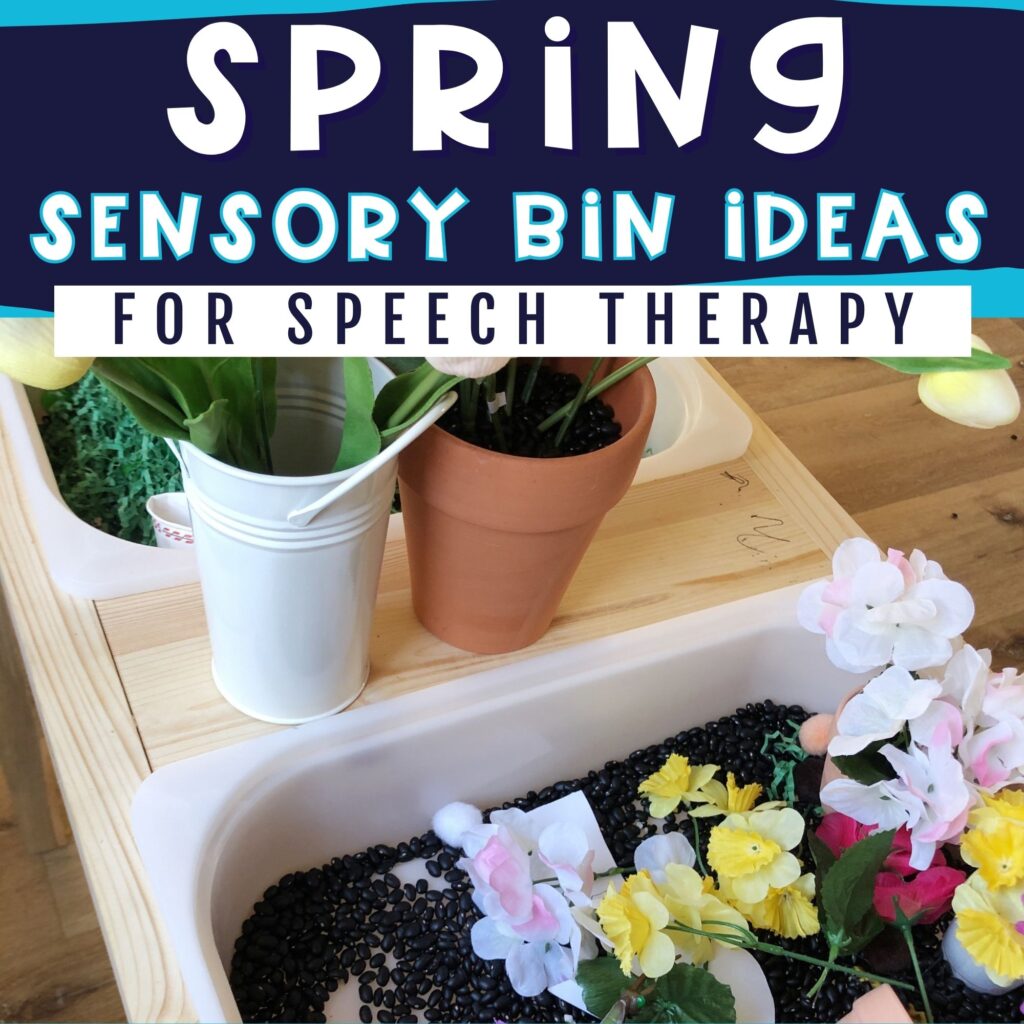
to create a flower planting sensory bin! SLPs can target sequencing for “How to plant a flower?”, and practice describing flowers and garden tools by attributes. This is a great pretend-play activity to help your younger students work on language and social pragmatics.
If you are looking for spring sensory bin ideas, the first thing to think about is your students’ ages and the skills you want to target.
Do your students need lots of space to explore? Or can they handle multiple layers of fillers and materials in the bin?
For example, if you are working with 3-year-olds, a simple bug sensory bin is a great place to start. You can use black beans for dirt, green grass filler, and plastic insects. This setup gives them enough to explore without overwhelming the bin or creating too much mess.
With a bin like this, you can target a variety of developmentally appropriate skills such as:
Another important piece of a good spring sensory bin is choosing a theme that connects to a book or seasonal concept.
For example, spring-blooming flowers can pair well with a flower garden sensory bin. When you use a book alongside your bin, you can introduce vocabulary and concepts during reading, then create more natural opportunities to practice those skills during play.
You’ll also want to think about your students’ sensory and motor needs.
Keeping these factors in mind will help you create spring sensory bins that are engaging, functional, and easy to use in your sessions.
The filler is the base of your sensory bin and one of the most important parts because it provides the tactile input for your students.
If you are looking for spring sensory bin fillers that are affordable and easy to find, I usually grab materials from Dollar Tree or craft stores.
Here are some of my favorite spring sensory bin fillers:
These fillers are easy to swap between themes, so you can reuse them for insect, Easter, and flower bins, and more throughout the spring months.
👉 If you want a full list of fillers, storage tips, and printable visuals, check out my sensory bins for speech therapy guide.
Insect sensory bins are one of my go-to spring sensory bin ideas because they are easy to set up and pair perfectly with popular books and seasonal themes.
You can reuse simple fillers like green shredded paper (grass) and beans (dirt), then swap out the insects and materials depending on the activity you want to target.

One of my favorite ways to build an insect sensory bin is by pairing it with the book In the Tall, Tall Grass by Denise Fleming.
For this bin, you can use:
This setup works great for targeting:
You can see the full setup and activity ideas in my In the Tall, Tall Grass lesson plan.
Another easy insect bin is inspired by The Very Hungry Caterpillar by Eric Carle.
You can add:
This bin is perfect for:
Students love recreating the story while digging through the bin, which naturally increases engagement and language use. You can get more lesson plan ideas and tips for using this sensory bin in my Hungry Caterpillar blog post.
If you want a simple, focused theme, a ladybug sensory bin is a great option.
You can include:
This type of bin works well for:
You can read my full breakdown of the ladybug sensory bin here. It has book recommendations, songs, and other extension activities you can pair with this bin.
Pro tip:
Insect sensory bins are easy to reuse across multiple sessions. Just switch out the book, add new insects, or change the language targets to keep things fresh without rebuilding the entire bin.
Flower and garden sensory bins are perfect spring sensory bin ideas because they connect to what students are naturally seeing during the season as plants begin to grow and flowers start to bloom.
This type of bin works especially well for mixed groups because you can easily adapt it for both articulation and language goals.
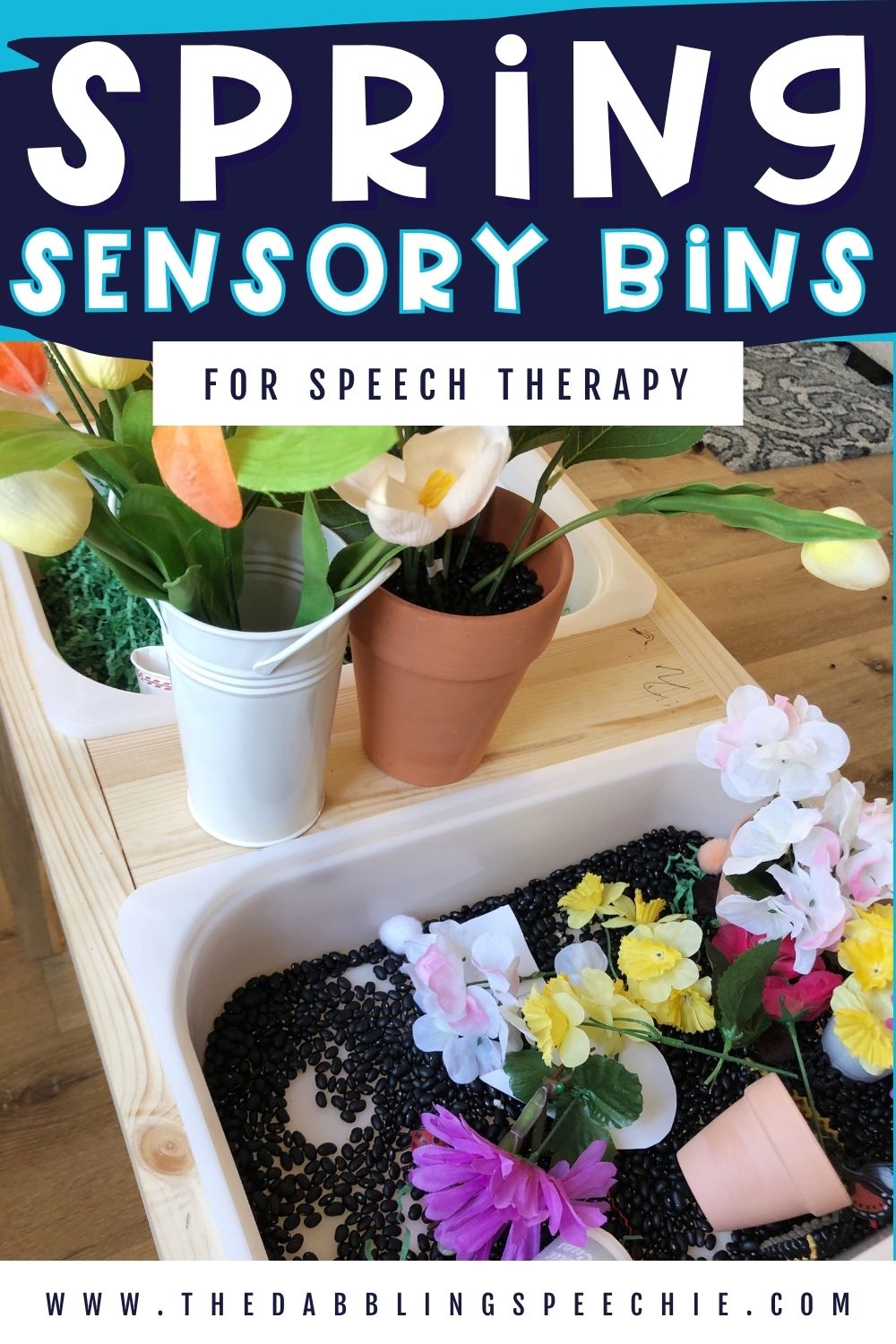
You can create a simple flower garden sensory bin using materials from the Dollar Store or craft stores.
For this bin, you can include:
This setup creates a fun pretend play activity where students can “plant” and arrange their flowers. You can usually find these things at Dollar Tree or a craft store. Definitely look around your house for containers or items that can work for this bin!
Flower sensory bins are great for targeting a wide range of speech and language goals, including:
Because students are actively manipulating the materials, it creates natural opportunities for conversation and language use during play.
If you want ready-to-use flower printables, and cheat sheets for a flower sensory bin, I include these in the spring units inside the Themed Therapy SLP membership.
For specific flower printables for a spring sensory bin that targets articulation and language goals, check out this flower sensory bin set.
A simple way to set up an Easter sensory bin is by using plastic eggs filled with small items or visuals.
For this bin, you can include:
Students can open the eggs and interact with what’s inside, which keeps them motivated and engaged.
Easter sensory bins are great for targeting a variety of speech and language skills, including:
You can also work on verbs like open, hide, find, and look while students play with the eggs.
If you want more ways to use this type of Easter sensory bin, check out my blog post where I share tips for working on articulation and language. Plus, you can download a free category visual sorting poster and get ideas for a chicken hatching sensory bin idea!
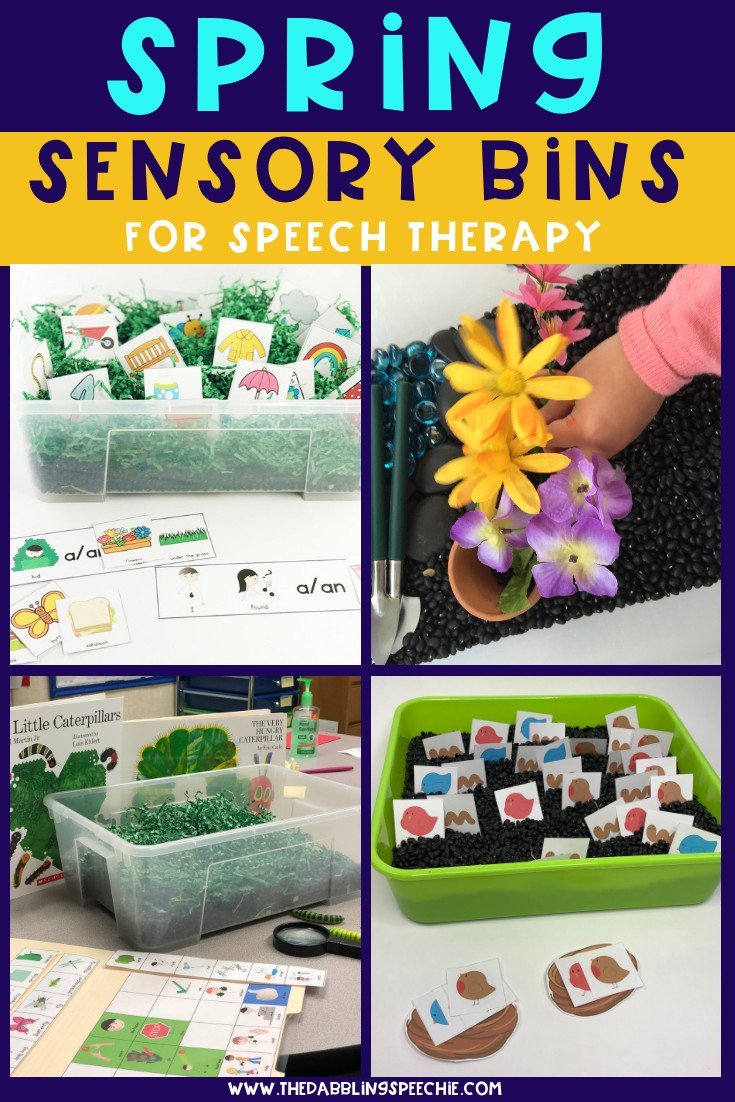
If you want a simple way to target vocabulary and grammar, this “Can You Find It?” sensory bin is one of my favorite spring sensory bin ideas for mixed groups.
This type of bin works especially well for students who are learning how to describe nouns by attributes or explain what items are used for.
How to Set Up the Bin
For this bin, you can include:
You can add printable or real toy items related to spring categories, such as clothing, outdoor items, animals, and yard items.
Have students go on a “Can You Find It?” hunt by giving prompts such as:
Students search through the bin and describe or label what they find.
This activity is perfect for targeting:
You can also hide items in the bin and have students create complete sentences when they find them.
For all the visual supports, and spring vocabulary printables for this sensory bin, grab the spring push-in language lesson plans. It has everything in there to make this an easy mixed groups spring sensory bin.
If you want printables, reinforcer activities, and cheat sheets to make planning easier, I created a Spring Sensory Bin Companion with materials for:
I also include quick-reference cheat sheets so you don’t have to come up with targets on the spot during your sessions.
Earth Day is a great opportunity to incorporate meaningful, real-world topics into your spring sensory bin ideas while targeting speech and language goals.
These types of bins are perfect for building vocabulary, teaching concepts, and having conversations about caring for the environment.
A recycling-themed sensory bin is a simple way to teach sorting and categorizing skills.
You can include:
Students can sort items while working on:
Check out this recycling sensory bin from Two Pink Peonies for a full setup and ideas.
You can also create a “plant the trees” or nature-themed bin with materials like:
This type of bin works well for:
See this plant-the-trees sensory bin from Happy Toddler Playtime for more ideas.
If you want to mix in fine motor practice, you can add:
These activities naturally support:
Check out these Earth Day fine motor activities from Turner TOTS for additional inspiration.
Chores and cleaning sensory bins are a great way to turn everyday routines into engaging spring sensory bin ideas while targeting functional vocabulary and life skills.
This theme works especially well for students who benefit from real-world connections and hands-on practice.
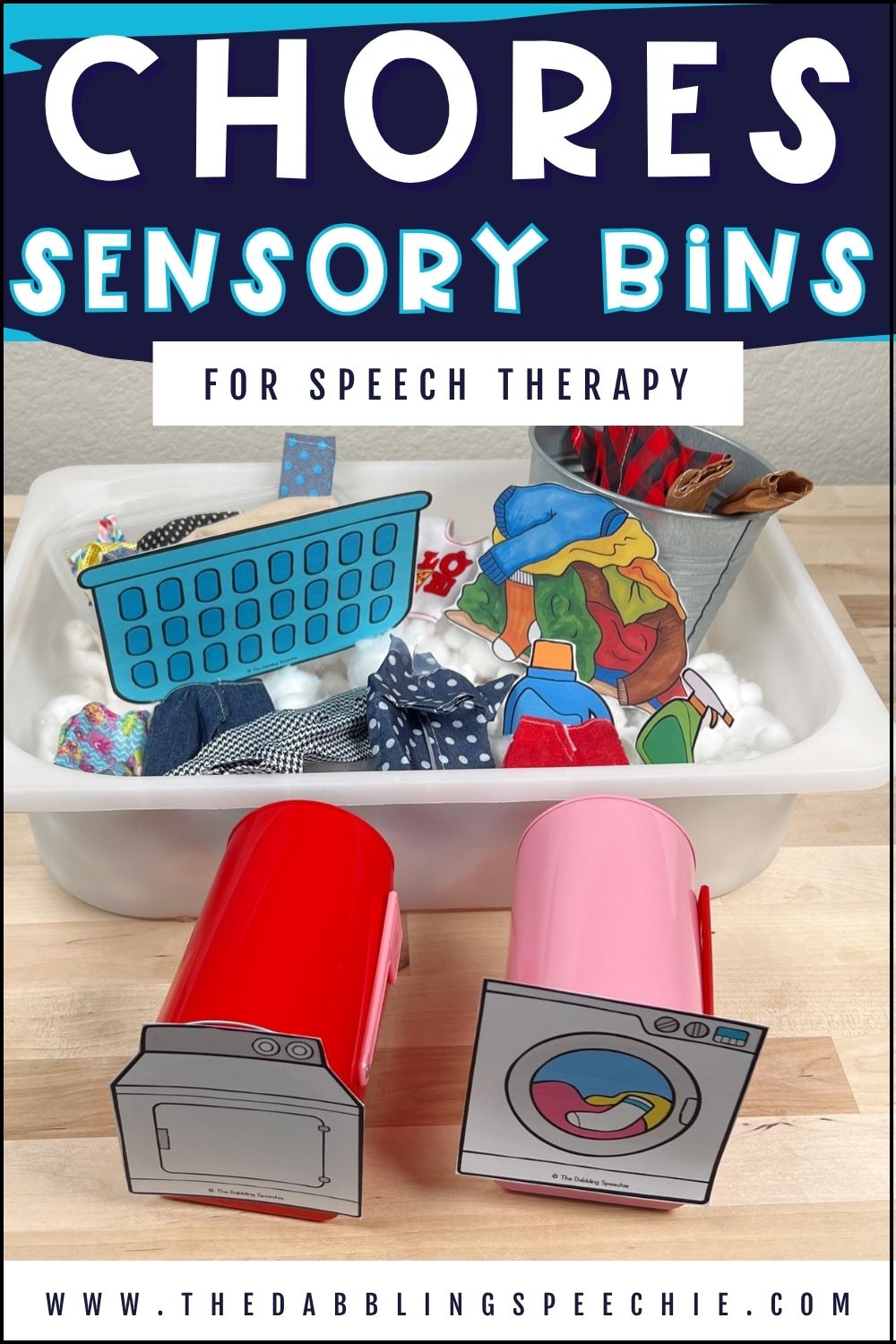
A simple and fun idea is creating a laundry-themed sensory bin.
You can include:
Students can sort items into categories like:
Chores sensory bins are perfect for targeting:
Because the tasks are familiar, students often engage more and use language more naturally during play.
If you want ready-to-use visuals and printables, I include chores-themed sensory bin materials inside the April monthly themes in the Themed Therapy SLP membership.
And if you have the annual plan, you can access the chores unit at any time of the year to reuse these activities whenever you need them.
Spring sensory bins aren’t just fun—they’re one of the easiest ways to target multiple speech and language goals in one activity.
Because students are actively playing and interacting with materials, you can naturally build in high-quality practice without it feeling repetitive or drill-based.
You can use sensory bins to get a high number of speech sound trials in a more engaging way.
Try:
This keeps students motivated while still getting the repetition they need.
Sensory bins are perfect for introducing and reinforcing vocabulary.
You can:
The hands-on element helps students better understand and remember new words.
You can easily build grammar goals into your sensory bin activities by using simple prompts and sentence frames.
For example:
This helps students expand their utterances and practice using complete sentences during play.
Sensory bins also create natural opportunities for social interaction.
Students can:
This makes them especially helpful for mixed groups or push-in sessions.
If you want to save time planning, I include seasonal sensory bin printables, visuals, and cheat sheets inside the Themed Therapy SLP membership.
These resources help you quickly adapt one bin for articulation, vocabulary, grammar, and social goals—without having to plan separate activities.
If you’re looking for more ways to use seasonal themes in your sessions, I’ve got you covered.
You can find even more ideas in my spring speech therapy activities, where I share book pairings, crafts, and low-prep activities for mixed groups.
If sensory bins are something you love using (or want to start using more consistently), be sure to check out my sensory bins for speech therapy page. It includes ideas, materials, and tips for setting up bins that target both articulation and language goals all year long.
Whether you’re planning for preschool, special education, or mixed groups, having a few go-to sensory bin ideas can make your sessions more engaging and easier to prep.