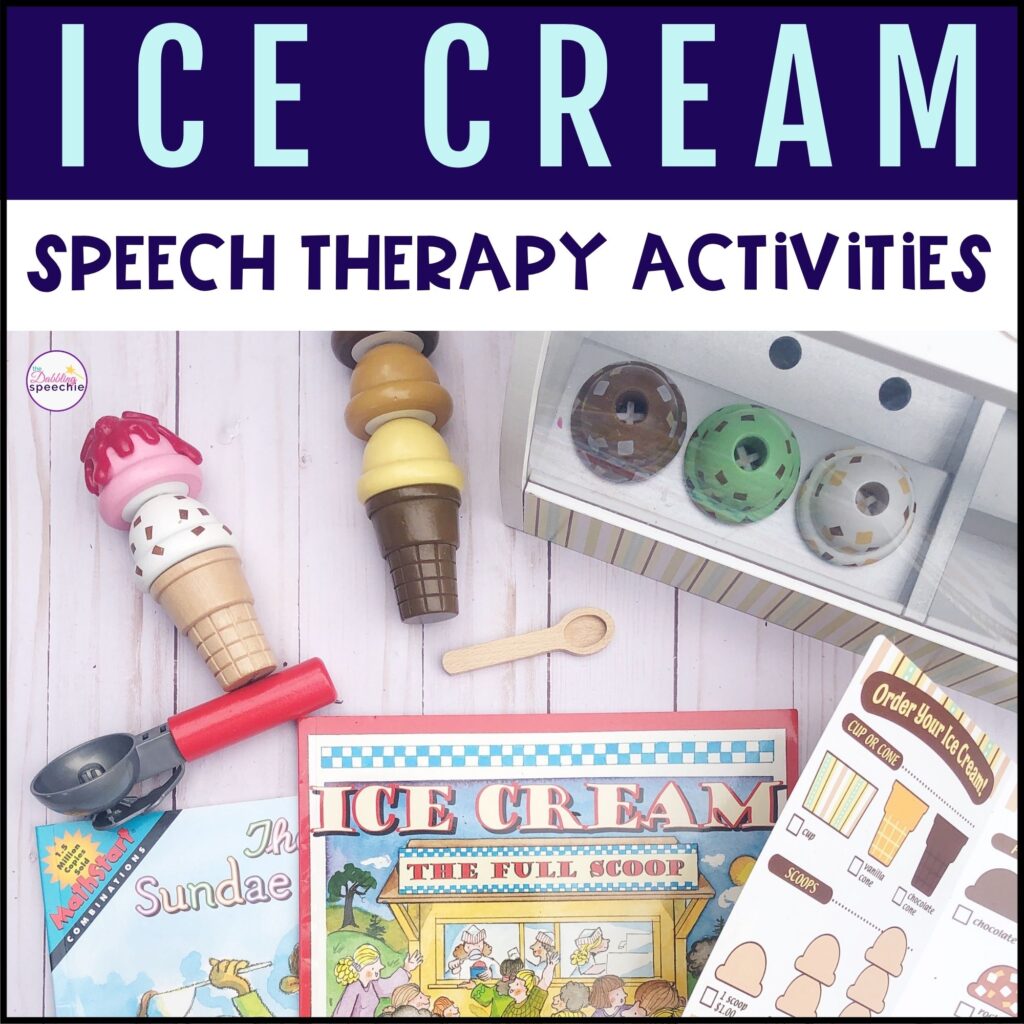
During the summer months, planning an ice cream speech therapy unit is one of my favorite ways to keep students engaged while targeting a variety of speech and language goals. Whether you work with preschool or elementary students, there are lots of ways to adapt this theme for different ages and ability levels.
From sensory bins and dramatic play to sequencing activities, books, articulation practice, and language lessons, an ice cream theme can help you cover a wide range of goals while making therapy feel fun and meaningful. I mean, what kid doesn’t love talking about ice cream? It’s seriously one of the best summer treats!
In this post, I’m sharing my favorite ice cream speech therapy activities that you can use to target articulation, language, social communication, vocabulary, and more.
This blog post contains Amazon affiliate links. When you use my affiliate link, I get a small commission at no additional cost to you.
Books are one of my favorite materials to bring into sessions because they are engaging, easy to prep, and cover a LOT of speech and language goals. If you work with a lot of mixed groups or have a lot of goals you cover in your 1:1 sessions, having a book will help you target a variety of skills without stressing about planning lots of different activities. Whether you’re working with preschool or elementary students, an engaging ice cream-themed book can help introduce new concepts while creating opportunities for meaningful discussions. For help with shared book reading strategies, I have a whole blog post to help you out.
When reading ice cream books in speech therapy, you can target:
For preschool students, focus on simple vocabulary, describing, and answering basic questions about the story. Older students can work on summarizing, making inferences, comparing characters, and using more complex sentence structures.
To extend the lesson, pair your book with an ice cream sensory bin, dramatic play activity, sequencing task, or an ice cream-themed craft. Using the same theme across multiple activities helps reinforce vocabulary and language concepts throughout the week.
Prek-1st:
2nd-3rd:
4th-5th:
One of my favorite ways to save planning time is using one book and pairing it with extension activities that target multiple speech and language goals. Instead of searching for worksheets, questions, and companion materials, I like having everything organized and ready to use.
Inside Themed Therapy SLP, you’ll find book cheat sheets, book companions, story maps, vocabulary activities, sequencing materials, and extension activities designed to help you get more mileage out of your therapy books. Many of the monthly themes include resources that make it easy to target comprehension, retell, vocabulary, grammar, social communication, and speech sounds using the same book across multiple sessions.
Whether you’re working with preschool or elementary students, these materials help you spend less time planning and more time providing engaging therapy.
If you are working with preschool through 2nd grade, investing in an ice cream toy set is worth it! I purchased the Melissa & Doug Ice Cream Counter years ago, and even my older elementary students still ask to play with it when they see it in my therapy room.
Ice cream toy sets are a great way to target speech and language goals through play. Students can practice requesting, commenting, describing, answering WH-questions, following directions, turn-taking, and social communication skills while running an ice cream shop or creating ice cream treats for friends.
Some of my favorite ice cream toy sets include:
You can also transform your therapy room into an ice cream shop and incorporate pretend play, problem solving, and conversation skills throughout the activity. You can use a 2-page speech-and-language cheat sheet for this toy in my toy companion resource.
If you’re looking for more detailed ideas for using ice cream toy sets, pretend play activities, sensory bins, and preschool language activities, check out my full guide to Ice Cream Preschool Activities for Speech Therapy.

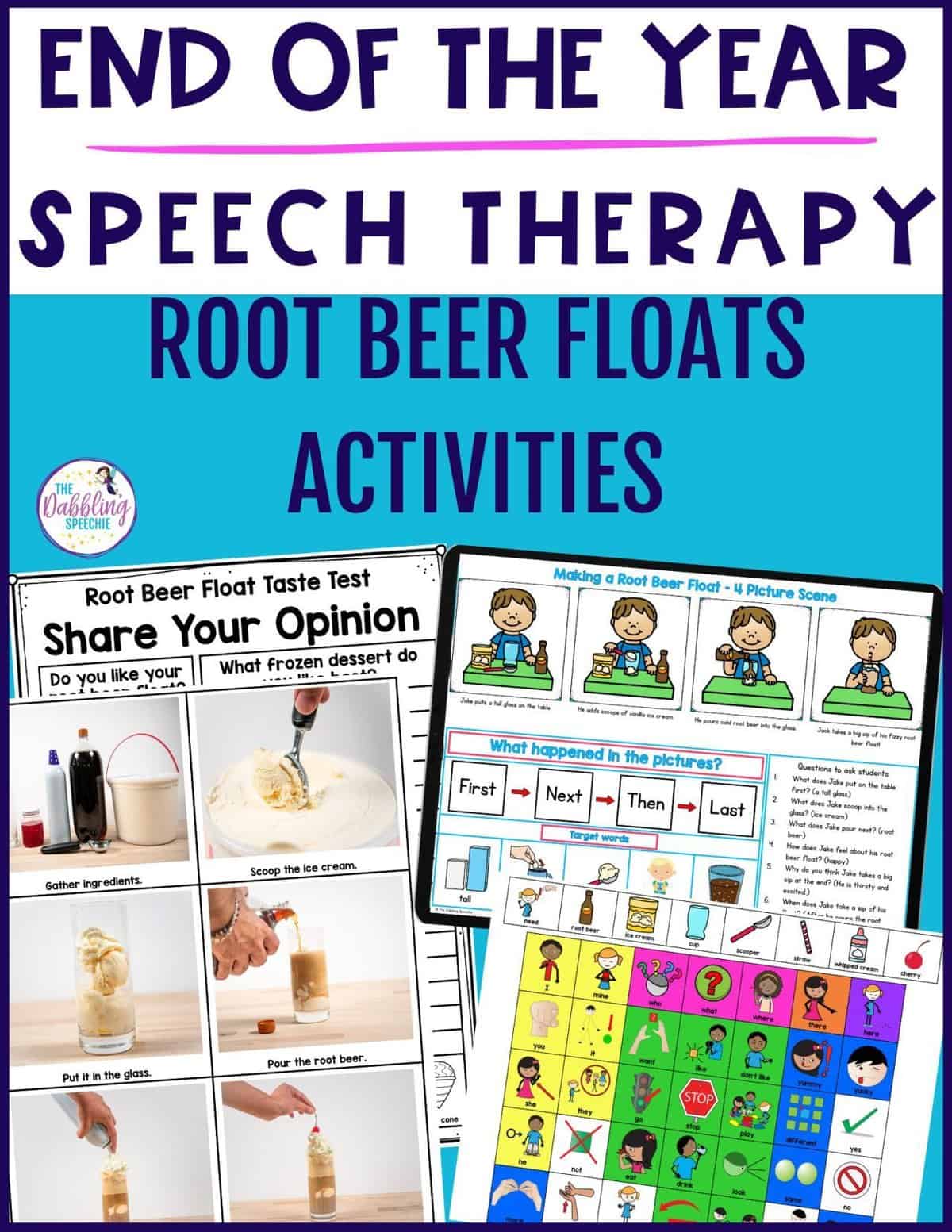
Need a done-for-you ice cream-themed activity for the end of the school year? My Root Beer Float Speech Therapy Activities include sequencing, describing, AAC supports, open-ended games, editable awards, and other extension activities that pair perfectly with an ice cream theme.
One of my favorite ice cream speech therapy activities is making ice cream in a bag! Not only does it keep students engaged, but it also provides opportunities to target speech, language, vocabulary, sequencing, and science concepts in a meaningful way. Students are often more motivated to participate because they get to enjoy the ice cream they helped create at the end of the lesson.
To learn more about how to make ice cream in a bag, check out this recipe and pair it with a SciShow video to build background knowledge before the activity. These resources are perfect for discussing the process, answering WH-questions, and introducing Tier II vocabulary words such as flavor, measure, melt, mixture, and ingredients.
For articulation and phonology goals, have students practice challenge words, phrases, or sentences containing their target sounds before adding ingredients to the bag. For example, students can practice words such as flavor, three, cream, shake, and salt during the activity.
This DIY ice cream making lesson also creates opportunities to target language goals, including:
Because students use different-sized bags and ingredients, you can naturally target concepts such as big/little, more/less, full/empty, and hot/cold while discussing the recipe.
If you need visual supports for sequencing, vocabulary, and language goals, my Ice Cream Push-In Language Unit includes visuals and activities that pair perfectly with this lesson. Live Love Speech also has visual recipe resources for ice cream in a bag and milkshakes that work well for whole-class lessons, push-in services, and small groups.
Ice cream sensory bins are a fun, hands-on way to target speech and language goals while keeping students engaged. They work especially well with preschool and early elementary students because you can easily adapt the same activity for a variety of goals.
To make an ice cream sensory bin, use the kinetic sand kit from Lakeshore Learning or add some of these materials to a container:
While students play, you can naturally target verbs such as scoop, sprinkle, pour, mix, eat, give, and melt. Sensory bins also provide opportunities to work on vocabulary, requesting, describing, following directions, and answering WH-questions.

Some language concepts you can target include:
For articulation and phonology goals, hide picture cards or small objects in the sensory bin and have students practice their target sounds before earning a scoop of ice cream or a topping for their creation.
One of my favorite things about sensory bins is that they make it easy to use a single activity with mixed groups. While one student practices speech sounds, another can work on vocabulary, basic concepts, sentence expansion, or social communication using the same materials.
Sequencing activities are a natural fit for an ice cream speech therapy theme because there are so many real-life experiences students can describe and explain. Whether students are making ice cream in a bag, creating an ice cream sundae, or preparing a root beer float, they can practice organizing information in a logical order while building important language skills.
Sequencing activities provide opportunities to target:
For younger students, focus on sequencing 3-4 steps using visual supports and simple sentences. Older students can explain the process in greater detail, add descriptive language, and discuss why each step is important.
If you need ready-to-use materials, the Ice Cream Sequencing Short Stories in Themed Therapy SLP make it easy to target sequencing and language goals with preschool and elementary students. The Ice Cream Push-In Lesson Plan Set also includes visual supports for sequencing the steps of making ice cream and other ice cream-themed language activities.
Anytime you can do an easy hands-on activity to cover speech and language goals, you should do it! Kids are way more engaged when they have something they can create. This 3D ice cream STEAM Challenge from Kara Carrero is a fun way to combine speech and language goals with science, engineering, and problem-solving.
As students build their ice cream cone and test different designs, you can target a variety of speech and language goals, including:
One of my favorite ways to adapt this activity for articulation students is to have students write their speech words on the circles before creating their ice cream cone. Or, have them practice their speech sounds before adding stamps or marker decorations. Another way to incorporate speech sounds is to fill the ice cream cone with pom poms for every production as scoops of icecream.
You can get all the printables for FREE and target tier II vocabulary for predicting, adjusting, formulating, and hypothesizing. Naturally, practice adding suffixes for ‘est’ to discuss the spheres that are weakest or strongest.
This activity pairs perfectly with the book Should I Share My Ice Cream? by Mo Willems. Before completing the challenge, read the story and discuss character feelings, problem solving, predictions, and social communication concepts. Then extend learning with the STEAM activity for a literacy-based speech therapy lesson.
An ice cream theme is an easy way to keep articulation practice engaging during the summer months. Whether you’re working on speech sounds in words, phrases, sentences, or conversation, there are plenty of ways to incorporate ice cream-themed materials into your sessions.
One of my favorite activities is using the ice cream reinforcer mats in my push-in unit. Students can earn magnetic chips, dot markers, pom poms, mini erasers, or other small manipulatives after practicing their target sounds. You can also adapt the activity for language goals by having students answer questions, describe pictures, or use complete sentences before adding items to the ice cream cone.
For a more interactive activity, use mini trinkets or figurines with an ice cream mat and ask questions such as:
Students can practice describing the hidden object, answering WH-questions, and using their speech sounds while making guesses. To increase the number of productions, choose figurines or objects whose names contain the student’s target sound.
Another simple articulation activity is creating an ice cream scoop challenge. After each production, students earn a pom pom scoop to place in a cone. You can also use cut-up pipe cleaners as sprinkles to add to ice cream cones you made with construction paper, and have students pick them up with a magnetic wand or tweezers to incorporate fine motor practice while working on speech sounds. Use my free, open-ended ice cream reinforcer game for any speech sound.
These activities work well for articulation, phonology, carryover practice, and mixed groups because they can easily be adapted for different ages and ability levels. Plus, students stay motivated because they can watch their ice cream creations grow throughout the session.
YouTube videos are an easy way to build background knowledge, introduce new vocabulary, and keep students engaged during an ice cream speech therapy unit. One of my favorite things about using videos is that you can adapt the same video for a variety of speech and language goals, making planning easier for mixed groups.
For language goals, try informational videos that explain how ice cream is made or take students on a virtual trip to an ice cream shop. These videos are perfect for targeting vocabulary, listening comprehension, sequencing, answering WH-questions, summarizing, and making predictions.
If you are working on social communication and conversation skills, a virtual field trip to an ice cream shop can spark discussions about ordering food, making choices, problem-solving, and expected social behaviors. Students can also compare different ice cream flavors, discuss their favorites, and practice perspective-taking.
Need a movement break? Incorporate ice cream-themed songs and movement videos between activities. Songs about ice cream and milkshakes are great for building vocabulary, requesting, imitation, following directions, and participation during group lessons.
For younger students and AAC users, short videos of dogs eating ice cream can be highly motivating. Use the videos to target verbs, describing, answering WH-questions, expanding sentences, and core vocabulary words such as more, eat, like, want, and different.
If you love using videos in speech therapy, be sure to check out my Summer Speech Therapy YouTube Videos post for more themed video ideas and free Google Slides that make lesson planning easier.
How Ice Cream Is Made
Virtual Field Trip
Songs & Movement Breaks
Language & AAC Videos
If you have a website, activity, or resource you love using with your ice cream speech therapy lesson plans, let me know in the comments. Sharing what you are doing with your students gives SLPs ideas for what they can do too! Loving an ice cream theme and want to save time planning? Check out this list on Amazon (affiliate links) of ice cream books, activities, games, and props to make your ice cream speech therapy lesson planning easier!