When looking for quality language therapy activities, you ideally want something easy to prepare, aligns with evidence-based practices, and engages your students. It’s also a bonus when you can find language activities targeting grammar and vocabulary goals.
Sometimes, finding engaging, low-prep, and EBP-aligned language resources is HARD. Grammar speech therapy can get stale if we don’t watch out and switch things up when we notice our students aren’t engaged! When you see the glossy-eyed look or off-task behavior, all the signs you need to know, it’s time to find new language therapy ideas.
I always try to create or find grammar intervention resources to motivate my students to practice in a session, but I won’t scrimp on quality intervention. Today, I am sharing five language therapy activities targeting grammar and vocabulary.
Language Therapy Activities Using a Free Sentence Frame Graphic Organizer
Many of our language-impaired students struggle with understanding the parts of speech. Your students may show weaknesses with noun-verb agreement, past-tense verbs, and adding in adjectives, adverbs, or prepositional phrases.
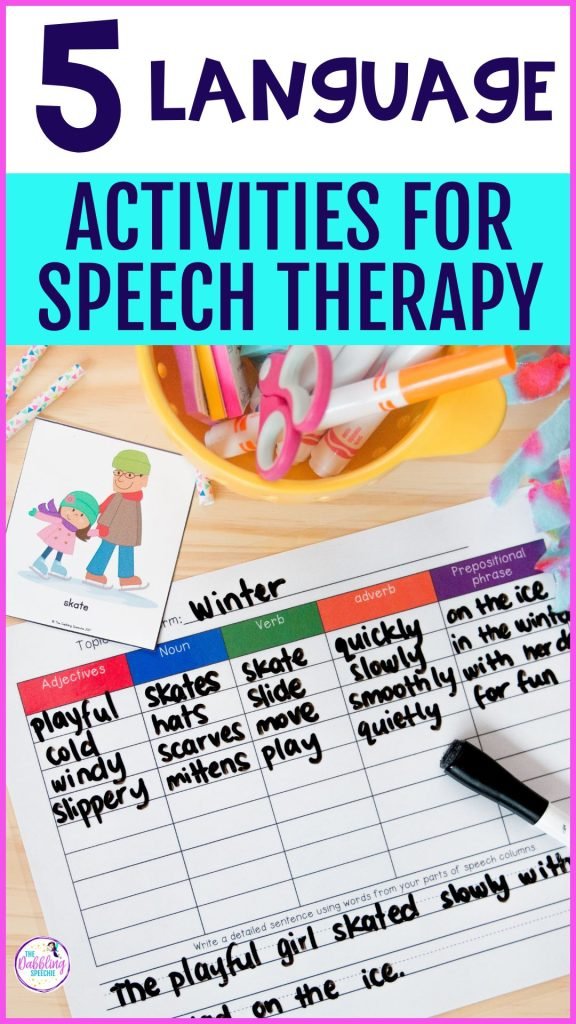
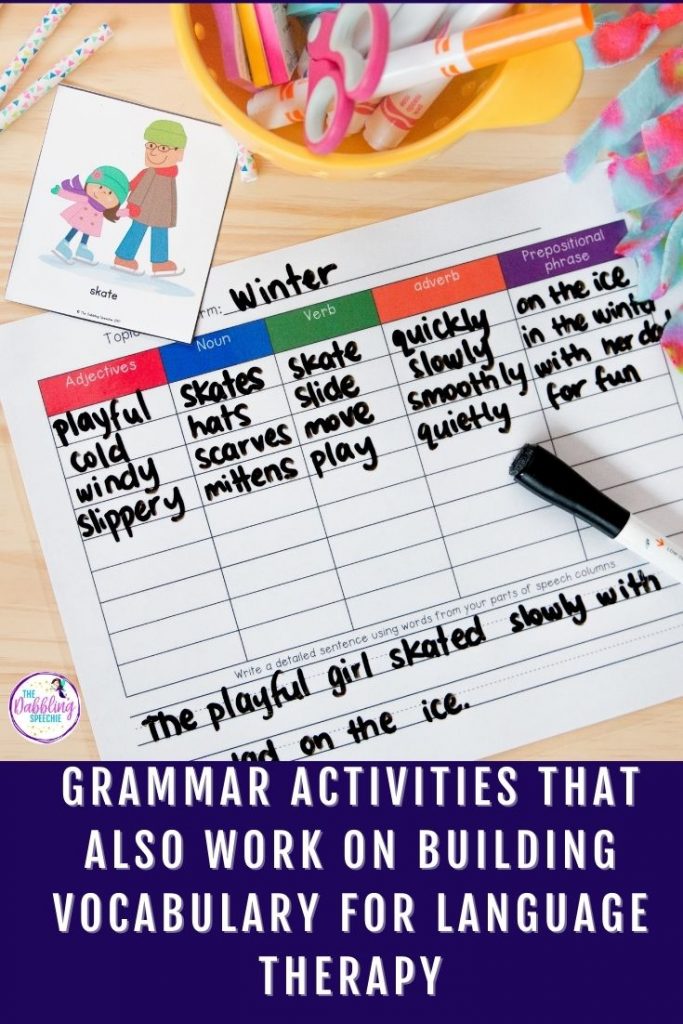
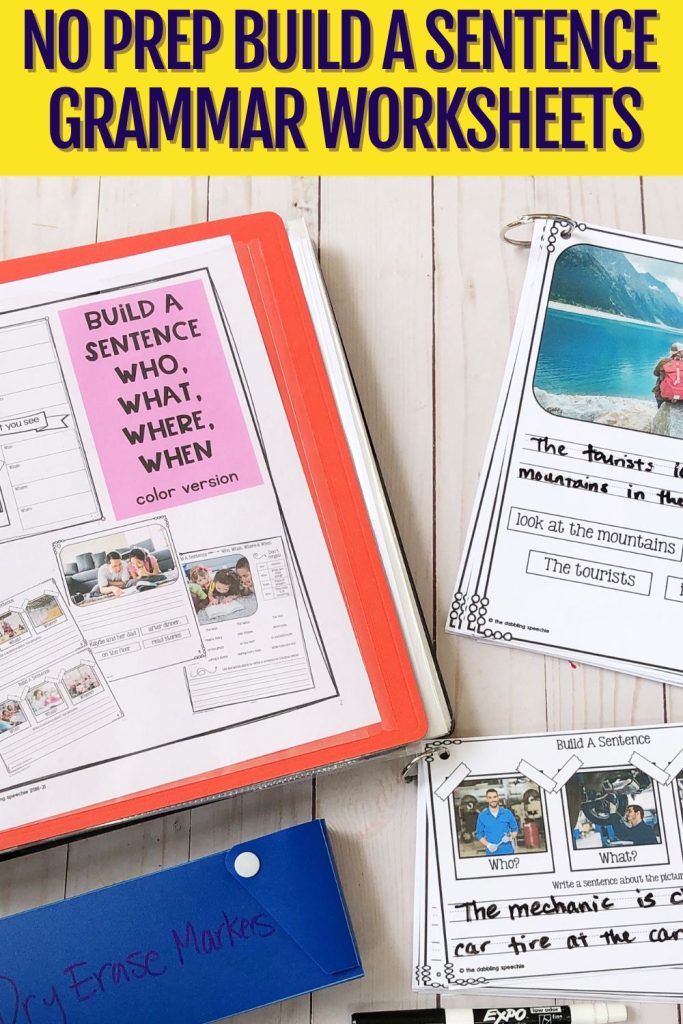
With your students who need to build more complex sentences, this FREE sentence frame graphic organizer will help them color code the different parts of speech.
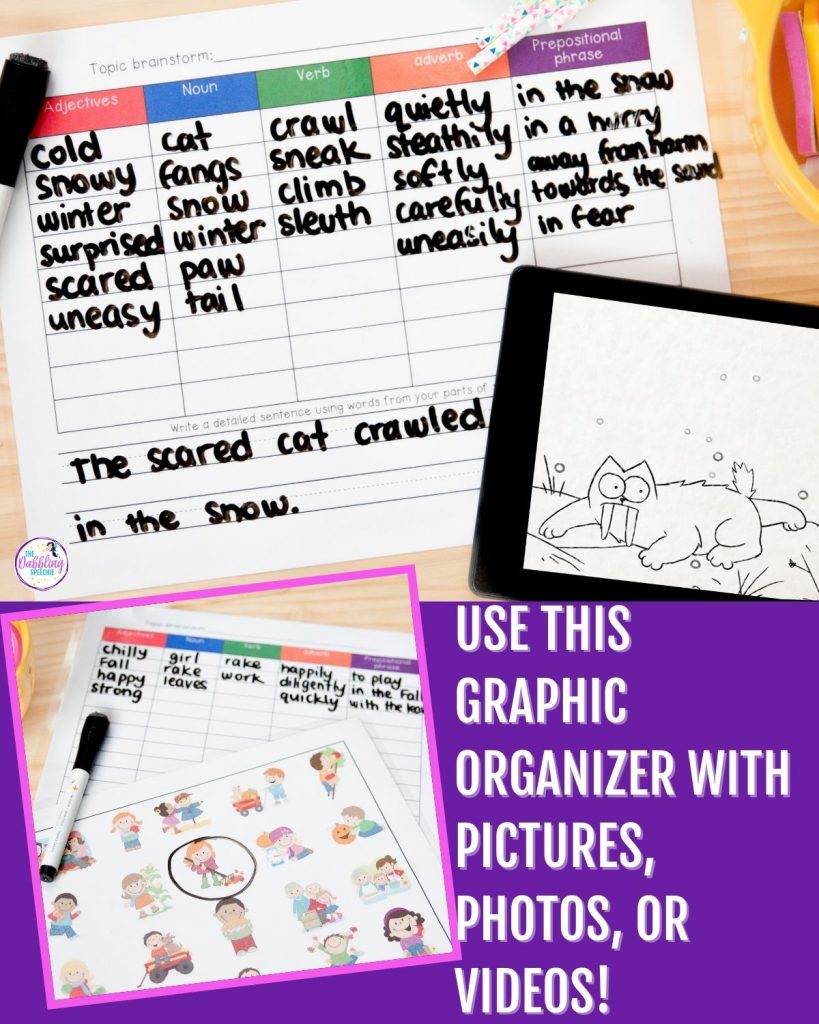
Plus, you can use this graphic organizer with ANY activity. One of my favorite ways to use this visual support is with wordless short videos. In particular, the Simon’s Cat YouTube videos are handy with this graphic organizer.
Target Themed Vocabulary with the Graphic Organizer
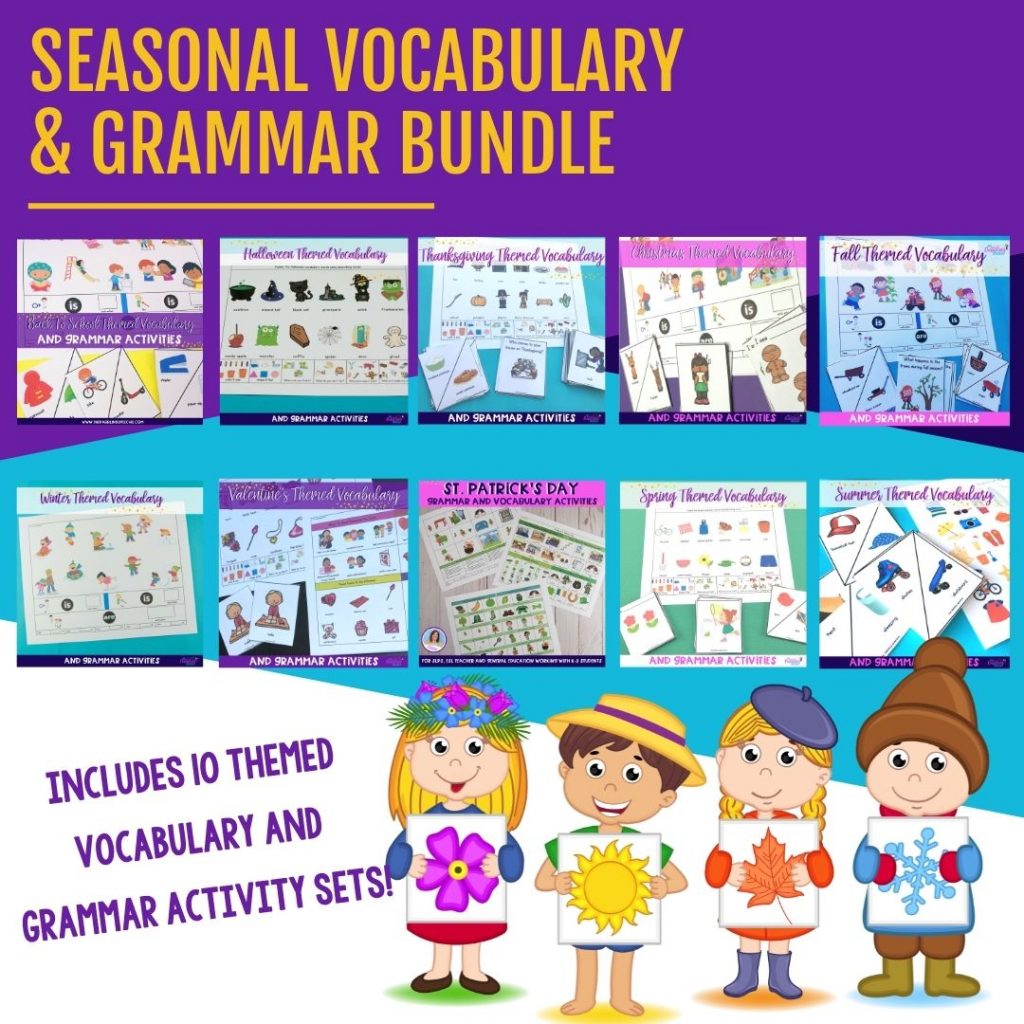
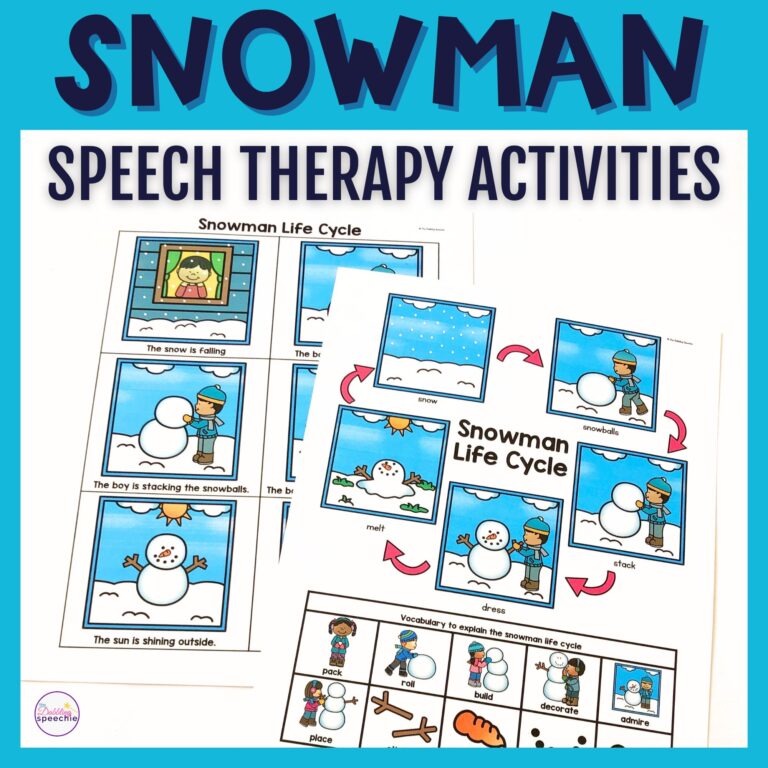
If you enjoy planning by themes, you can use themed books, photos, videos, or picture scenes to work on themed vocabulary while teaching grammar concepts. We provide lots of printable materials in the Themed Therapy SLP membership for grammar and vocabulary based on a theme-based approach.
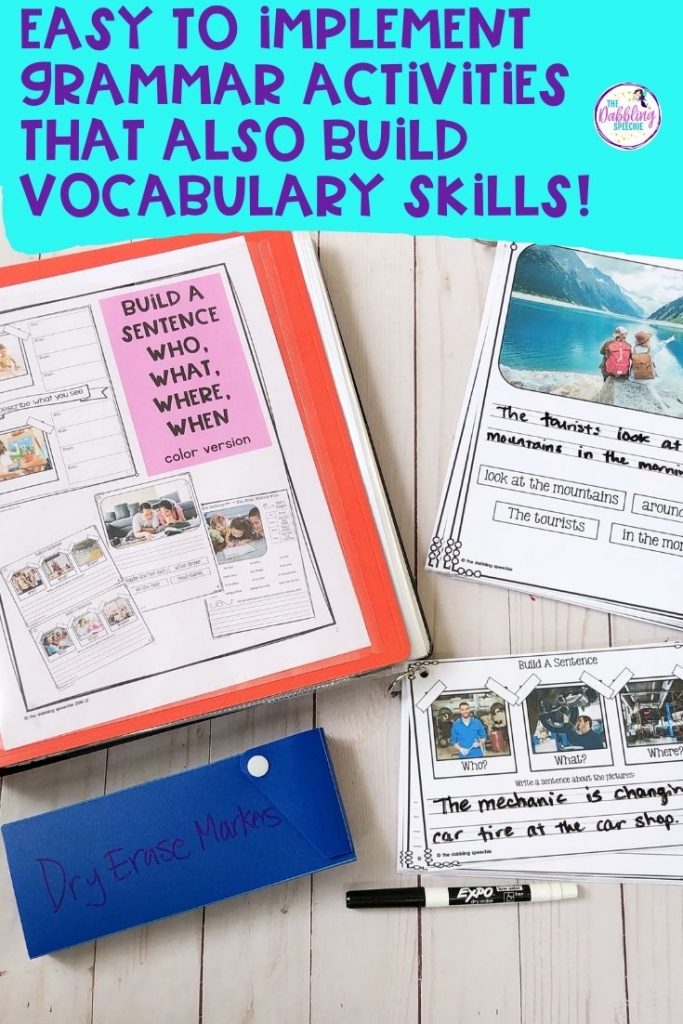
As a group, have your students describe what they see while you write it in the correct parts of the speech column. Then, your students can create sentences using the graphic organizer’s visual support.
While your students create their sentences, you can use the vocabulary from the photos. Check out these seasonal inferencing task cards if you need some themed photos with this graphic organizer.
Resources for Targeting Grammar and Vocabulary with the Sentence Graphic Organizer
There are LOTS of ways to use this sentence frame graphic organizer! Pair this with real photos (search on pixabay) or GIFS! Need help with adding GIF? Head to my YouTube video and watch at the ten-minute mark.
You can also use Simon Cats videos, picture scenes from books or comics, and the pictures from these seasonal-themed verbs and vocabulary sets. Click the link below to check out.
A Grammar Activity that Focuses on Building Vocabulary in Context
Many years ago, I had a student who struggled week after week with remembering the grammar rules. Slowly, both the student and I became frustrated with the therapy process. My student was beginning to lack confidence and motivation to practice. And I, as the clinician, was stumped on how to help my student learn the grammatical rules. The evidence-based practices of implicitly and explicitly teaching the grammar concepts weren’t working for my student.
That’s when I shifted gears to focus on the content of a sentence. Instead of hyper-focusing on grammar rules, we concentrate on what makes a complete sentence. We began making sentences with real photos that included the who, what, where, and when. To reduce the overwhelm of writing and generating sentences independently, I made scaffolded worksheets to help build confidence with this student.
Changing How You Present a Grammar Activity Can Be a Game Changer for Therapy Progress
As we continued working on building sentences with who, what, where, and when, I found that my student was engaged, participating more confidently and creating more complex sentences with less support.
And with this approach, you can also target grammar errors within the context of the sentence, so we practiced grammatical rules as we reviewed each sentence created.
You can work on building vocabulary that is related to the picture by adding adjectives, more complex verbs, and vocabulary words seen in the photo.
Language Therapy Activities for Verb Tense, Pronouns & Vocabulary
A lot of research shows that explicitly teaching the grammar rules with a cueing hierarchy is effective for learning morphemes. But, it’s hard to keep your students engaged while drilling morphology.
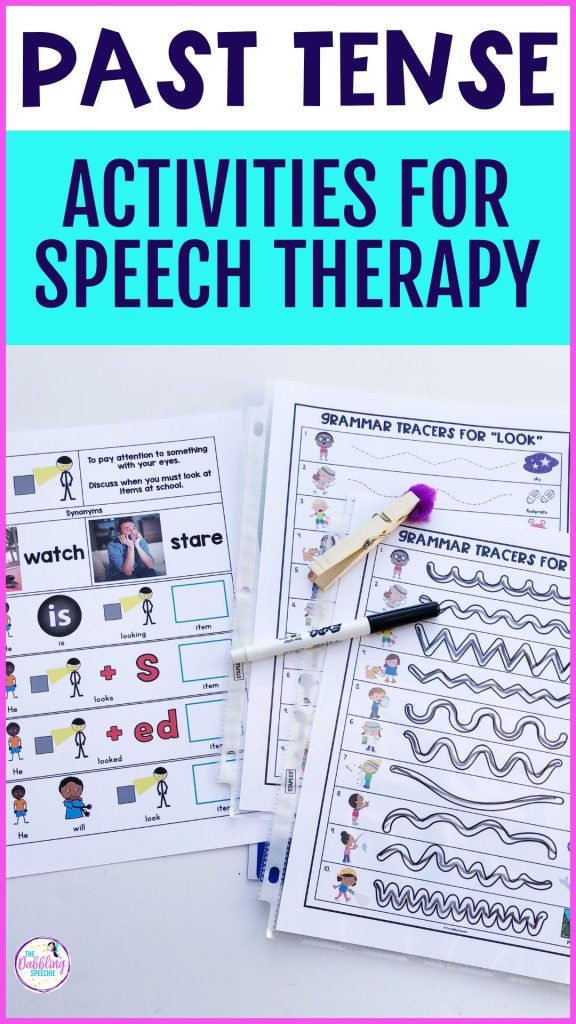
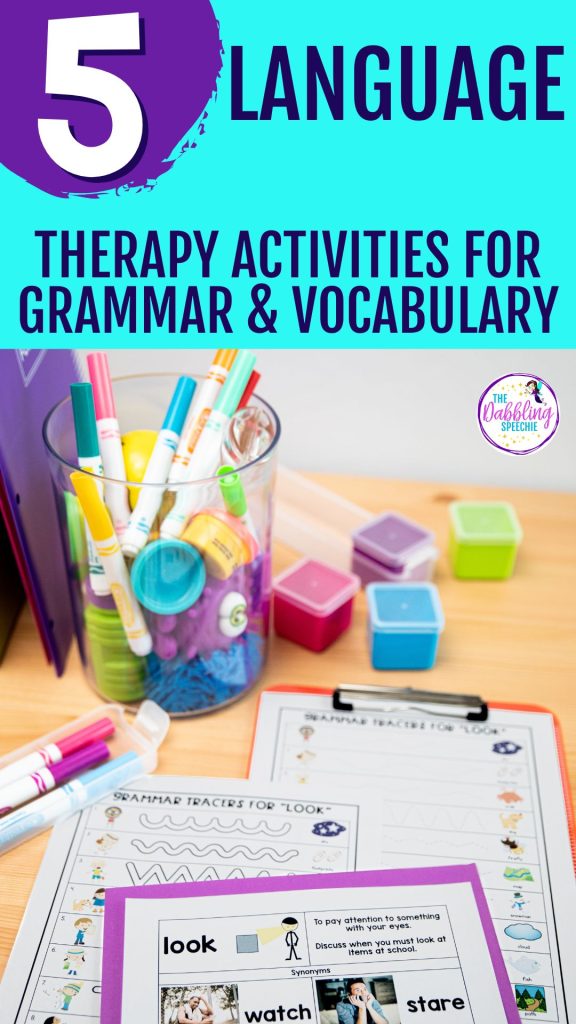
So, that’s why I came up with the Grammar Tracer worksheets. They are No Prep, incorporate tracing to keep hands engaged (and your OT happy), and provide a lot of trials with one verb at the sentence level.
You can help your students build deeper semantic networks with the targeted regular and past tense verbs by using visual supports to explain the verb in kid-friendly definitions and providing synonyms and antonyms.
You can stick these worksheets in a page protector and get many great grammar drills in a session. Often, I try to break up the session to have a drill activity and then a more play-based or hands-on lesson. If you start with these grammar worksheets, you can transition to the naturalistic activity feeling good that you got that structured practice in the therapy session.
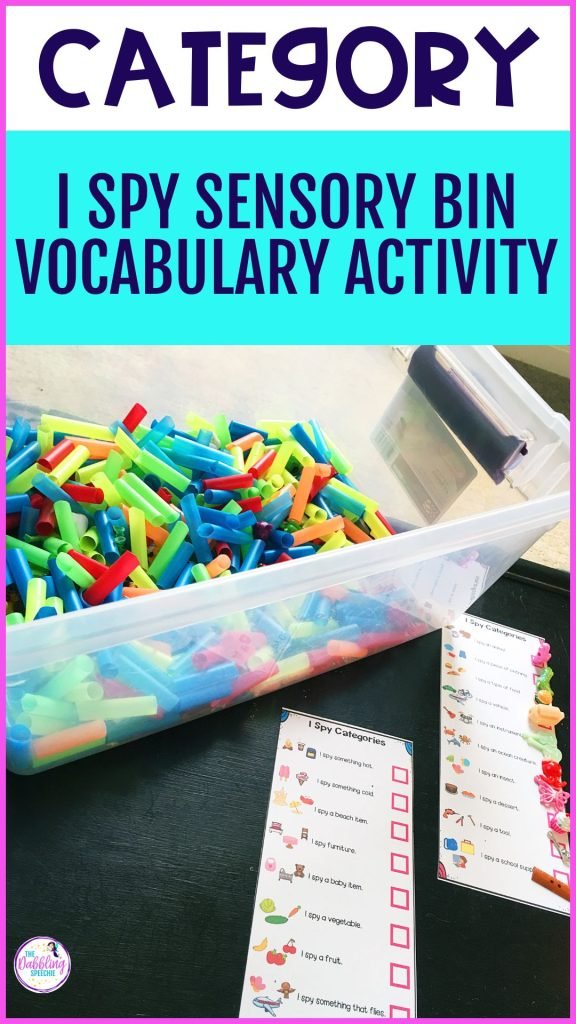
Fill the Bag: Grammar and Vocabulary Challenge
Fill a bag or box with small objects, toys, or pictures. Students take turns pulling out an item and must do the following:
1. Name the item (basic vocabulary) or share the category group the item belongs.
2. Use the item in a grammatically correct sentence.
3. Answer a question about the item to build vocabulary further (e.g. “What is it used for? or “Where would you find it?”).
Examples:
- Item: A toy airplane.
- Sentence: “The airplane flies high in the sky.”
- Question: “What kind of people use airplanes?”
Why it Works:
This activity builds expressive vocabulary through naming and functional use while simultaneously practicing grammar with sentence construction. You can pair it with worksheets that focus on categorizing or describing items.
We provide verb and vocabulary flashcards in the Themed Therapy SLP membership that would work well for this activity!

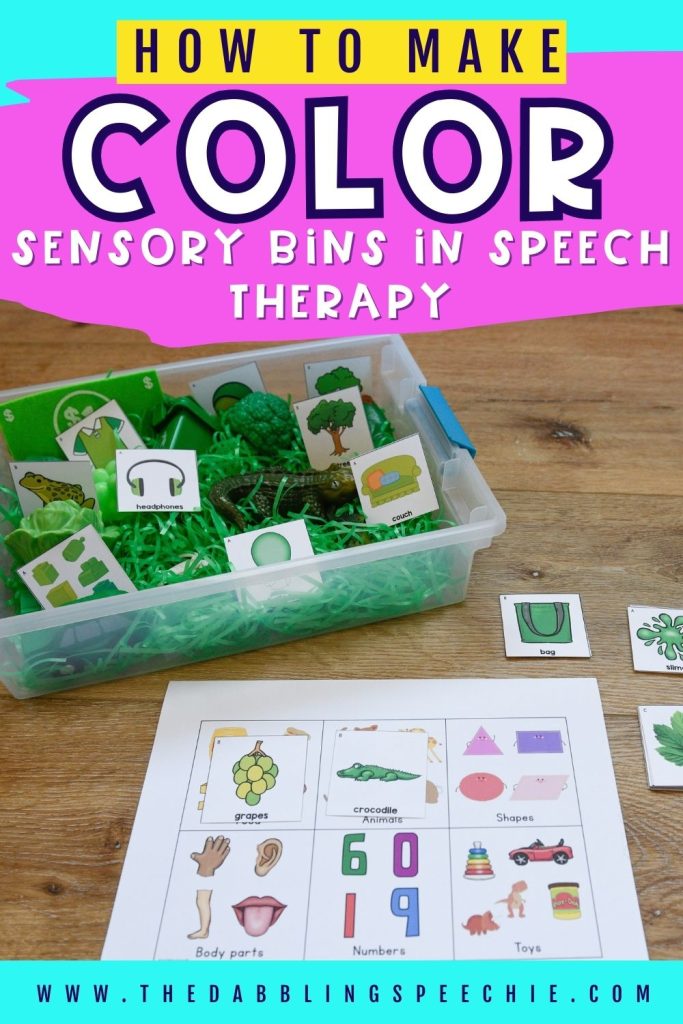
Color Sensory Bin for Vocabulary & Grammar
A similar language therapy activity would be to make a color sensory bin with plastic toys or printable picture items. You can describe them by attributes, answer wh-questions with correct sentence structure, noun-verb agreement while answering yes-no questions, and using in a sentence.
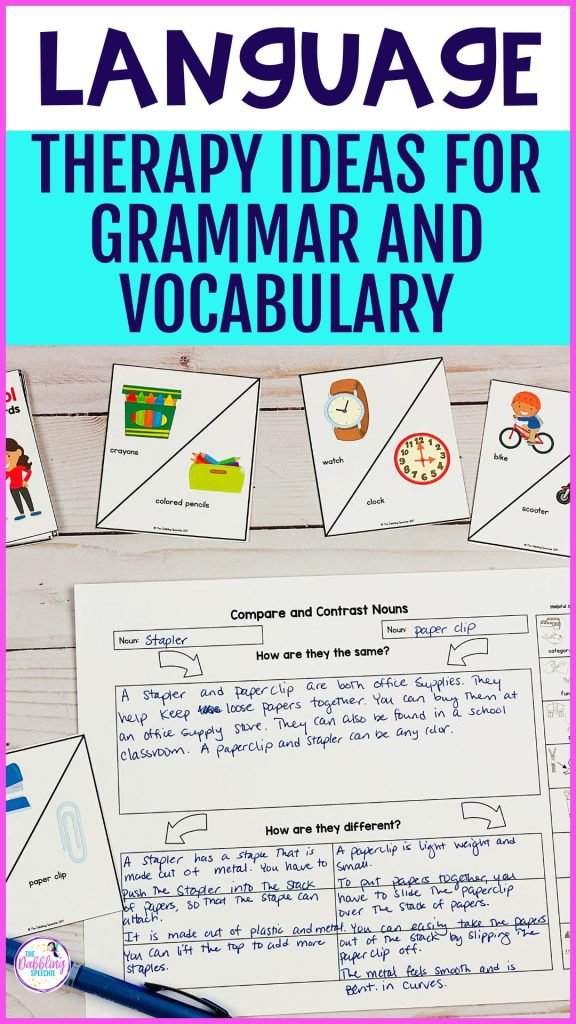
Compare and Contrast Vocabulary Items
Using a Venn diagram, you can compare and contrast vocabulary items by similar features based on category, function, size, color, location, texture and any additional details. Not only are you working on depth of knowledge with the vocabulary words, you can have students use compound and complex sentences. For students struggling with the cognitive demand of building sentences, use visual sentence strips. There are so many things to compare and contrast within different themes, book characters or YouTube videos. Watch two Simon’s Cat videos and then compare and contrast what happens in them.
What Language Therapy Activities Do You Plan for Grammar and Vocabulary Goals?
Do you have a language therapy activity or idea that helps keep your students engaged while engaging in meaningful practice? Let me know what games or materials you have used to target different grammar concepts. If you use any of these grammar resources in your therapy session, tag me on social media @thedabblingspeechie so I can celebrate your therapy wins!
It’s always an excellent grammar lesson when you keep your students engaged and build vocabulary simultaneously!