As speech-language pathologists, we know that planning engaging and practical therapy sessions can be challenging—especially when trying to target multiple goals simultaneously. But what if you could simplify your planning while keeping students engaged? Spring language activities are great for incorporating seasonal vocabulary while addressing key grammar goals!
Using spring-themed vocabulary to target syntax and morphology boosts engagement and helps students build stronger language skills. Research shows that children with language impairments need at least 36 meaningful interactions with a word to learn it truly. By weaving spring words into grammar practice, students can make real-world connections to the vocabulary they hear during spring.
In this post, I’ll share fun and effective spring language activities designed to support preschool through second-grade students. Many of these ideas can also be adapted for upper elementary learners!
Evidence-Based Practices for Grammar to Apply to Your Spring Language Activities
In this post, I’ll share fun and effective spring language activities designed to support preschool through second-grade students. Many of these ideas can also be adapted for upper elementary learners!
Students with language disorders often need explicit instruction when learning to add new morphemes to verbs and nouns. Research shows that combining implicit and explicit grammar instruction leads to significant improvements in learning grammatical forms.
- Implicit teaching involves exposing students to a morpheme without directly explaining the rule. For example, reading a book with repeated emphasis on a specific verb tense or naturally modeling grammar during a spring-themed play activity can help students pick up patterns over time.
- Explicit teaching provides direct instruction on grammar rules, helping students understand when and how to use them correctly.
If you’re looking for spring language activities that incorporate these strategies, here are three engaging grammar activities to try in your speech therapy sessions!
Teaching Methods For Expressive Grammar Skills with Spring Language Activities
- Teaching the target directly
- Modeling the target with emphasis
- Prompting the child to use the target
- Conversation Recasting the child’s errors on the target – when the SLP models what the child said with the correct grammar and emphasizing the correct morpheme such as “I do like catsssss.” You can read more about this evidence-based practice on this BLOG POST.
- Providing feedback on the child’s productions
To read more about effective grammar intervention information, you can read my blog post, HERE.
Smith-Lock, K. M., Leitao, S., Lambert, L. & Nickels, L. (2013). Effective intervention for expressive grammar in children with specific language impairment. International Journal of Language and Communication Disorders, 48(3), 265–282.
Easy Ways to Use Spring Vocabulary Words to Teach Grammar
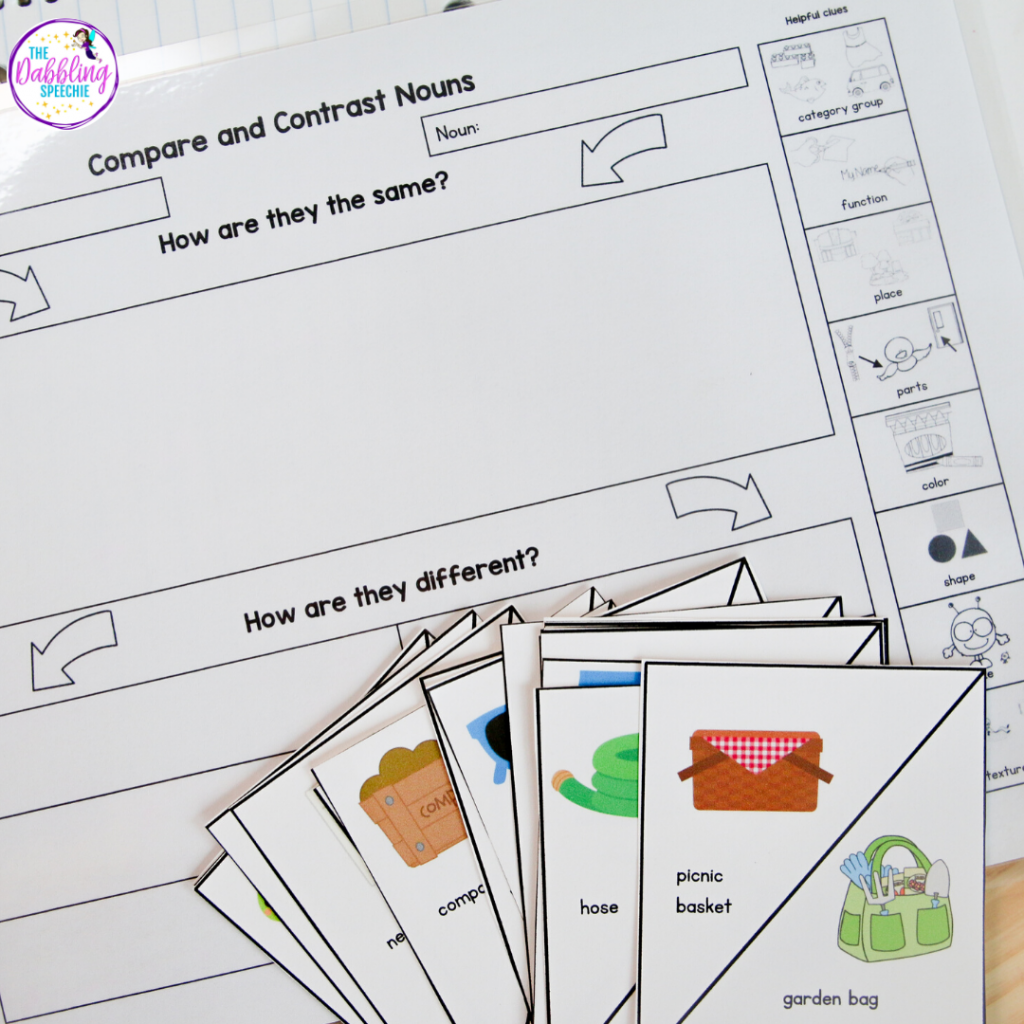
Incorporating spring vocabulary words into grammar lessons is a simple yet effective way to target multiple language goals. One engaging approach is comparing and contrasting spring-themed nouns. This not only strengthens vocabulary knowledge—by discussing categories, functions, textures, sizes, shapes, and locations—but also provides opportunities to practice transition words like because and although, as well as conjunctions like and and but.
For example, when targeting noun-verb agreement, you might say:
➡️ A water bottle has a lid, but a juice box has a seal that you punch with a straw before drinking.
You can also address singular and plural noun forms while comparing objects. For example:
✅ Hamburgers have a top and bottom bun. Hot dogs have one bun.
✅ Hamburgers have a round meat patty, while hot dogs have a long stick of meat.
By embedding spring language activities into these comparisons, students can practice grammar in a meaningful way while building stronger connections with seasonal vocabulary!
Spring Speech Therapy Themes to Use Vocabulary To Target Grammar
Use different spring themes to apply the spring vocabulary using these evidence-based practices for working on syntax and morphology. In the Themed Therapy SLP membership, we provide Prek-5th materials for spring, insects and chores during April. We also have a mini-theme for a picnic theme that includes themed verb and vocabulary flashcards, and themed vocabulary task cards to help implement these strategies with a theme-based approach.
FREE Spring Language Activity: Compare & Contrast Graphic Organizer
Looking for a visual way to help students compare and contrast nouns? This FREE spring language activity includes a compare-and-contrast graphic organizer designed to make grammar practice more engaging during spring speech therapy sessions.
Try using it with these spring-themed noun pairings:
✅ Garden bag vs. Picnic basket
✅ Rake vs. Shovel
✅ Bird vs. Kite
✅ Bug jar vs. Bug container
If you need more spring speech and language activities, my Spring Vocabulary and Grammar Activities set includes 18 additional noun pairings to expand your students’ compare-and-contrast skills! And, we have a spring, insect, chore and mini-themed unit in the Themed Therapy SLP membership.
Grammar Drill Ideas for Plural Nouns and Third-Person Singular in Spring Speech Therapy
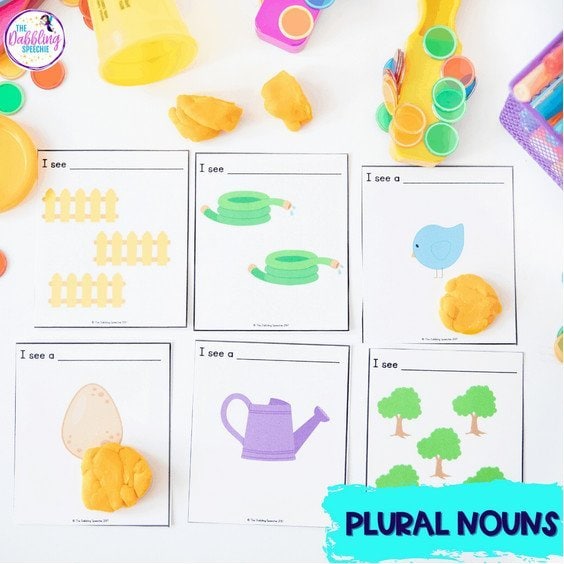
Using spring vocabulary is a great way to help students practice marking singular and plural nouns. Start by making a list of spring-themed items students may see or use, then have them practice forming plurals. For example:
✅ Hoses, birds, watering cans, trees, etc.
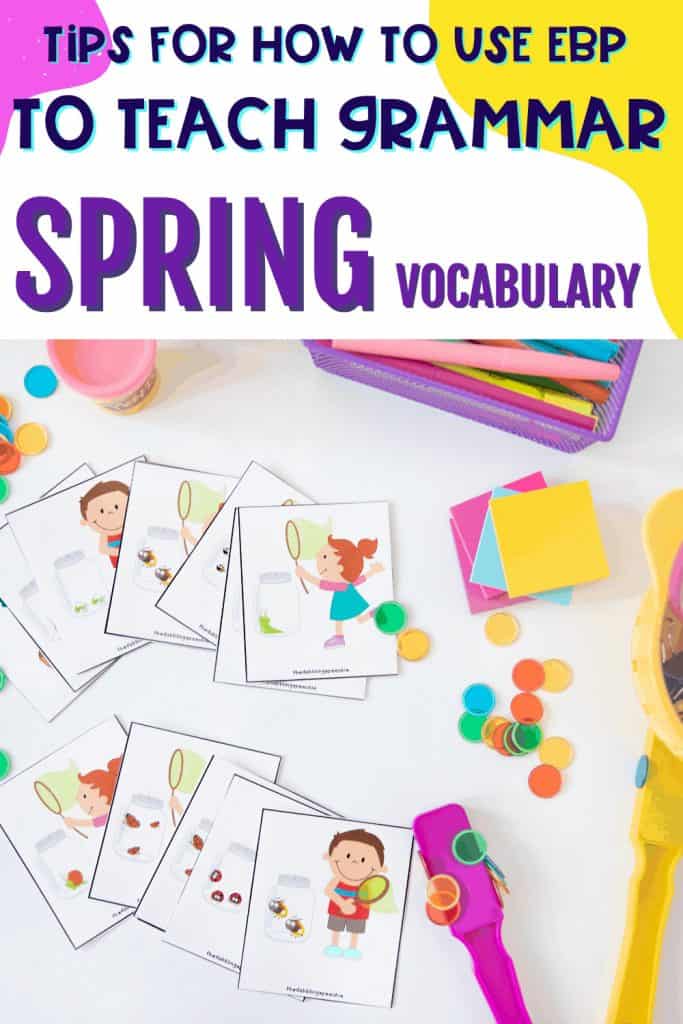
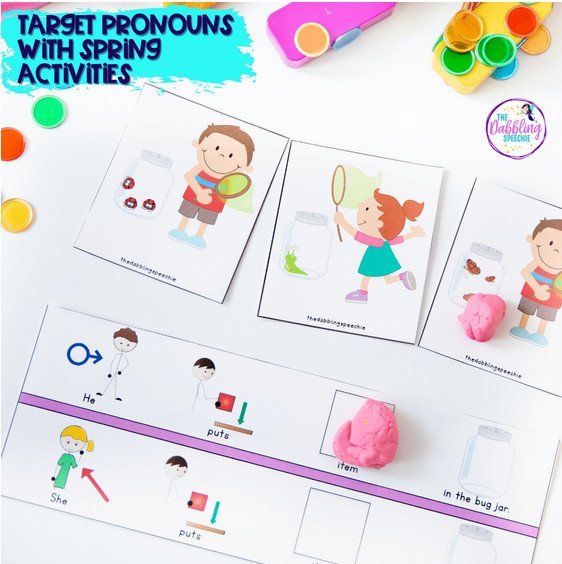
Another functional spring speech therapy drill is practicing third-person singular with seasonal vocabulary. Many kids enjoy bug hunting, so you can encourage them to describe what someone puts in a bug jar:
➡️ He puts three ladybugs in the jar.
For SLPs who love sensory bins or interactive activities, try using plastic mini insects (Amazon affiliate link) in a jar. Have students take turns adding bugs and forming sentences like:
✅ Jeremiah puts a ladybug in the jar.
✅ She puts a beetle in the jar.
You can also work on answering “who” questions by asking: Who put in a ladybug?
If you need spring task cards to support these skills, check out my Spring Grammar and Vocabulary Sets for ready-to-use resources! And, a fun way to implement this third-person singular is with a flower or insect sensory bin.
Using Spring Vocabulary to Build Grammatically Correct Sentences
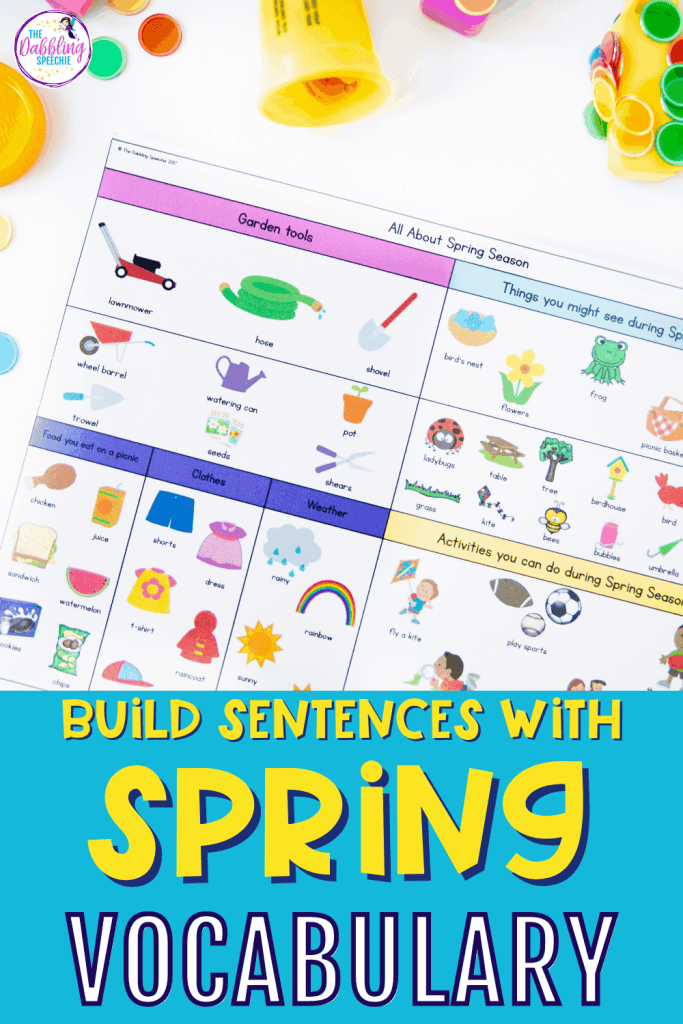
A simple yet effective way to incorporate spring language activities into your sessions is by creating a spring-themed word web with your students. Start by brainstorming everything that reminds them of spring and writing their ideas on paper. Once you have a strong vocabulary list, have students use those words to form grammatically correct sentences.
This activity provides opportunities to work on:
✅ Past and present verbs (The flowers bloomed / The flowers bloom today.)
✅ Adverbs (The rabbit hops quickly across the grass.)
✅ Prepositional phrases (The bird sings in the tree.)
✅ Noun functions (A rake is used to gather leaves.)
✅ Describing locations and parts of objects
I love using a spring vocabulary poster in my sessions—it makes it easy to discuss spring-related words while covering multiple goals in one activity. Plus, who doesn’t love low-prep spring language activities that keep students engaged while practicing important grammar and vocabulary skills!?
Spring Language Activities: Verb Movement Games for Preschool & Kindergarten
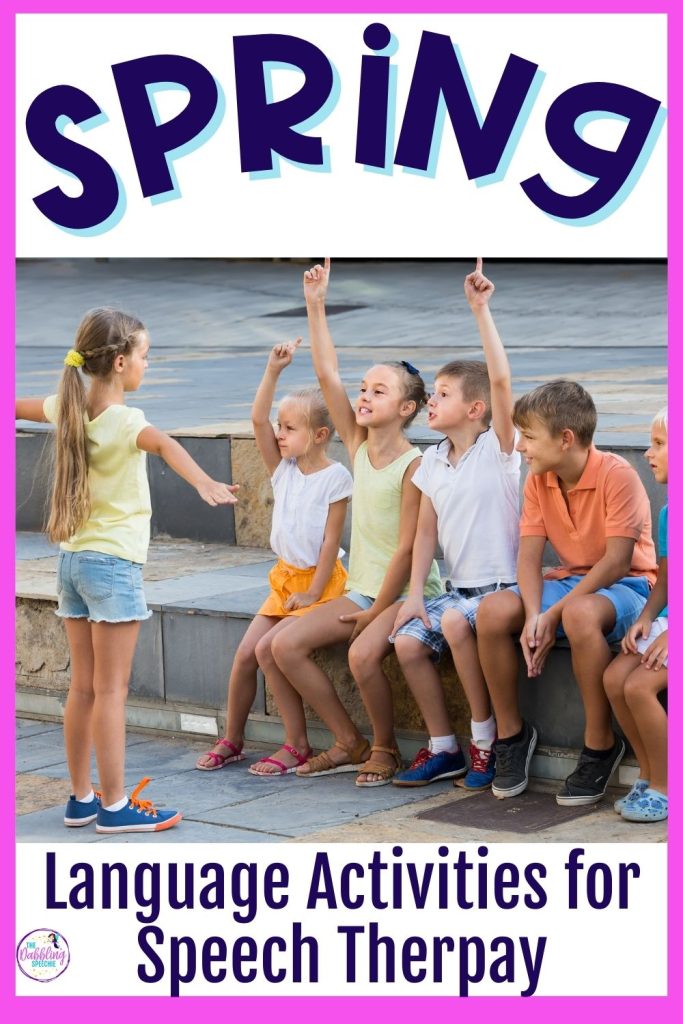
Looking for a fun way to incorporate movement into your spring speech therapy sessions? Try playing charades with spring vocabulary and verbs! This spring language activity game helps young learners practice grammar skills in an engaging, interactive way.
Here’s how to play:
1️⃣ Make a list of spring verbs or gather spring verb picture cards.
2️⃣ Put them in a hat and have students take turns picking a verb.
3️⃣ The student acts out the verb while the group tries to guess it.
4️⃣ Once the verb is identified, have students practice forming present, past, and future tense sentences using the verb.
For an easy-prep option, check out my Spring Push-In Language Lesson Plan Guides, which include a ready-to-use list of spring verbs and pictures!
👉 Want more play-based spring speech therapy activities? Check out this blog post for even more fun ideas to target speech and language goals with preschool and kindergarten students!
Speech Therapy Games with Spring Vocabulary Words
Incorporating spring vocabulary words into speech therapy games is a fun way to keep students engaged while targeting language goals. Try these interactive spring language activities to practice grammar, vocabulary, and sentence structure:
✅ Word Associations – Choose a spring verb like blowing and have students brainstorm related words. For example, a kite blows in the wind or you can blow bubbles in the spring air.
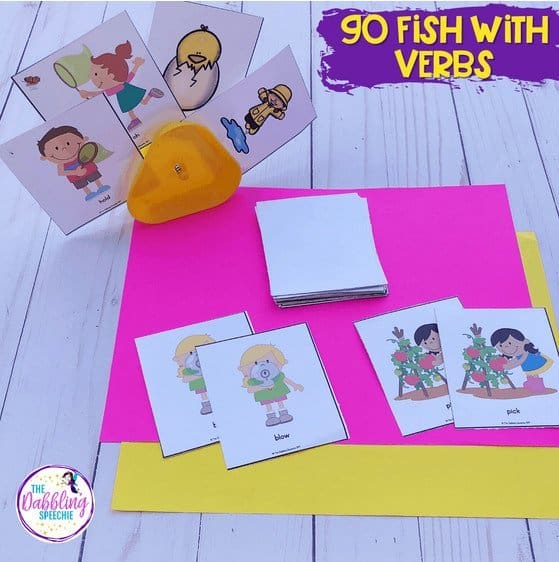
✅ Go Fish with Spring Words – Use spring-themed vocabulary or verbs as stimulus items for a fun, low-prep game.
✅ Flashlight Word Hunt – Turn off the lights and shine a flashlight on vocabulary words displayed around the room. Students take turns finding and saying the words.
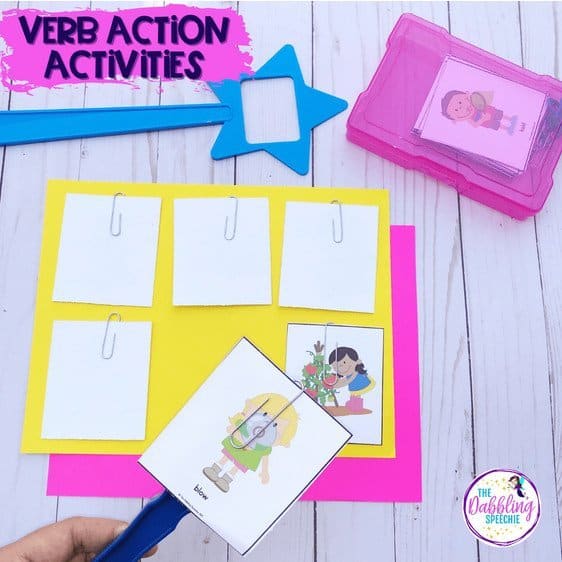
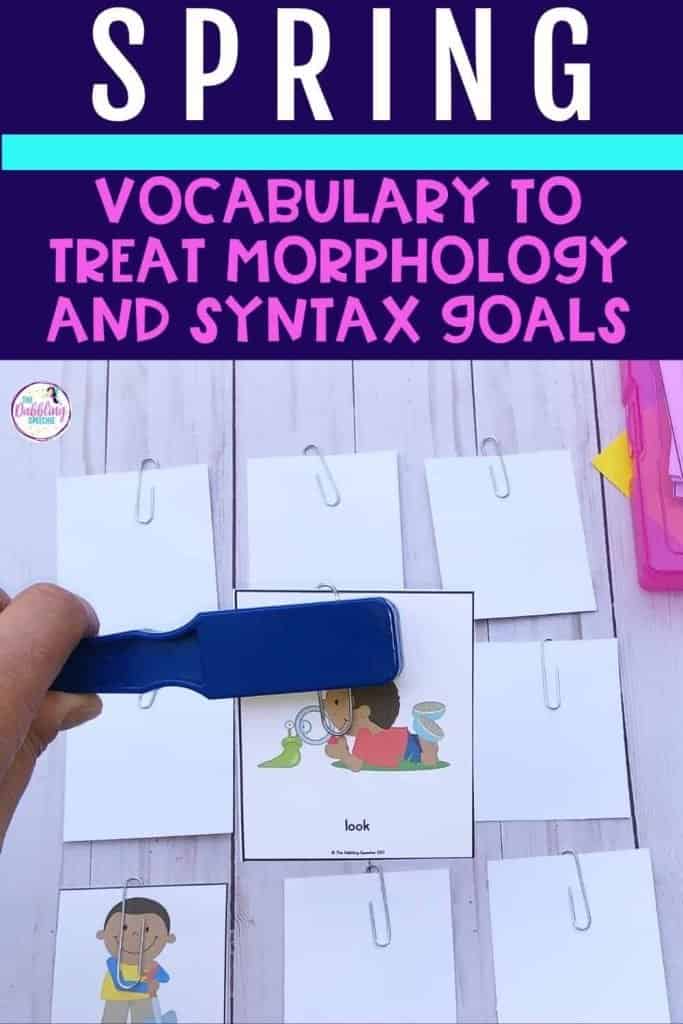
✅ Magnetic Wand Game – Attach paper clips to spring vocabulary or verb cards and turn them face down. Students use a magnetic wand to select a card. Hide a token under one of the cards—the student who finds the token wins! You can find even more magnetic wand ideas here.
These spring speech therapy games make learning fun and interactive while reinforcing essential language skills!
How Do You Use Spring Vocabulary in Therapy?
I would love to know all the ways you are planing spring language activities to work on grammar and vocabulary goals. Share your ideas in the comments! If you need more spring speech therapy ideas to use with your mixed groups, my replay Facebook LIVE can help give you some easy spring speech and language activities to do in your therapy sessions.