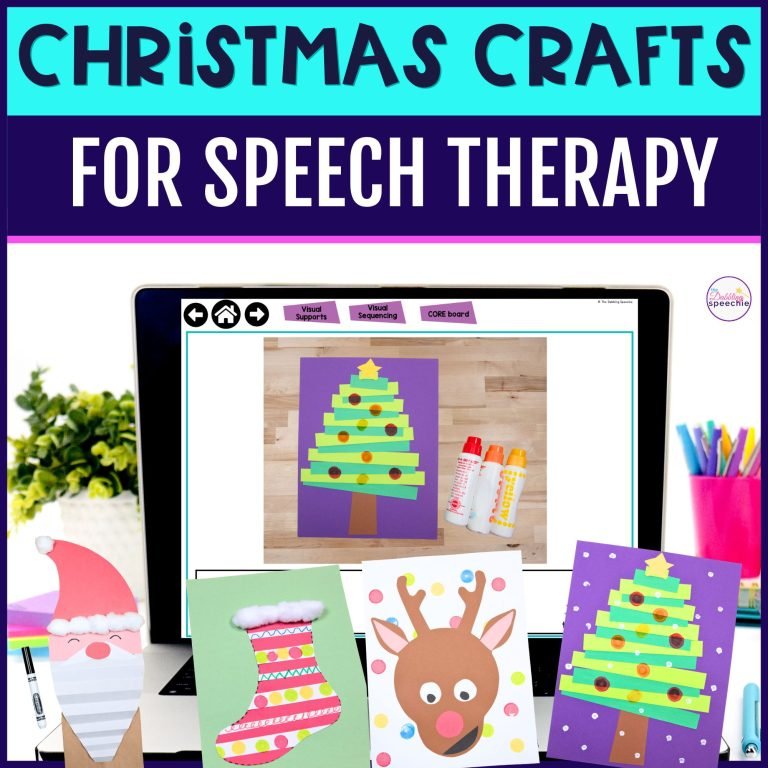


Looking for fresh ideas for your spring speech therapy activities? When the seasons shift and everything starts to bloom, it’s the perfect time to bring that energy into your speech sessions. Whether you’re working with preschoolers or elementary-aged students, having themed materials on hand can boost engagement and make planning a breeze. In this post, you’ll find a variety of spring speech therapy activities—from book pairings and crafts to low-prep games—that support your students’ speech and language goals while keeping sessions fun and functional.
One of the easiest ways to bring meaningful spring speech therapy activities into your sessions is by pairing them with engaging picture books. Spring books in speech therapy can target vocabulary, sequencing, grammar, comprehension, and articulation goals while keeping kids motivated through rich visuals and seasonal themes.
The books listed below by age level are included in the Themed Therapy SLP membership, which means you’ll have access to book cheat sheets, companion activities, story maps, and extension ideas to help streamline planning.
These books are perfect for little learners working on basic concepts, simple sentence structures, and early vocabulary:
Lola Plants a Garden by Anna McQuinn
In the Garden by Tim McCanna
Use these stories to explore character emotions, cause/effect, story retell, and more:
Bear Wants More by Karma Wilson
Spring is Here by Will Hillenbrand
Busy Spring, Nature Wakes Up by Sean Taylor
These spring books work well for higher-level language goals like inferencing, perspective taking, and summarizing:
Florette by Anna Walker
Harlem Grown by Tony Hillery
Miss Rumphius by Barbara Cooney
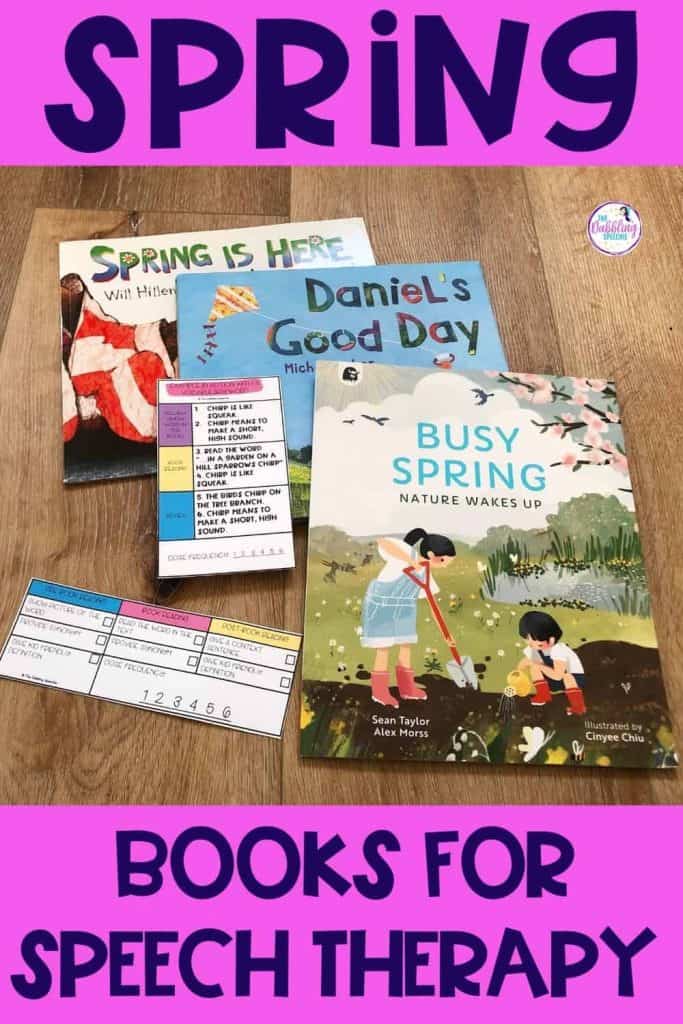
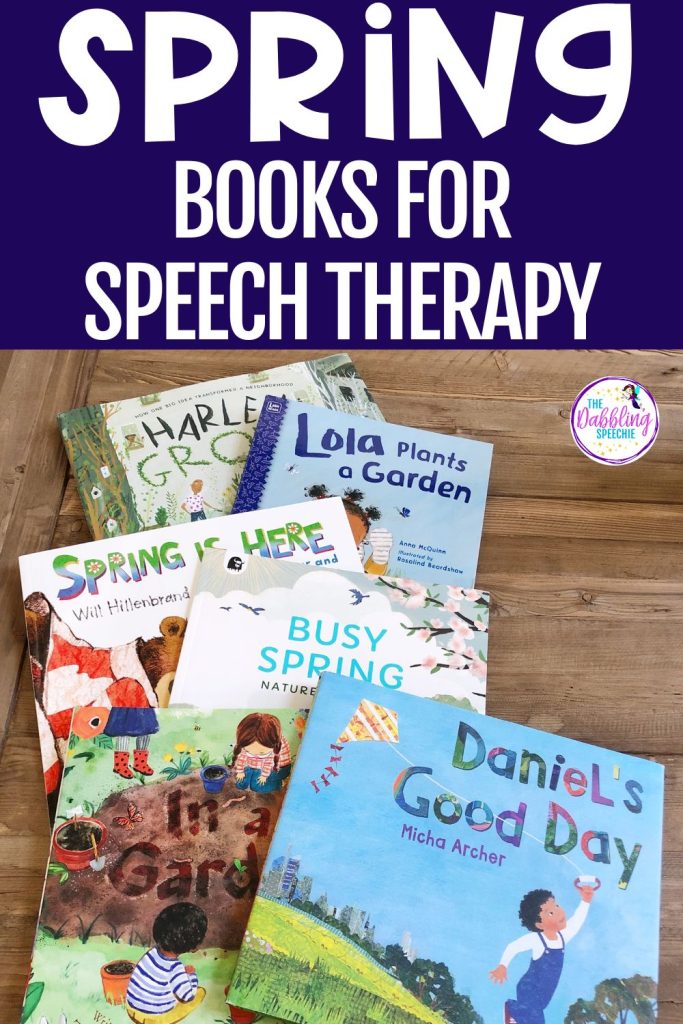
If you’re looking to expand your spring therapy library, these additional titles are perfect for bringing the season into your sessions. While they aren’t part of the Themed Therapy SLP membership, they still offer plenty of opportunities for engaging spring speech therapy activities. Use them to work on story retell, describing, vocabulary, and grammar in a way that feels fresh and fun.
Planting a Rainbow by Lois Ehlert – great for labeling, describing, and sequencing how a garden grows.
Plant the Tiny Seed by Christie Matheson – interactive and perfect for following directions or talking about plant life cycles.
Worm Weather by Jean Taft – excellent for comparing spring weather and using action verbs.
When Spring Comes by Kevin Henkes – ideal for comparing seasons and identifying changes in nature.
Up in the Garden and Down in the Dirt by Kate Messner – targets complex sentences, compare/contrast, and life science vocabulary.
Goodbye Winter, Hello Spring by Kenard Pak – use for describing scenes and practicing conversational exchanges.
Kite Day by Will Hillenbrand – simple sentences for younger learners; great for sequencing and verbs.
Spring Stinks by Ryan T. Higgins – perfect for perspective taking, emotions, and humor in language.
Keep these books on hand to rotate into your sessions throughout the spring months, or build themed lessons around them to keep therapy fresh and aligned with the season.
Incorporating play-based spring speech therapy activities is a fun and effective way to increase engagement—especially for preschool and early elementary students. Using seasonal toys and pretend play themes allows you to target a wide range of speech and language goals while keeping things natural and motivating.
If you’re looking for ideas, check out these blog posts packed with inspiration:
To make planning easier, we’ve created a Spring Toy Guide with links to favorite toys, sensory bin materials, and games that are perfect for your themed sessions. You can explore all of our recommended items in the Spring Toys & Games section of our Amazon storefront.
From gardening kits and insect catchers to picnic playsets and weather-themed toys, you’ll find resources to support expressive language, turn-taking, WH-questions, sequencing, and more.
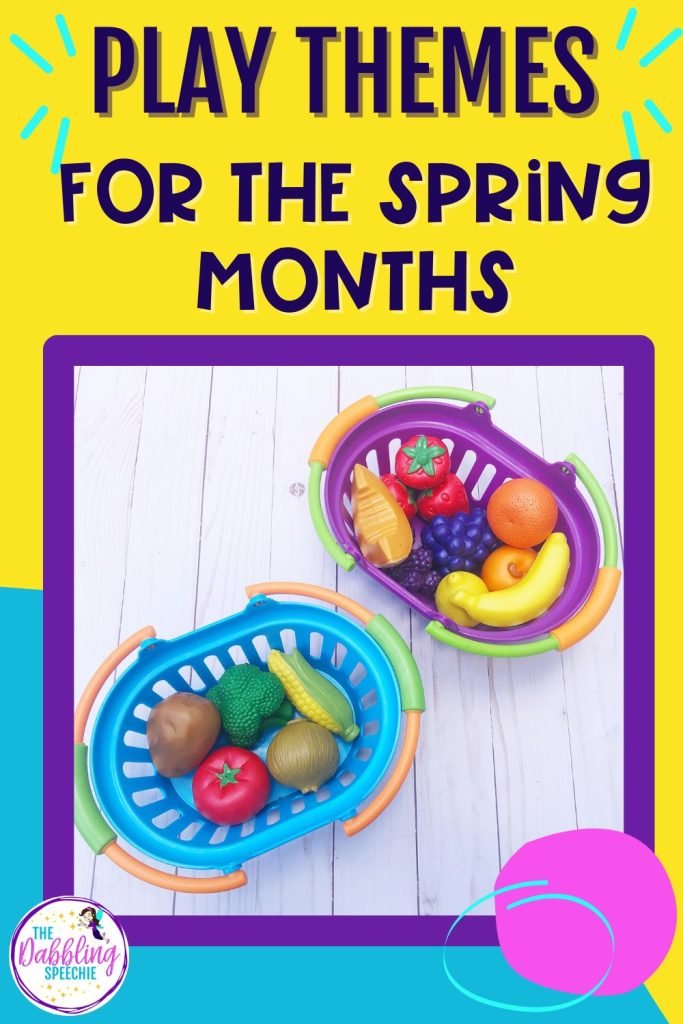
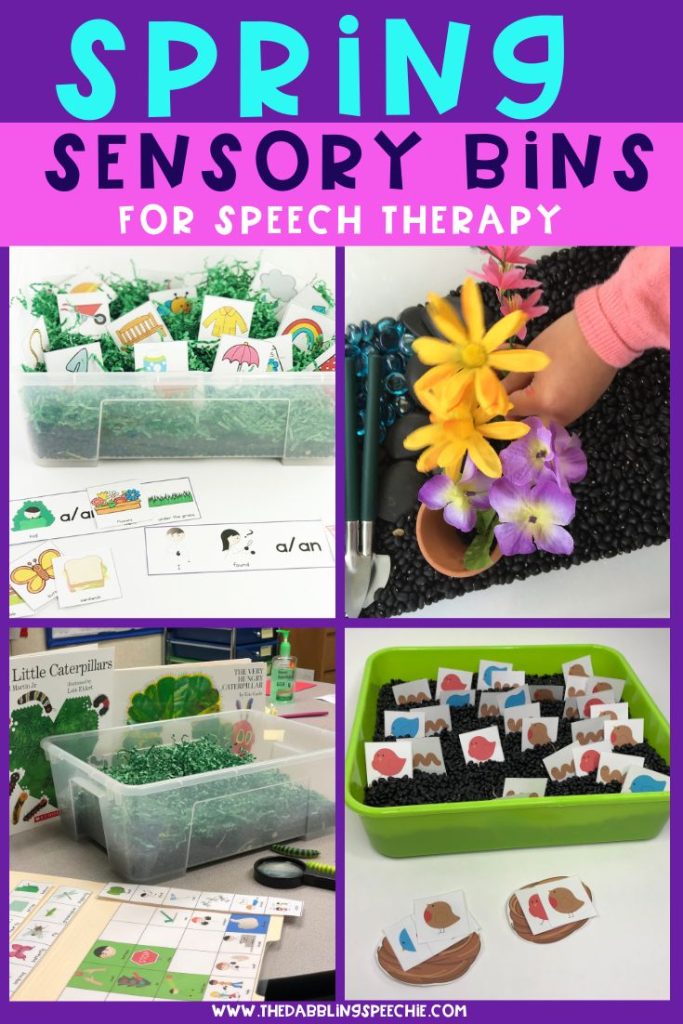
Sensory bins are a hands-on way to bring spring speech therapy activities to life. These themed bins offer tactile experiences that keep students engaged while targeting a variety of goals, including articulation, sentence formation, following directions, and vocabulary. They’re especially helpful for mixed groups or when you need a low-prep, high-interest activity that works across grade levels.
You can explore a variety of themed ideas in this blog post:
👉 Spring Sensory Bins for Speech Therapy
Some favorite spring sensory bin themes include:
Insects and bugs with mini tongs for describing, sorting, and categorizing
Gardening bins with faux flowers, seeds, and scoops for sequencing and spatial concepts
Weather bins with cotton balls (clouds), pom-poms (rain), and sun erasers to practice WH-questions
Easter or egg hunt bins with mini eggs for articulation words or language prompts inside
Pair your bins with themed mini objects, task cards, or story companions for a complete session.
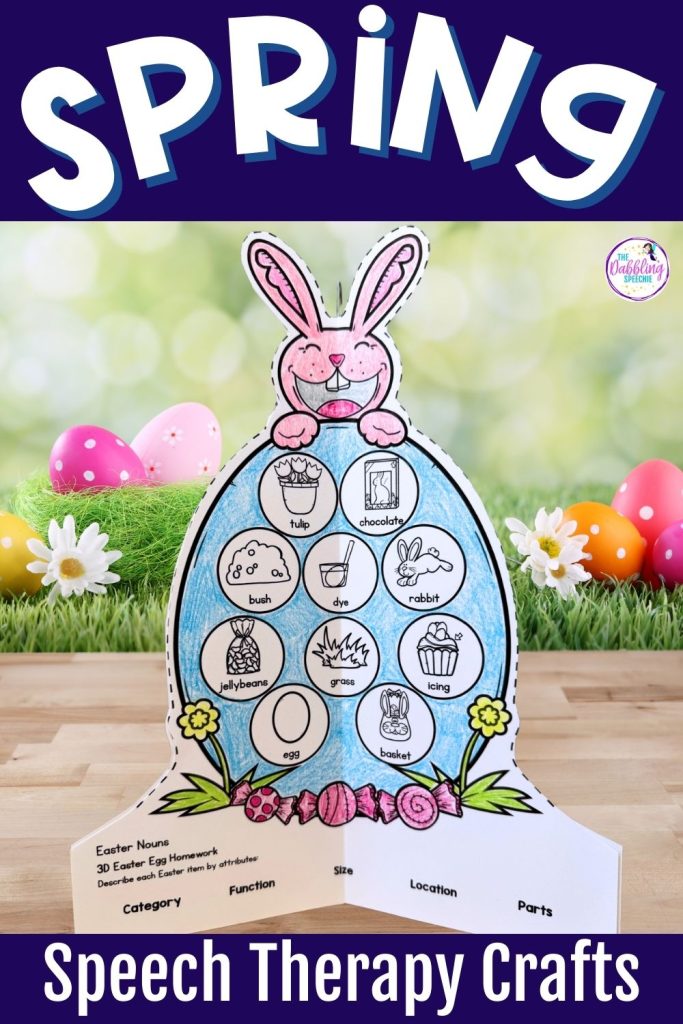
When it comes to engaging your students during the season, crafts are a go-to spring speech therapy activity that can support a wide range of language and articulation goals. Whether you’re working in small groups or classroom-based therapy, crafts offer built-in opportunities for following directions, sequencing, describing, and sentence formulation—all while keeping hands busy.
If you want to plan spring speech therapy activities with crafts, you will spark engagement with your students and find lots of ways to adapt the craft activity to cover goals. Below are a few of my favorite spring speech therapy crafts you can use with your whole caseload:
This craft lets students decorate a 3D Easter egg while working on Easter vocabulary, articulation targets, or language concepts like size, color, or spatial words, perfect for students who celebrate Easter.
Use this spring-themed butterfly craft to target articulation and language goals in a hands-on way. Students can create their butterfly and practice target words, describe the parts of the butterfly, or sequence the steps of the craft.
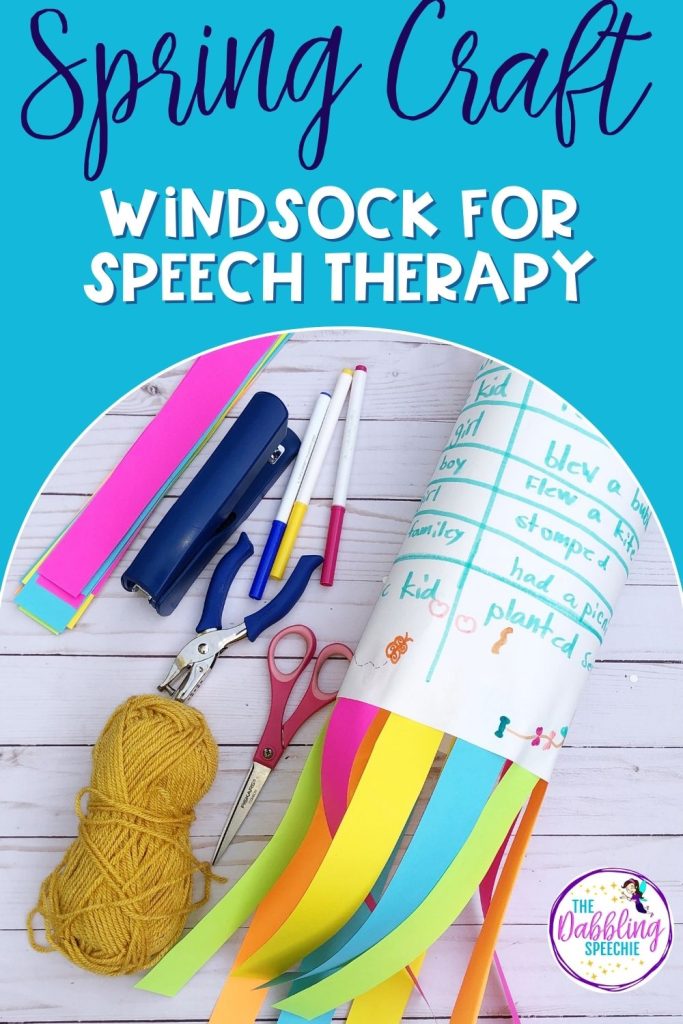
The Windsock Craft is another favorite spring speech therapy activity, especially for weather themes. You can use it to work on sequencing, verbs, describing the wind, or even comparing windy vs. calm weather. This craft is perfect for visual and hands-on learners and works great for mixed groups.
Whether you’re working on articulation carryover or expanding sentence length, spring crafts can make your spring speech therapy activities more interactive, functional, and memorable.
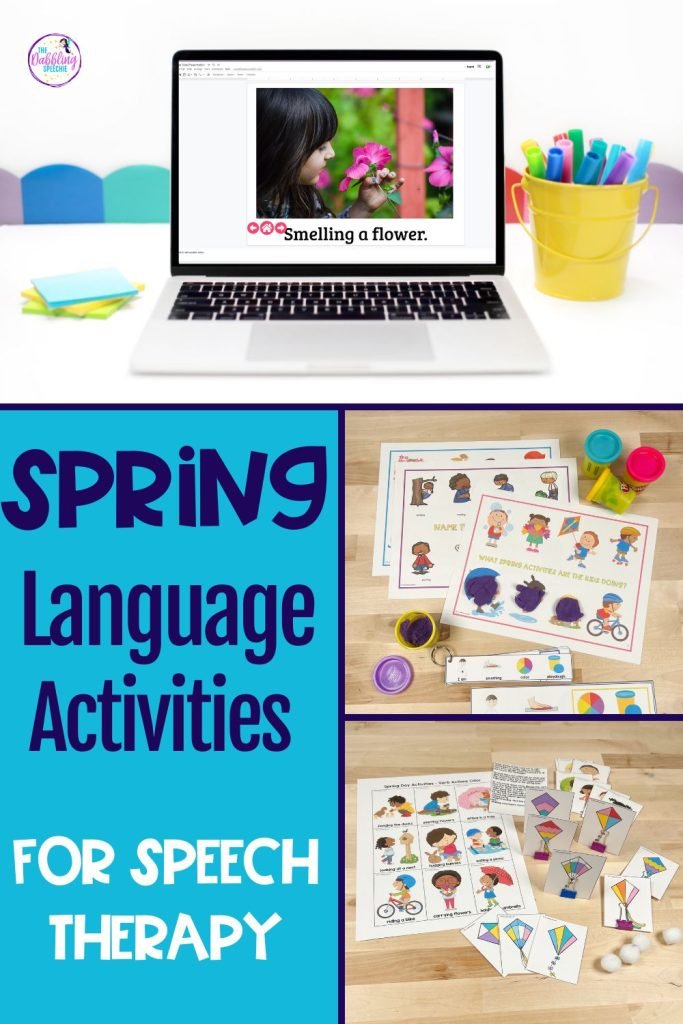
Spring is the perfect time to build language skills with engaging, themed activities that support grammar, vocabulary, sentence formulation, and comprehension. Whether you’re doing small group sessions or classroom-based therapy, these spring speech therapy activities can help you cover a wide range of language goals with minimal prep.
Need a ready-to-go lesson for your classroom visits? These themed push-in plans are perfect for PreK–2nd grade and cover core language skills in fun, structured ways:
Bugs Speech Therapy Push-In Language Lesson Plans – includes BINGO sheets, verb action visuals, noun function cards, and a full lesson plan
Spring Language Lesson Plan for Push-In – includes spring-themed books, songs, vocabulary visuals, and group activities
These plans are ideal for targeting WH-questions, core vocabulary, grammar, and more in a classroom-friendly format.
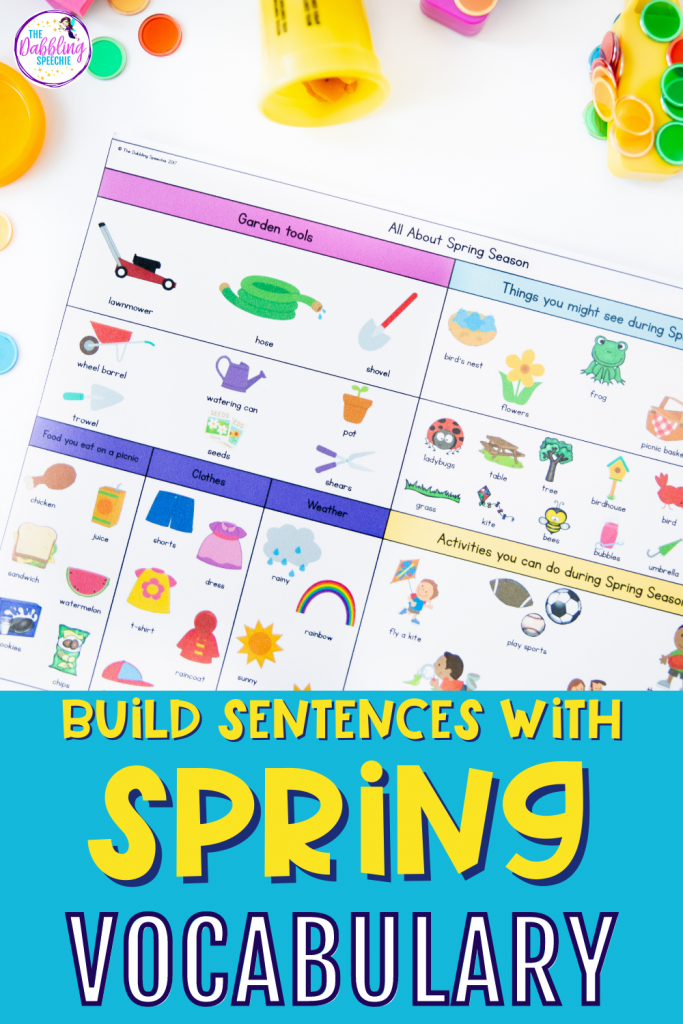
These Spring Vocabulary Activities make it easy to target a variety of language goals:
Verbs and irregular past tense
WH-questions and describing
Categories and grammar
Great for mixed groups or center-based practice!
The Spring unit in the Themed Therapy SLP membership is packed with materials that support expressive and receptive language goals, including:
Verb and vocabulary flashcards
Sequencing short stories
Book companions
Vocabulary task cards
Non-fiction passages
👉 Explore the membership here to simplify your planning and deliver meaningful spring speech therapy activities for every language goal.
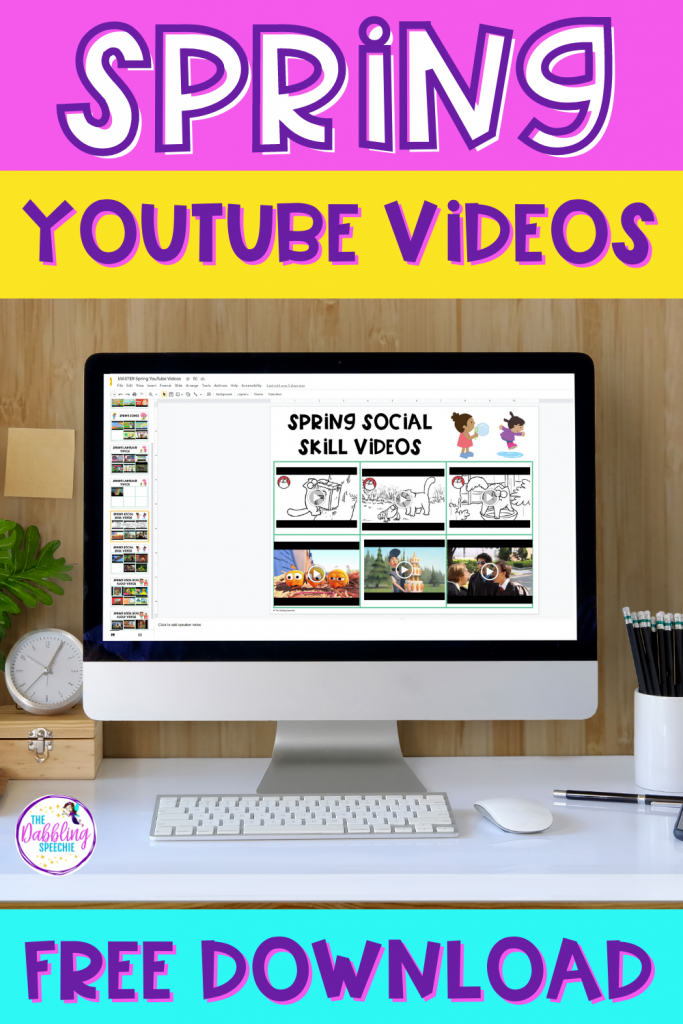
If you’re looking to add variety to your spring speech therapy activities, YouTube videos can be a game-changer—especially for teletherapy or group sessions. Videos grab your students’ attention, build background knowledge, and can be used to target comprehension, vocabulary, grammar, and more.
To make it easy, I created a FREE Google Slide with all the best spring-themed YouTube videos organized by category (e.g., songs, movement breaks, science clips, and more).
👉 Check out the full Spring YouTube Videos blog post here to grab your free resource!
A few favorite ways to use these videos:
Pause and describe what’s happening in the video to practice using verbs or adjectives
Answer WH-questions after watching a short clip
Use movement songs as reinforcers between drill-based tasks
Tie in a short spring science video with a related book or vocabulary lesson
Whether you’re in person or online, these spring speech therapy videos can keep your sessions fun, functional, and low prep.

Want a no-prep way to target articulation and language goals while keeping kids laughing and engaged? The Simon’s Cat wordless videos are a hit for spring speech therapy activities—especially when paired with visual supports.
To make planning even easier, I’ve created Spring Speech Therapy Simon’s Cat Cheat Sheets that go along with six wordless short videos. Each cheat sheet includes:
Articulation word lists (including mixed group targets)
WH-questions and vocabulary prompts
Story retell guides
Inference and perspective-taking questions
👉 Grab the full resource on Teachers Pay Teachers here
These videos are ideal for mixed groups, teletherapy, or in-person sessions when you need something flexible and fun. Because the clips are wordless, they’re perfect for prompting expressive language, inferencing, and storytelling—and they work across a wide age range.
It can be a little trickier to keep upper elementary and middle school students engaged with seasonal themes, but there are plenty of spring speech therapy activities that are relevant, functional, and age-appropriate. Here are several ways to bring spring into your sessions for older students—without needing hours of prep time.
Explore spring-related questions like Do all plants bloom? or Why do the seasons change? using Wonderopolis articles. These short, engaging texts are perfect for:
Summarizing
Vocabulary building
Sentence combining
Answering inferential and literal questions
Mystery Science offers short videos and lessons on spring topics like pollination, plant reproduction, and seasonal weather. Use these to work on:
Tier 2 vocabulary
Cause/effect
WH-questions
Sentence formulation
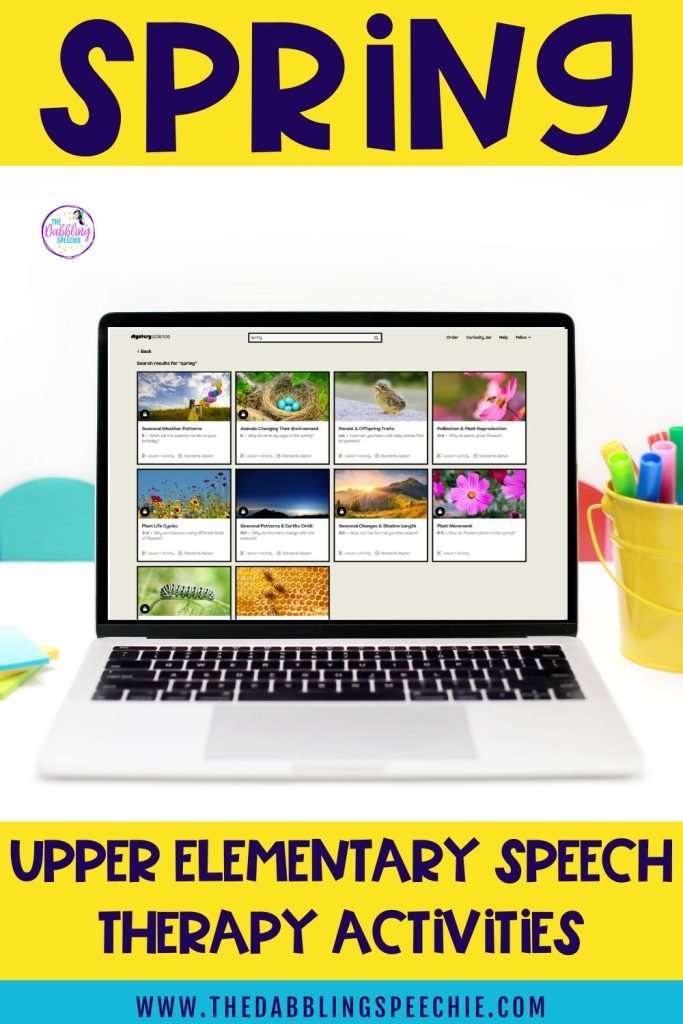
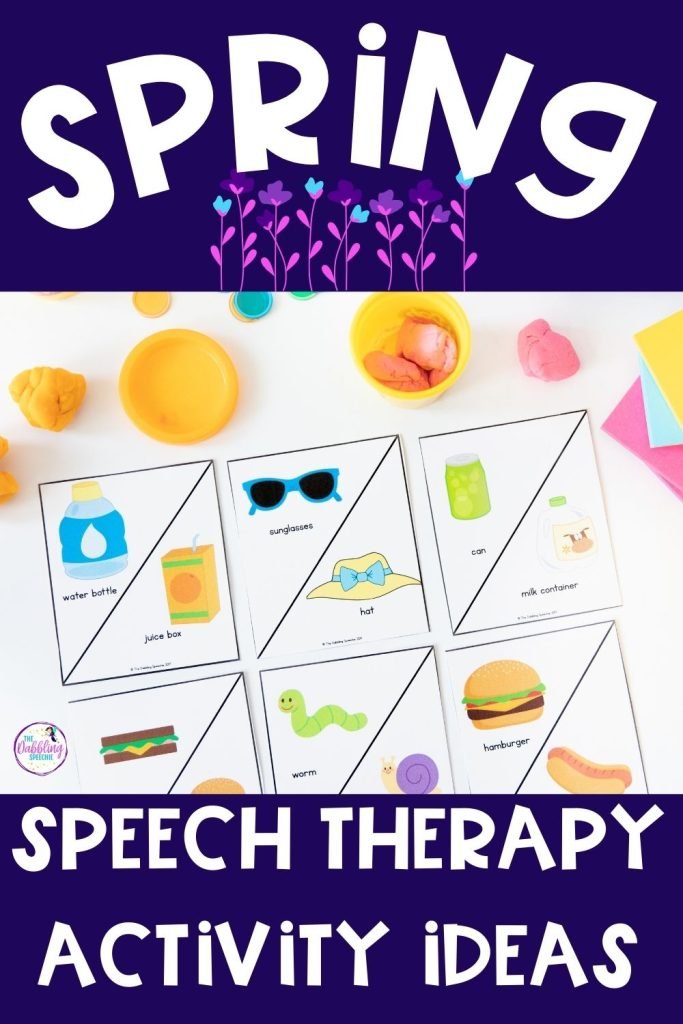
Choose spring nouns (e.g., flower vs. tree, butterfly vs. bee) and have students compare and contrast using key features. Pair this with the Expanding Expression Tool (EET) to scaffold descriptive language and support expressive language goals. There are spring vocabulary compare and contrast flashcards. Check out the no-prep spring speech therapy unit if you need to compare and contrast graphic organizers.
Try this free Earth Day lesson plan from Lit in Focus—no prep needed!
Get spring and Earth Day-themed book recommendations from Your Thrifty Co Teacher that work beautifully for comprehension, discussion, and summarizing.
Grab some paint chips and have students create a spring synonym garden! This writing extension helps build vocabulary and is a creative way to explore shades of meaning. You can find inspiration here.
Here are some spring idioms to spark discussion, make inferences, and work on figurative vs. literal meaning in speech therapy:
Spring into action – to start doing something quickly and energetically
A spring in your step – to feel cheerful or energetic
No spring chicken – someone who is no longer young
Hope springs eternal – people will always be hopeful
Spring fever – restlessness or excitement that comes with springtime
Put a spring in someone’s step – to make someone feel happier or more energetic
Full bloom – when something is at its best or most successful stage
May-December romance – a relationship between someone younger and someone older (can be adapted for context)
Make hay while the sun shines – take advantage of opportunities while they last
Come out of the woodwork – when people appear suddenly, often unexpectedly
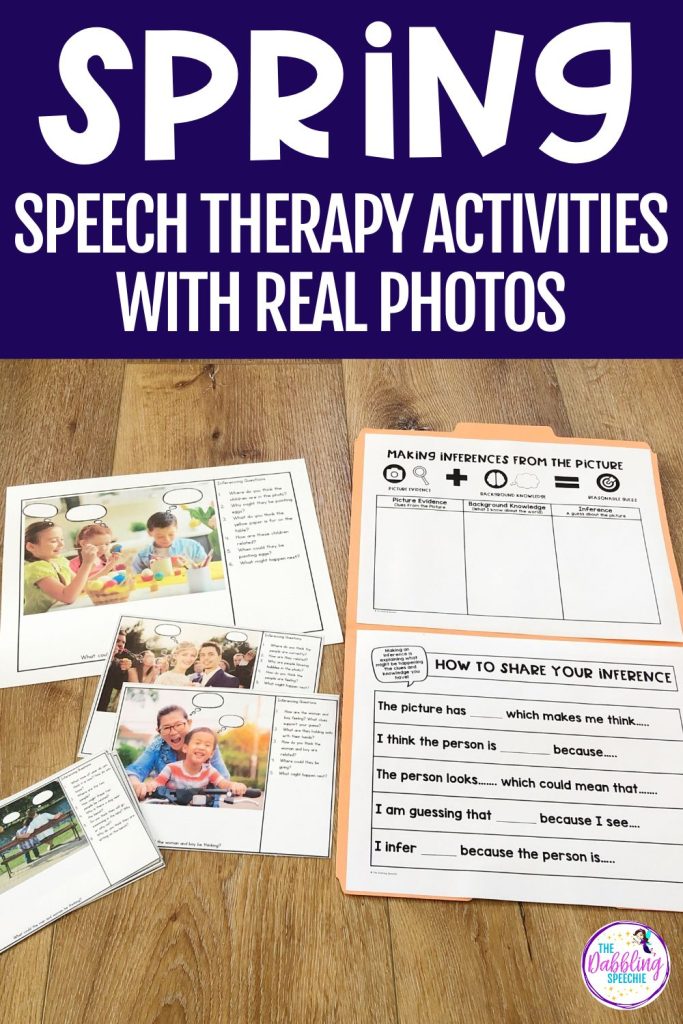
Real spring photos can spark rich conversations and make abstract concepts more concrete—especially for students who need visual support to access language. You can use real-life images to target a wide variety of speech and language goals:
Describing: Use visuals to describe what they see (e.g., color, size, category, function)
Comparing/Contrasting: Show two similar photos (e.g., tulips vs. daffodils) to work on similarities and differences
WH-Questions: Ask who, what, where, when, and why questions based on the photo scene
Story Generation: Use a photo as a prompt to create a short spring-themed narrative
Articulation: Use photos to elicit target words in context (e.g., “bunny,” “basket,” “flower”)
All of these sites allow free use for educational purposes—perfect for creating your own visuals, slides, or task cards.
If you want ready-to-go materials using real spring pictures, try these:
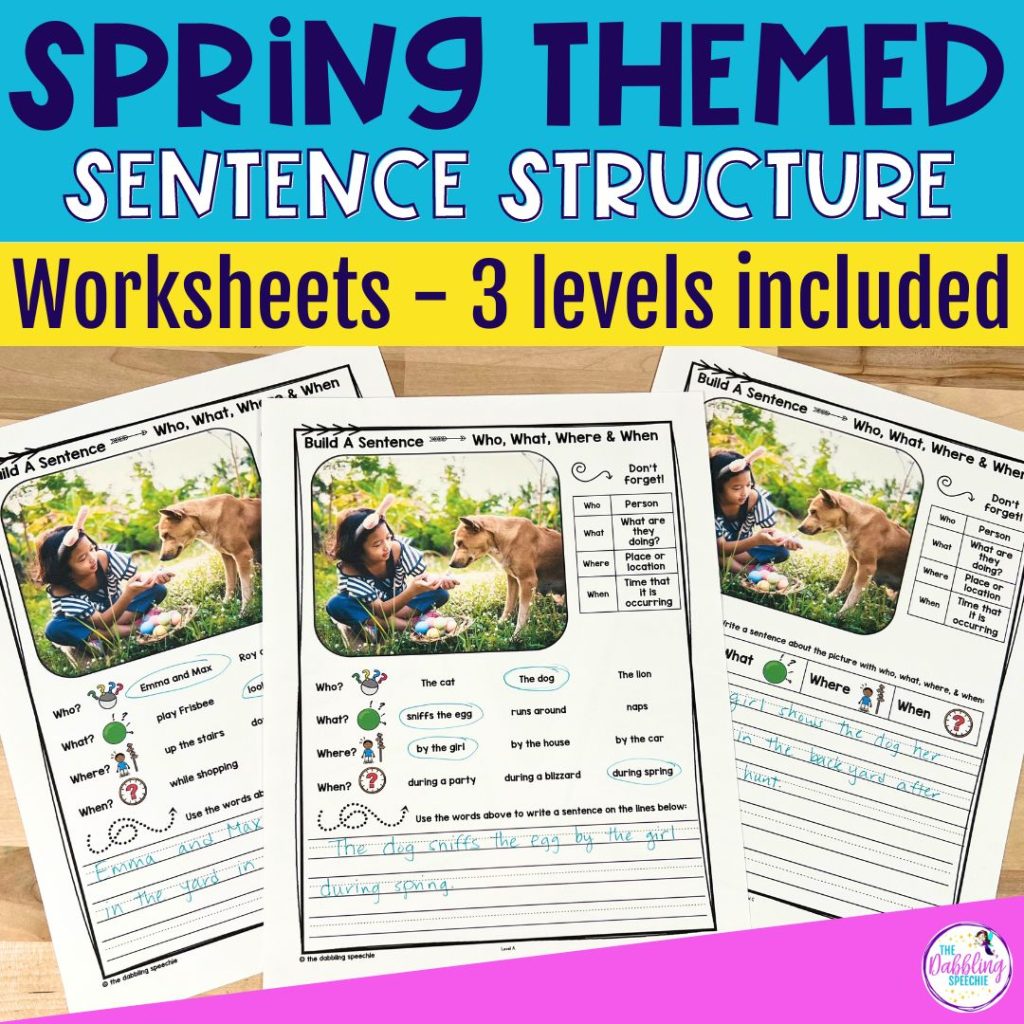
Spring Sentence Building Worksheets With Pictures – great for grammar, syntax, and vocabulary
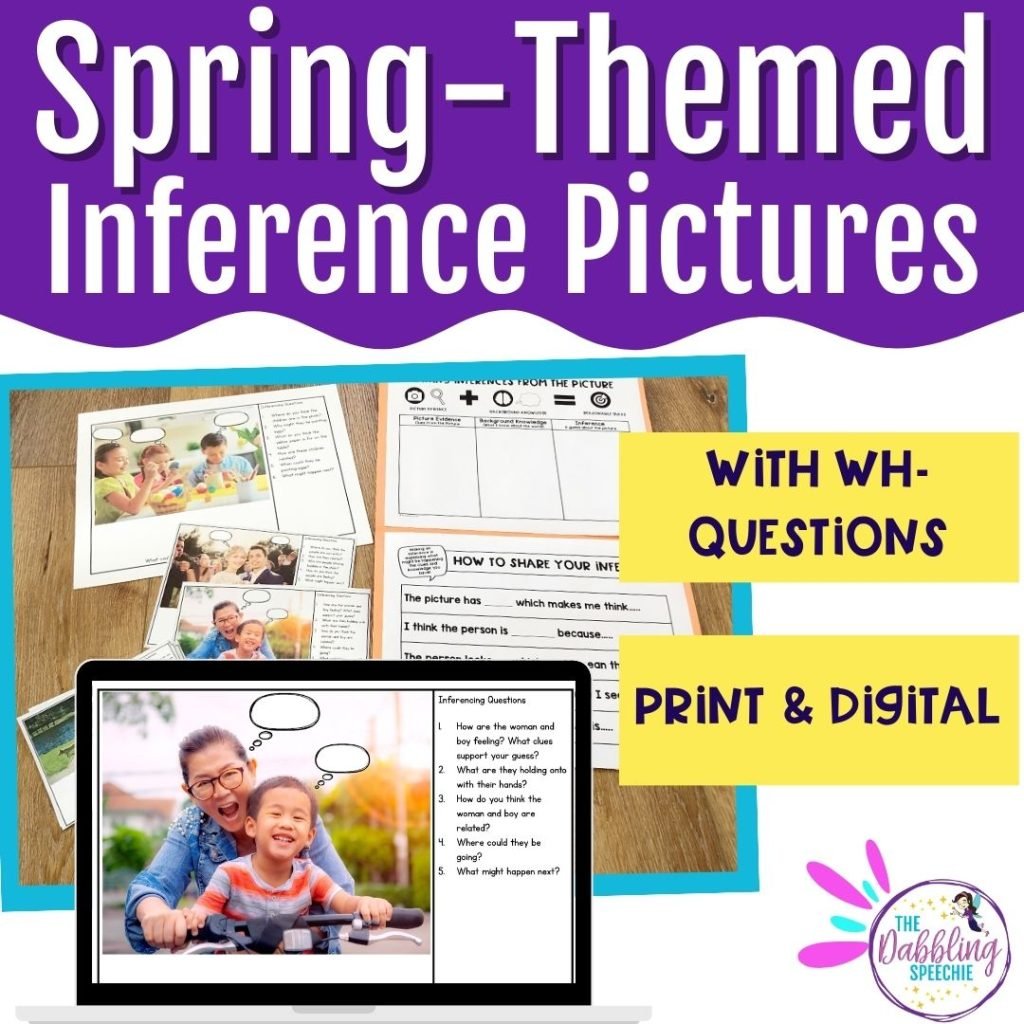
Spring Inferencing With Pictures Task Cards – ideal for practicing inferencing, prediction, and perspective-taking