
Getting high trial counts during articulation therapy is key, but keeping students engaged during those repetitions is equally important. When kids are motivated, they practice longer, participate more, and make faster progress. These articulation therapy activities combine fun with function, using games, themes, crafts, and visuals that keep students excited about their goals. If you’re focused on getting more trials in less time, check out my 100 Trials in Speech Therapy post and podcast episode from Real Talk SLP for practical tools to boost efficiency while keeping kids motivated.
Imagine trying to get more physically fit and hiring a trainer to help you achieve your goals. We know that to get in better shape, we have to work out consistently and do exercises that will build muscle. If our trainer only made us do burpees and crunches every session, our motivation would probably dwindle quickly. As much as we know that working out will help us achieve our goals, it doesn’t mean it will be the only factor keeping us motivated.
The trainer has to switch up the workouts, turn on high-pump music, give us encouragement along the way, and show us how we are making progress. That goes for our students, too. Of course, they want to improve their speech. But how boring can a session be, having to say their speech sound target over and over and over again.
That’s why keeping kids engaged helps maintain their motivation to keep working hard. We need to make sessions feel fresh and fun because if your students are more motivated to practice, generalization will be faster! Switching up your activities, using visuals, and manipulatives are just a few of the things you can do to engage your students. For more ways to make therapy fun, learn about tools and ideas that will get kids motivated in your sessions.
Movement increases energy and focus, especially for younger students who need to wiggle while they work! These articulation therapy activities blend movement with practice to make drill work fun, functional, and engaging.
Students love searching for hidden words, and this activity adds built-in movement to your session. Hide articulation flashcards around the room, and have students find and practice each word 5–10 times before collecting the next set.
Try my I Spy Speech Therapy and Scavenger Hunt Sets for ready-to-go sound-specific hunts, or download a free version from my I Spy Language Game blog post.
Turn articulation practice into a game of toss! Students can say their target word before each throw or aim for a specific score. You can also set up a simple “speech bowling” station using plastic cups or empty water bottles as pins.
Tape articulation flashcards around the speech room, turn off the lights, and grab a flashlight. Kids will love hunting for their target words while repeating each one. This activity keeps students alert, laughing, and practicing at a high rate.
Use paper cutouts on the floor to lead students to a treasure or fun ending. For example, place lily pads or stepping stones on the floor and have students jump to each one after saying their speech word 5–10 times.
These types of gross motor articulation therapy activities are perfect for mixed groups or co-teaching sessions.
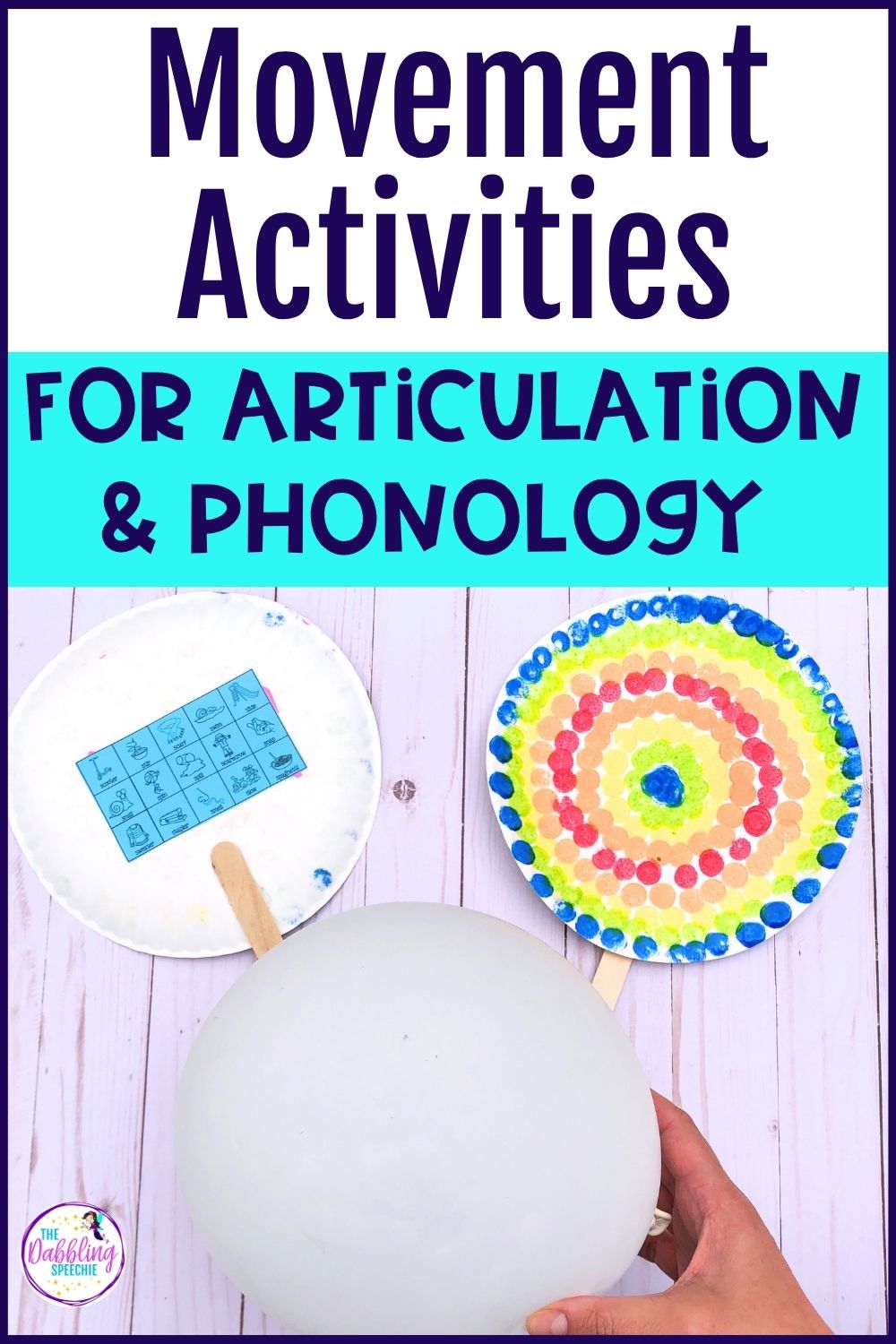
Combine crafting and movement! Students can make their own paddle using paper plates and craft sticks, then use it to keep a balloon in the air while practicing their target words. You can grab all the directions in my Paper Plate Paddle Craft post.
Create an obstacle course in your room or on the playground. Have students crawl under a desk, jump over a line of cones, or balance on one foot while saying their target words. This keeps practice lighthearted and physically engaging.
Painter’s tape is one of my favorite low-cost tools for articulation therapy activities. Use painter’s tape to create hopscotch paths, zigzag lines, or “speech stations” on the floor. Each stop can represent a word position or challenge (e.g., say your word in a sentence before moving on).
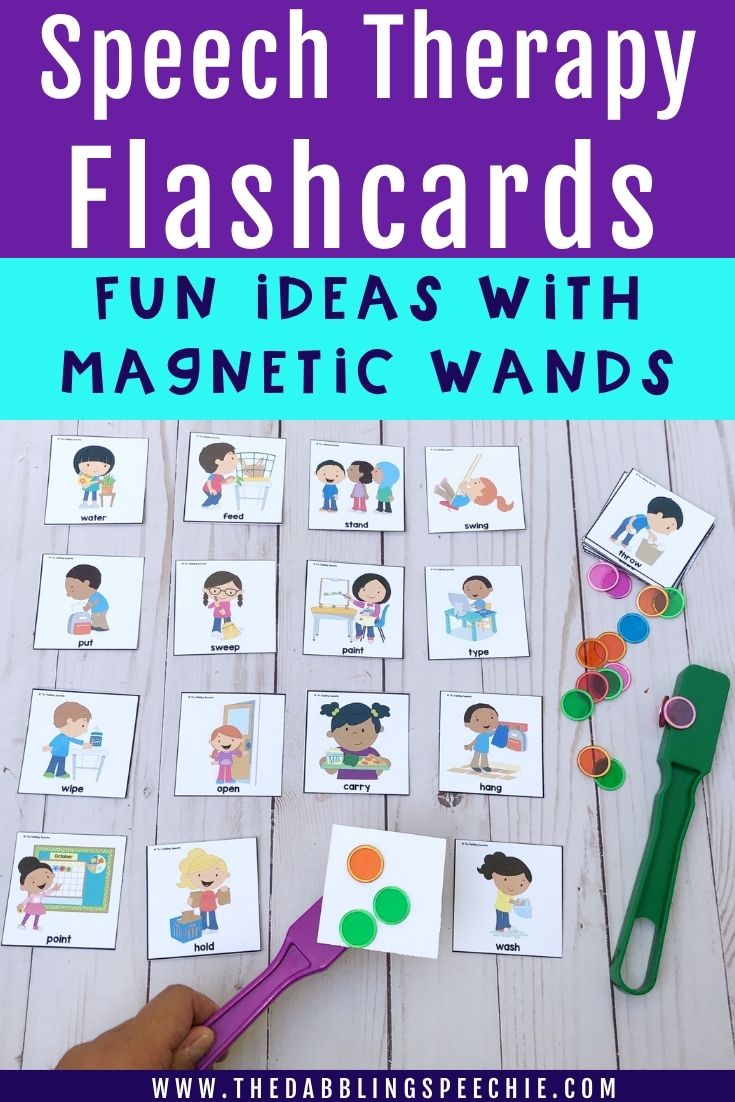
Engagement skyrockets when students use their hands while practicing sounds. Simple manipulatives can turn repetitive drills into motivating, high-trial sessions.
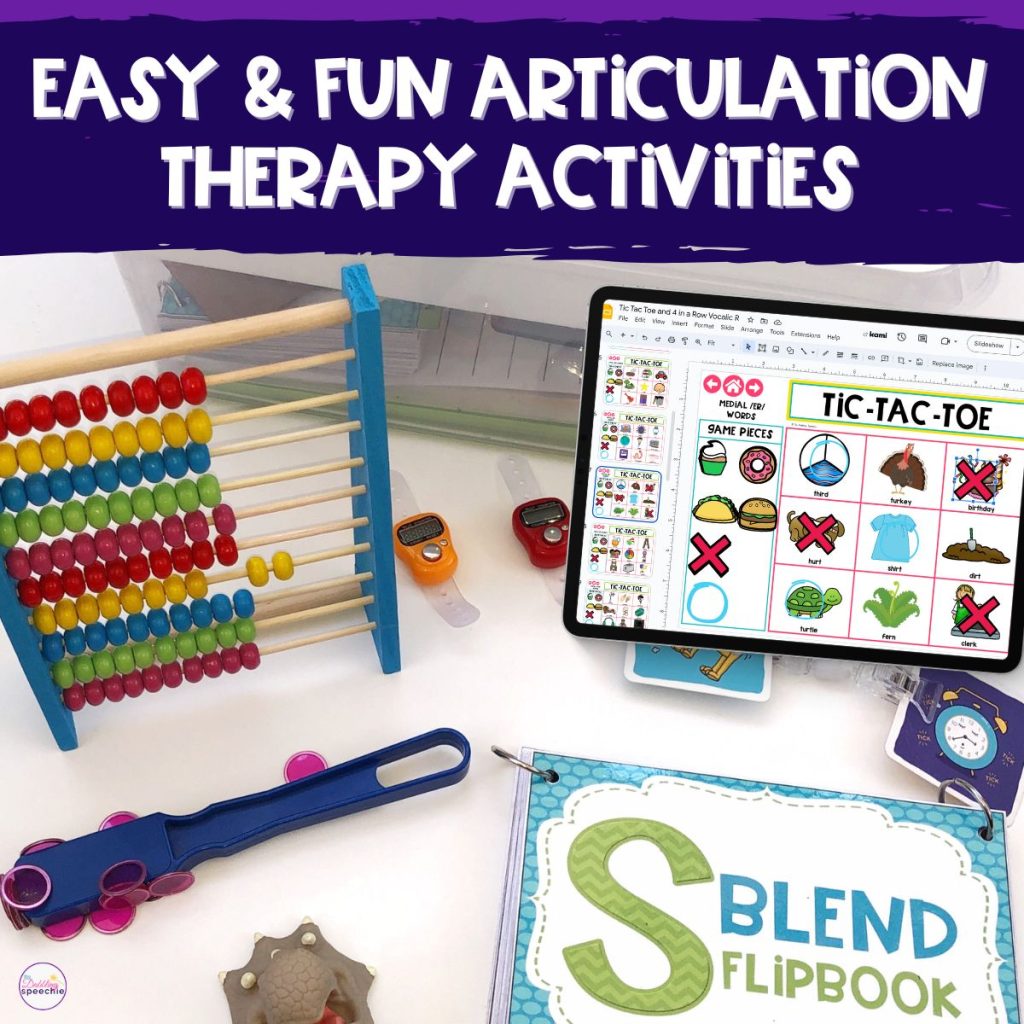
Try using magnetic wand flashcard games for an interactive way to grab student attention. The magnetic pull makes every trial exciting—and you can see a full example in my Speech Therapy Flashcards post.
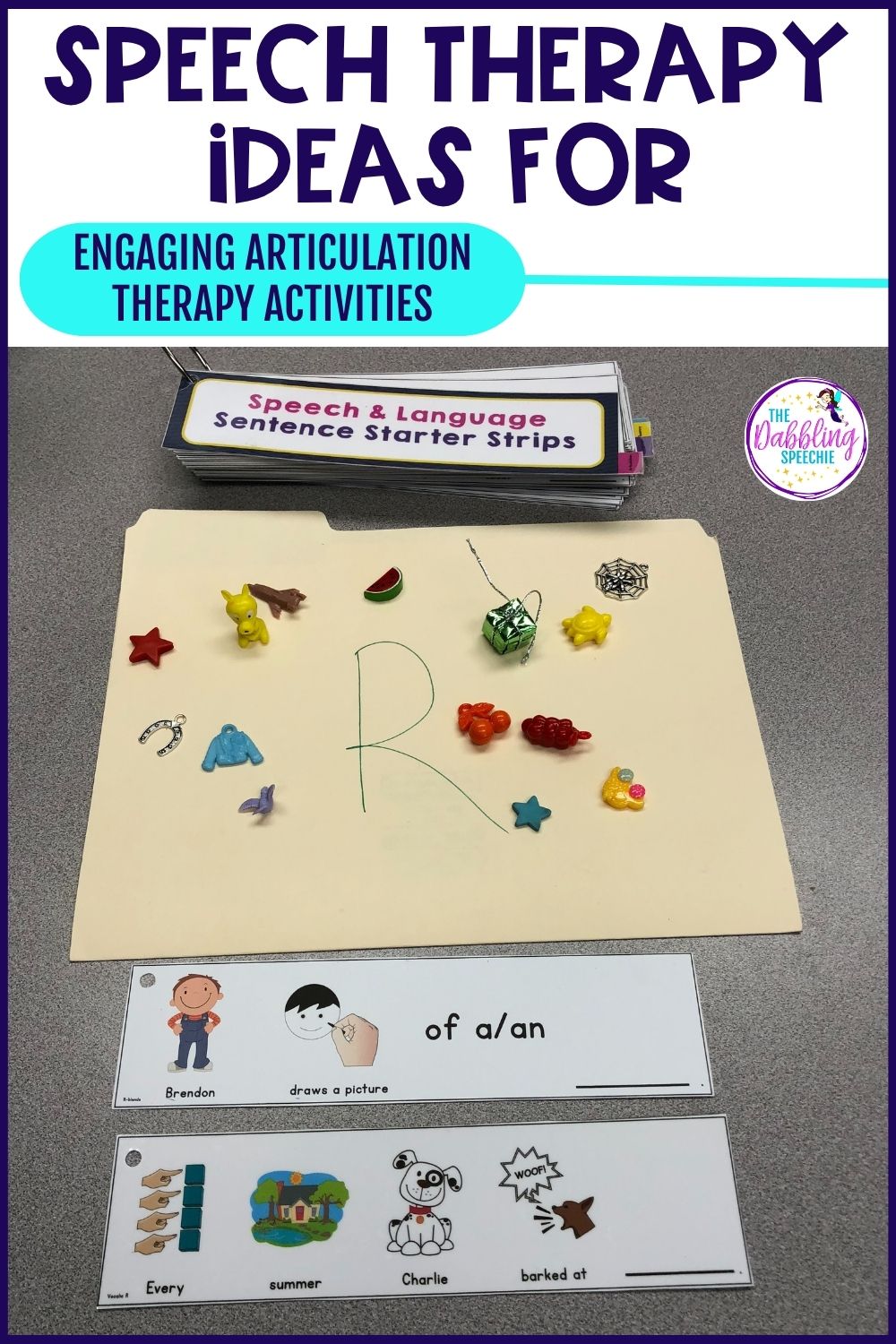
Mini erasers, tokens, or clothespins are great for tracking productions. You can also have students stack blocks as they practice, then knock them over with toy cars or ball poppers for a satisfying sensory payoff.
For independent drill practice, articulation flipbooks are a go-to option. Students love using dry-erase markers to check off words, write sentences, or circle their best productions—it keeps them actively engaged while you monitor accuracy.
You can even use dice with flashcards to gamify practice: roll to see how many stacking cubes to place on top of a card, and whoever builds the tallest tower wins!
For more ideas on manipulatives that help you get high trials, listen to episode 100 of the Real Talk SLP Podcast.
These ideas pair perfectly with themed articulation flashcards that target multiple sound positions. You’ll find sets like these inside my upcoming Articulation Flashcard Line and in the Themed Therapy SLP Membership.
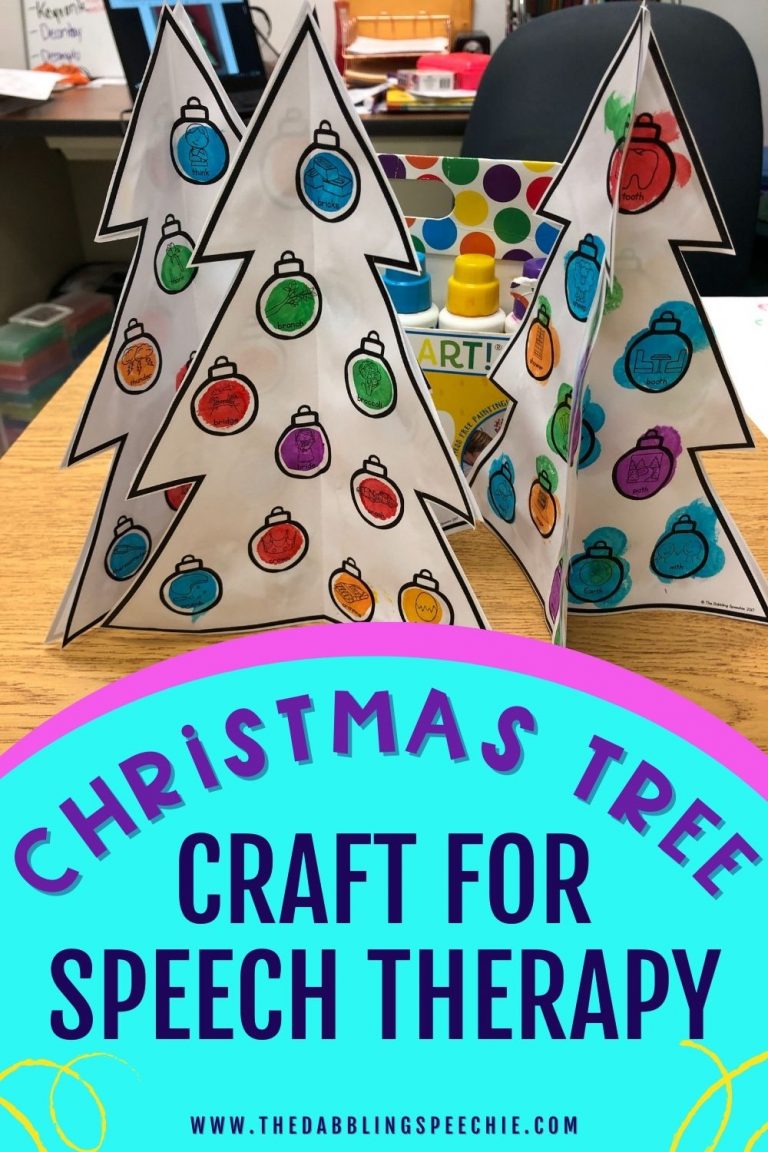
One of the easiest ways to boost engagement in articulation therapy activities is by adding a creative, hands-on craft. When students are cutting, gluing, or coloring, they’re not just having fun—they’re also getting more trials in without realizing how much they’re practicing. Each repetition can be tied to a step in the craft: say your word before adding a sticker, gluing a piece, or folding the paper.
After the craft is finished, send it home for extra practice! Parents love having a visual reminder for speech homework, and students are proud to show off what they’ve made.
Try some of these student-approved articulation crafts:
Using a theme-based approach with your language students is a great way to provide contextualized instruction that helps them work toward their language goals. You can incorporate fun, festive activities to keep things feeling fresh and new while your students work on their speech sounds. For example, planning fall and winter articulation activities ties in aspects of the season while also focusing on getting high trials. In the Themed Therapy SLP membership, you get articulation flashcards, speech sound word lists (download these free themed set), and themed open-ended games to use with any goal. For all my SLPs who love doing Christmas in December, download the free Christmas BINGO game and speech-sound word list!
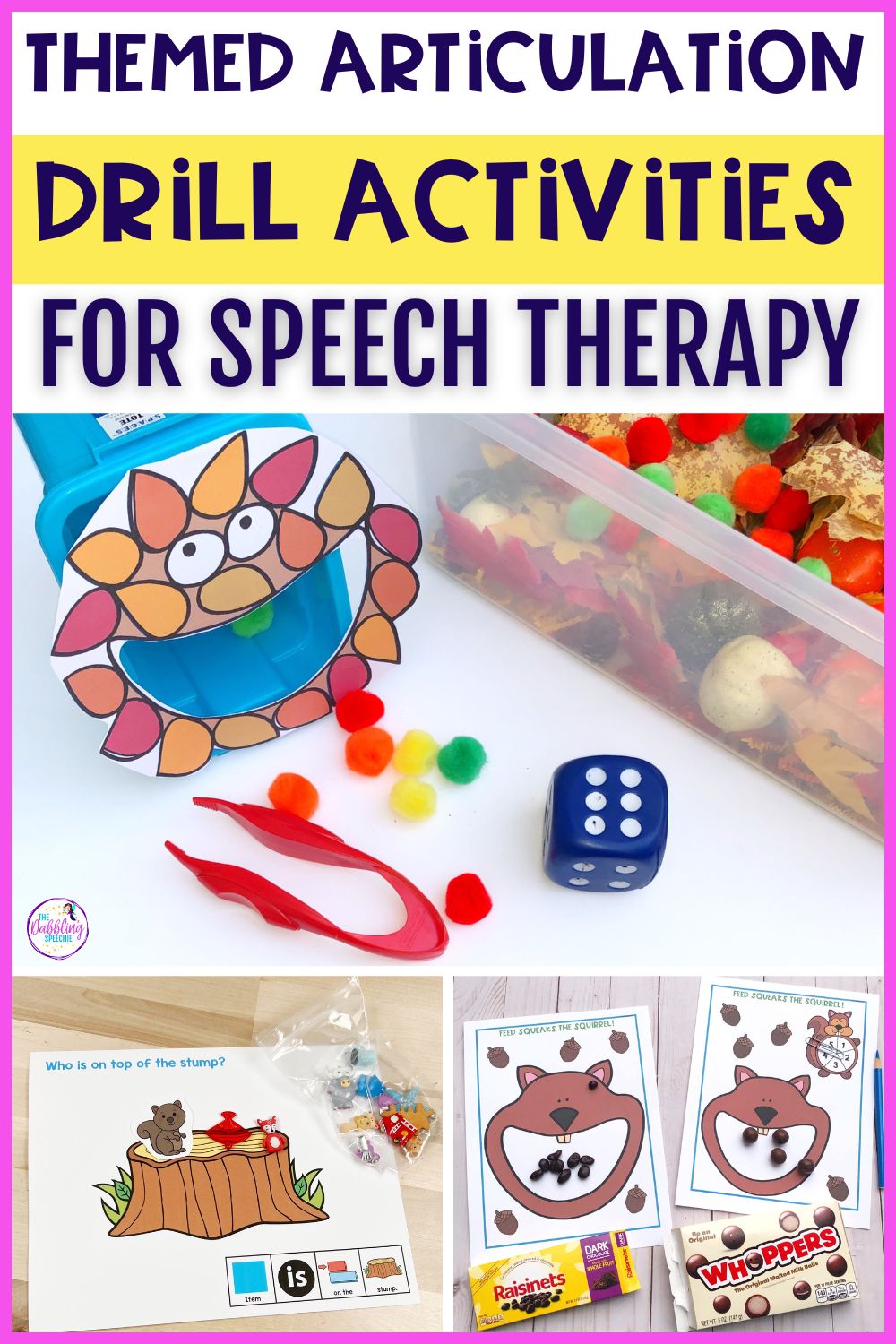
Sometimes the best articulation therapy activities are the simplest to set up. Quick, low-prep games can keep students focused and motivated while helping you get a high number of repetitions in each session.
Start with some of my favorite free articulation games that are easy to grab and go—like The Points Game, High Trial Uno, and a printable Race to 100 board. You can download them all from my post on Free Articulation Games for Speech Therapy.
Adding a little friendly competition can go a long way. My Sentence Challenge Game encourages students to “beat their score” by tracking how many productions they can do in one minute. This turns repetition into a personal challenge that feels like a game instead of drill work.
You can also turn classroom materials into engaging speech games:
Digital tools can make planning articulation therapy activities a breeze, especially if you’re working with students on laptops, tablets, or in teletherapy sessions. Having interactive options ready to go helps keep students engaged while saving you prep time.
Start by organizing your caseload with my Digital Speech Folders. These Google Slides templates make it easy to plan sessions, store digital materials, and assign articulation games for independent or teletherapy practice.
If you prefer a ready-to-use drill option, try my No-Print Articulation Flipbooks. They work perfectly on an iPad or computer and are ideal for high trials during virtual sessions or center rotations at the word, phrase and sentence levels.

You can also supplement therapy with engaging online games:
When you mix in these digital articulation therapy activities, students stay engaged, and you’ll always have a back-pocket plan—whether you’re in-person, online, or need a low-prep option for a busy week.
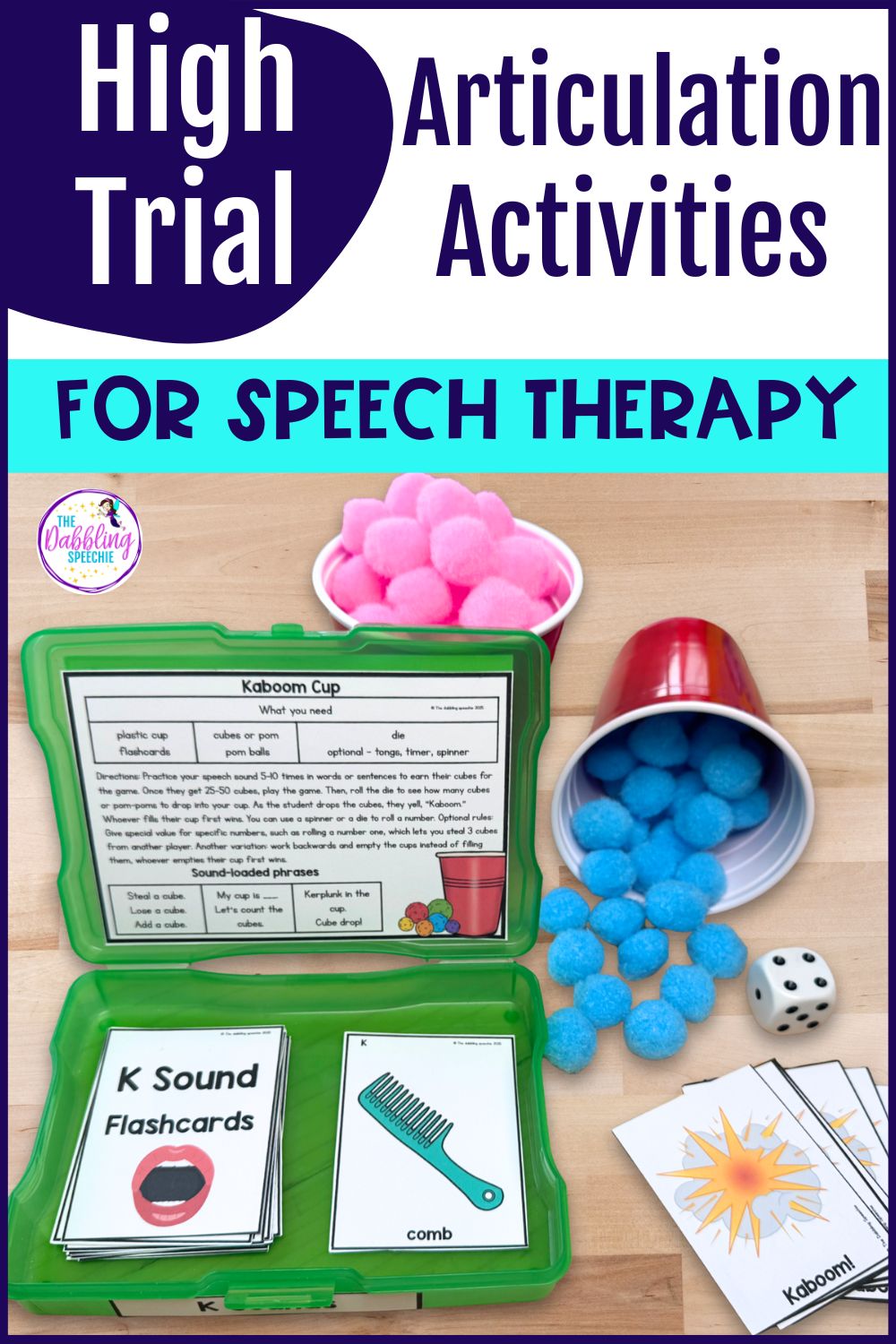
One of the most effective ways to boost engagement in articulation therapy activities is to give students a say in what they do. When students help choose the game, craft, or challenge, they feel more involved, which naturally leads to more practice and better progress.
Student choice can be simple and informal. You can present two options, such as “Do you want to play Race to 100 or the Points Game?” Or ask, “Would you rather make a craft or use magnetic wands today?”
If you want to offer flexibility, create a speech sound container filled with different activities. This makes it easy to pivot if students change their minds. You can also write the session plan on a dry-erase board and let students choose the order of activities using a “You Pick Three” format.
For structured sessions, give students a choice of a reinforcer. They can pick the game or break activity after completing each task, or earn the last 5–10 minutes of the session for a preferred activity once all their drill work is done.
If you want to build a visual choice board, you can make one in Canva or Google Slides. Add pictures or icons representing different types of articulation therapy activities like crafts, games, or digital tools.
Adding student choice helps your sessions feel collaborative while still maintaining structure. When students feel like they have a say in how they practice, they stay more motivated, and you’ll see those high trial numbers increase without extra effort.
You don’t need fancy materials to keep students engaged. With more than 25 articulation therapy activities in this post, you have plenty of ways to make speech sessions both fun and effective. From movement-based games and hands-on crafts to digital tools and student-choice strategies, these ideas will help you get high trials while keeping your students motivated.
Each of these articulation therapy activities blends creativity with purpose, giving you options that fit any group size, setting, or goal level. Whether you are using a craft for home practice, rolling dice with themed flashcards, or loading up a favorite online game, the key is variety and flexibility.
If you want ready-made materials to make planning easier, check back soon for my Articulation Flashcard Line, coming this November. You can also explore the Themed Therapy SLP Membership, which includes themed articulation flashcards, open-ended games, homework, and speech sound word lists that align with your sessions all year long.
These resources will help you save time, keep students engaged, and make articulation practice something your kids actually look forward to each week.