The Concerns & Overwhelm of push-in services for speech therapy
If you are a school-based speech pathologist, you may hear from your school district that they want you to do push-in services for speech therapy. For many SLPs, the idea of doing a push-in services speech therapy model feels foreign, overwhelming, and worrisome. We didn’t get trained on how to do push-in or co-teaching in grad school, so there isn’t a roadmap for how to do it well. And, you worry if you do push-in speech therapy how will this impact your schedule and quality of the intervention for your students. Those are all valid questions and concerns.
Hopefully, after reading this blog post, you will have a better understanding of the push-in model for speech therapy and how to incorporate that with your caseload.
Understanding the Push-In Model for Speech Therapy
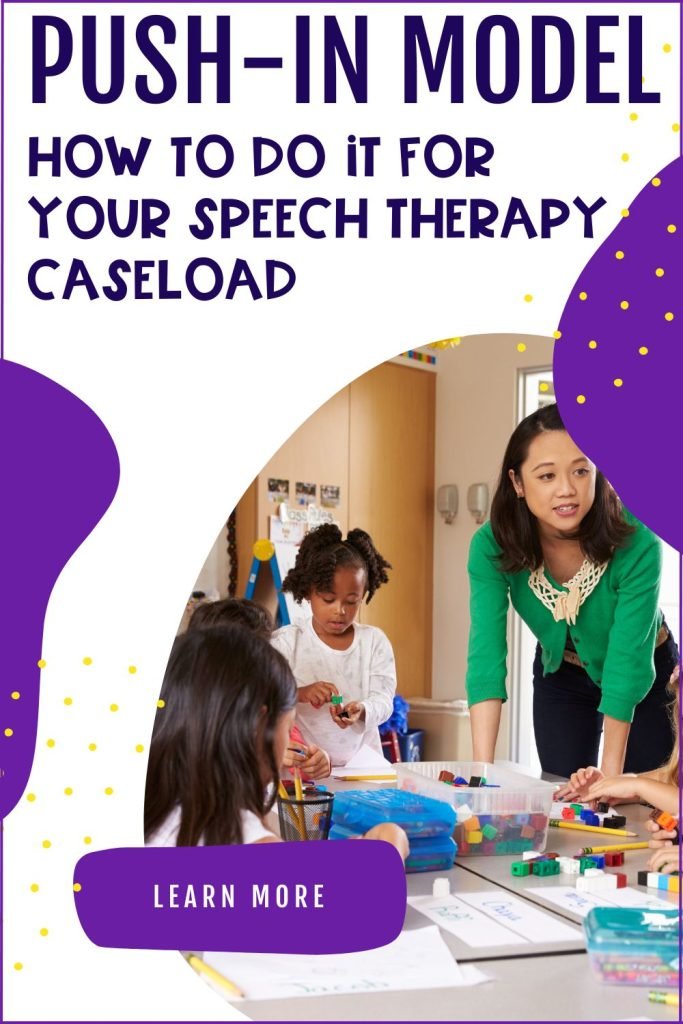
The push-in model for speech therapy often feels daunting for school-based SLPs. Unlike traditional pull-out models, where students receive direct, tailored interventions outside the classroom, push-in speech therapy involves providing services within the natural environment of the classroom.
However, this doesn’t mean simply pulling students aside to work in isolation. Instead, the push-in model emphasizes collaborative services, integrating speech therapy into the classroom through co-teaching, coaching, or consultation with the teacher.
For an in-depth look at setting up a push-in model with your students’ classrooms, download this free collaborative services guide for resources and tips.

Collaborative Services in Push-In Speech Therapy
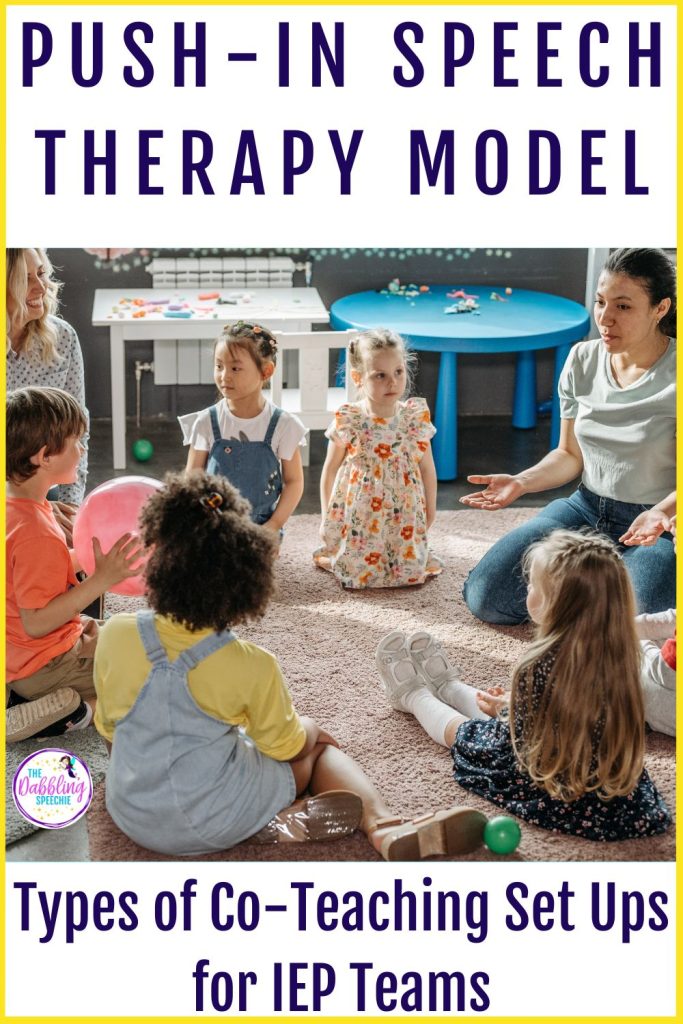
Effective push-in speech therapy hinges on strong collaboration between SLPs and teachers. This partnership ensures that students receive targeted interventions aligned with their Individualized Education Plans (IEPs) while benefiting from the inclusive environment of the classroom. Collaboration can look different for every teacher and classroom. The Informed SLP has a great visual to see the various types of collaboration that can happen with IEP team members.
Tips Before You Start Co-Teaching
Before diving into co-teaching services, preparation is key. This resource on co-teaching outlines essential steps for creating a successful partnership, such as setting clear expectations, sharing goals, and aligning teaching styles.
Listen to episode 41 to hear about the different collaborative services you can provide for students on your caseload.
Addressing Common Challenges in Speech-Therapy Push-In Models
Adopting the push-in services for speech therapy model comes with its share of hurdles. SLPs often face logistical challenges like managing classroom schedules, collaborating with teachers of varying personalities, and ensuring students receive quality intervention. When juggling paperwork and other responsibilities, planning engaging lessons for larger groups can also feel overwhelming.
To tackle These Push-In Services for Speech Therapy Challenges:
- Use the IEP as your guide. Tailor interventions to students’ needs while collaborating with teachers to adapt activities for the class.
- Utilize co-teaching strategies like station or parallel teaching to manage group sizes and meet diverse needs. Take time to coordinate with your IEP team member before implementing co-teaching.
- Streamline planning by using shared resources that integrate speech and language goals into classroom routines. For instance, these push-in lesson plan guides for PreK-2nd grade offer ready-to-go ideas for whole class lessons, and small groups.
With intentional planning and collaboration, the push-in model can feel more manageable and lead to positive student outcomes.
The Key to Successful Push-In Services for Speech Therapy
Clear communication and a willingness to adapt can help make the push-in model less intimidating and more impactful for students. But let’s be honest—collaborating with teachers and managing classroom dynamics isn’t easy. Coordinating and planning takes extra time and effort, but the long-term benefits can be well worth it.
Push-In Services in Speech Therapy Works with Preschool Classrooms
Caswell et al. (2024) piloted a shared book reading program where SLPs collaborated with preschool teachers during circle time. By integrating interactive reading, WH-questioning, and hands-on activities, they supported language and literacy goals while modeling strategies for teachers. After eight weeks, teachers reported improved student engagement and skills, as well as a greater appreciation for the SLPs’ support.
This example shows how push-in services can boost student outcomes and empower teachers, proving that with thoughtful planning, the push-in model can be highly effective.
Types of Co-Teaching and Push-In Models
When implementing the push-in model, understanding different co-teaching approaches can help you and your classroom teacher find the best fit for your students’ needs. Here are a few common models:
One Teach, One Support:
- One teacher leads the lesson while the other provides individualized support to students who need it.
- Ideal for introducing push-in services or managing large groups.
- Typically, the SLP would teach the lesson and the teacher would support engagement and behavior with the class.
Station Teaching:
- The class is divided into smaller groups, and each teacher runs a separate activity.
- Great for targeting specific speech and language goals while keeping students engaged.
- You can incorporate the instructional aides, teachers and SLPs all teaching lessons related to speech and language goals.
Parallel Teaching:
- Both teachers instruct smaller groups of students on the same material simultaneously.
- Useful for reducing group size and creating more interaction opportunities.
- And, you can break up the class based on levels, so the more advanced students can be in a group while the SLP is scaffolding, providing longer wait time, etc. with their group.
More Co-Teaching Push-In Set-Ups for the SLP and Teacher
Team Teaching
- With this push-in speech therapy model, both teachers lead the lesson together, alternating roles and responsibilities seamlessly.
- Works well when you’ve built a strong collaborative relationship with the teacher.
Alternative Teaching:
- One teacher works with a smaller group of students who need more intensive support while the other manages the rest of the class.
- Best for targeted interventions without pulling students out of the classroom.
Pick the Collaborative Service Model That Works for You
Each of these push-in services for speech therapy models has its perks, and what you choose depends on your goals, the classroom vibe, and how you and the teacher like to work together. You don’t have to stick with just one push-in speech therapy approach either—it’s okay to mix and match or try something new if things aren’t clicking. The key is finding a way to make it work for you, the teacher, and most importantly, the students.