If you work with preschool and early elementary students, you probably have a TON of goals for the K sound. Fronting is common in preschool-aged children, so I know you need speech therapy for the K sound activities that keep kids motivated while still getting high trials.
In this blog post, I’m sharing K sound speech therapy ideas to help with eliciting the K sound, along with K articulation and phonology activities for the syllable, word, sentence, and conversational levels.
This blog post contains Amazon affiliate links for your convenience. I receive a small commission at no additional cost to you.
For students who are just starting at the isolation level for the K sound, strong visual and verbal cues are key for helping them understand where and how to make the sound. Here are some of my favorite K sound speech therapy resources for elicitation:
Remember, not every elicitation cue or visual will work for every child, so it’s nice to have a set of supports available to help you when working with students.
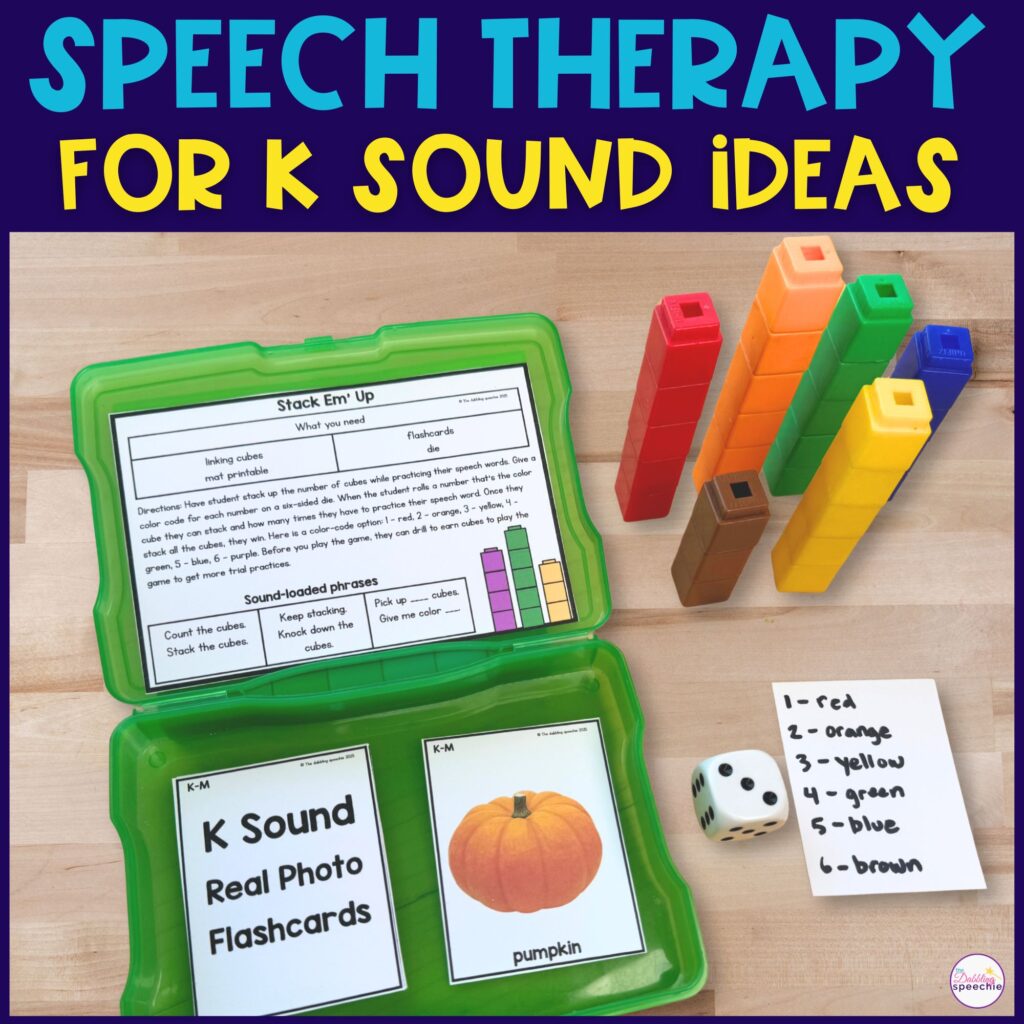
At the syllable level, working on the K sound isn’t the most fun and exciting. Pairing K-sound syllable-level practice with quick drill-reinforcer activities will help your students stay motivated to practice.
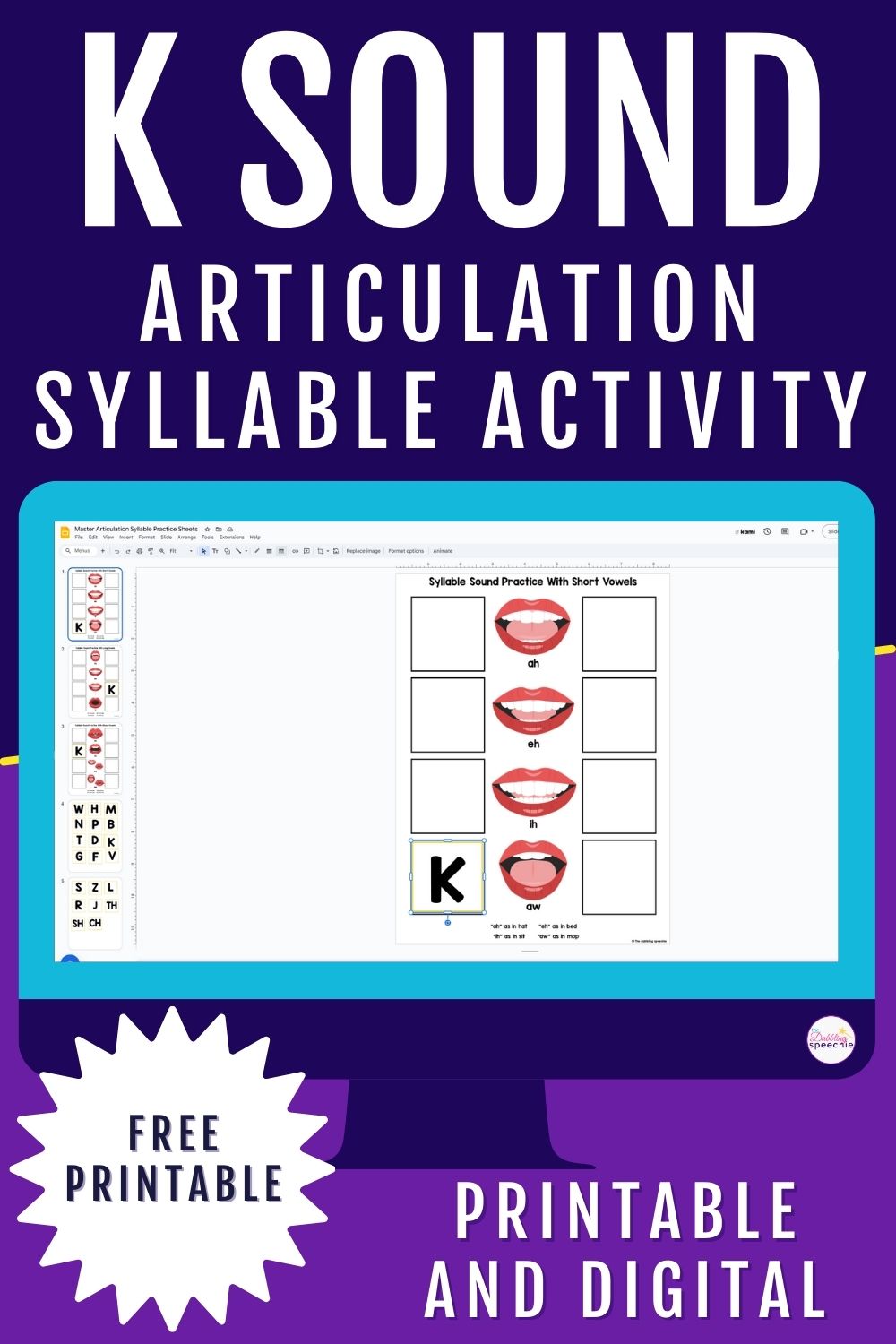
At the syllable level, working on the K sound isn’t the most fun and exciting. So, pairing K sound syllable level practice with quick drill reinforcer activities will help your students stay motivated to practice.
Pro Tip: dot markers, hole punchers, magnetic wand with chips, and so many more tools can help you make getting 100 trials fun!
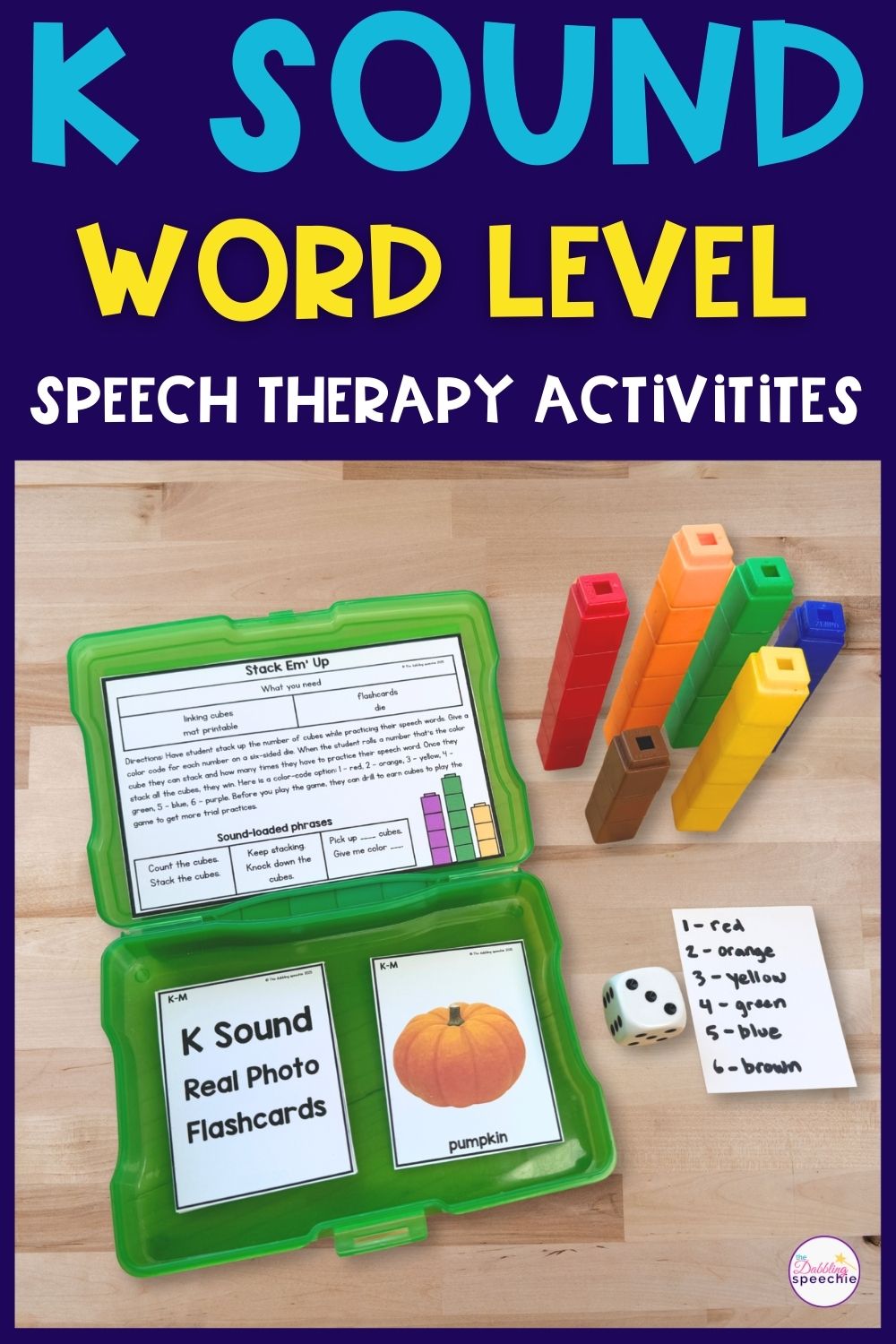
At the word level, students are practicing the K sound in initial, medial, and final positions while maintaining accurate placement without visual cues. These K-sound speech therapy activities help improve accuracy and generalization.
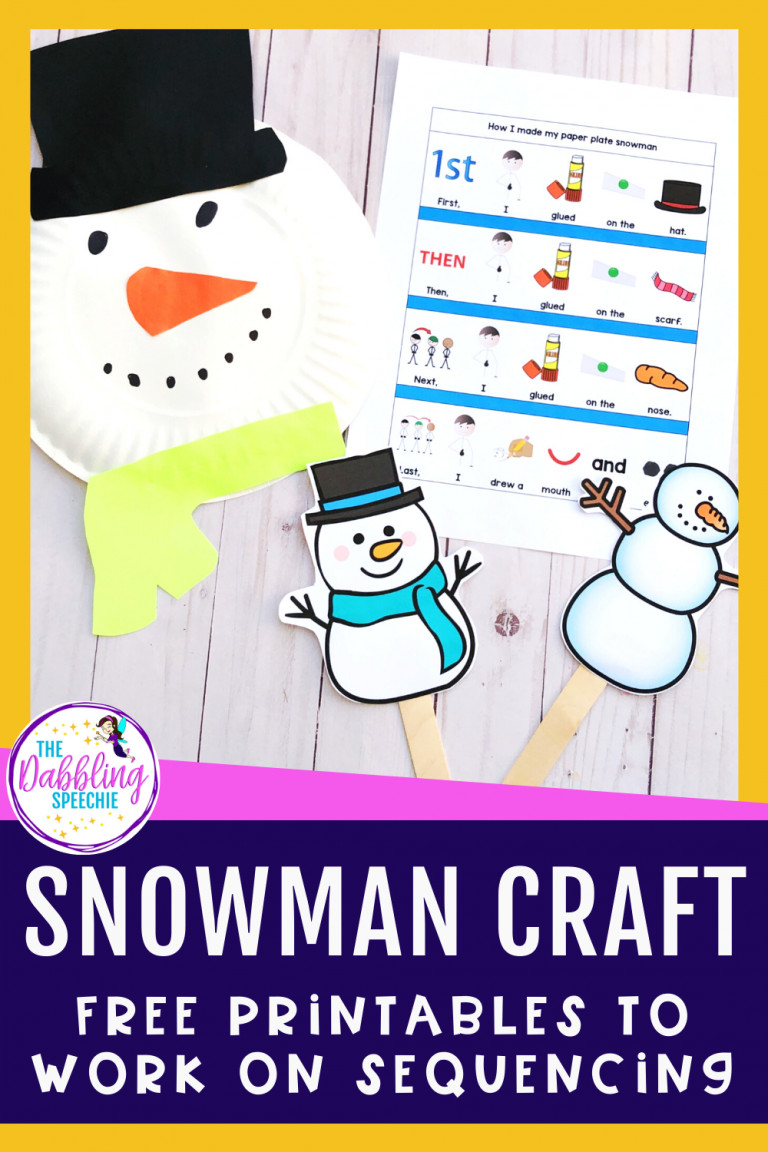
Crafts are a great way to get high trials of the K sound while keeping students motivated. These K sound speech therapy crafts can be used for word, sentence, and even home practice.
You can pair K sound words with your favorite speech therapy games to easily get 100+ trials. The key to planning effective K sound speech therapy activities is having a strong list of K words that target initial, medial, and final positions. I typically use the word lists from my K articulation flipbooks, the articulation flashcards, or pull from themed vocabulary lists when I’m planning mixed groups.
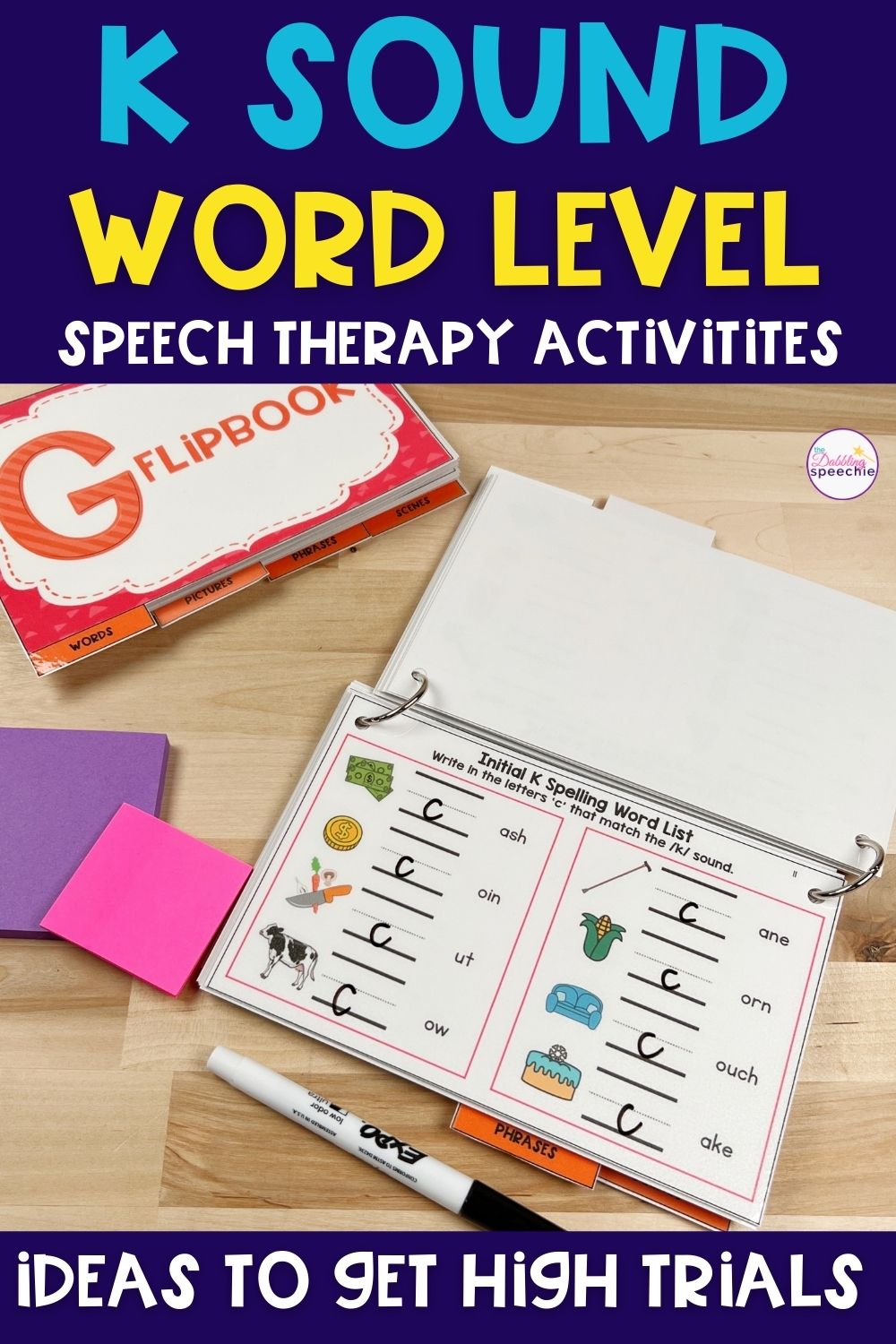
Another easy activity is to have your students create K–sound–loaded phraseson paper. These phrases can be practiced during the session and then sent home for weekly speech homework.
For example, you can use carrier phrases like:
Students think of different words to complete the sentence. The added word does not need to contain a K sound because the target words your student is practicing are can or caught. This works especially well for mixed groups because you can give students a category group or work on grammar target to help them generate responses.
Here are a few more examples of K sound–loaded phrases:
If you use a theme-based approach, this same activity works perfectly with theme vocabulary. You’re still getting repeated K productions while keeping therapy functional and engaging. We include K articulation cards and speech sound word lists for every theme inside the Themed Therapy SLP Membership, which makes planning these activities quick and easy.
It’s always helpful to have no-prep K articulation worksheets in your speech therapy material stash for quick planning days or speech homework. These types of resources make it easy to get high trials at the word and sentence level without spending extra prep time.
Some of my go-to K sound resources include K articulation sentence level worksheets and my year-long articulation worksheets that pair with favorite books and themes and include K sound targets. For additional sentence ideas, Home Speech Home has a helpful collection of K words and sentences that work well for structured sentence practice or homework. These resources are especially useful when you need quick, straightforward K sound practice that still supports accuracy and generalization.
Kids love games, and they’re a great way to keep students motivated during K sound speech therapy practice. Whenever you’re planning a game for high-trial practice, think about how students can earn game pieces by producing the K sound before taking a turn.
For example, with a game like Sneaky Snacky Squirrel, students can earn acorns for each correct K sound production. While playing the game, have them use K sound–loaded phrases such as “Can I get ___?”, “I caught a ___,” or “I can take a turn.”
Once the game is finished, have students practice their K words again as they put the game pieces back in the box. This helps sneak in even more trials without adding extra time. Plus, this game naturally has opportunities for the K sound with “sneaky, snacky, acorn, keep, pick, back, or take.”
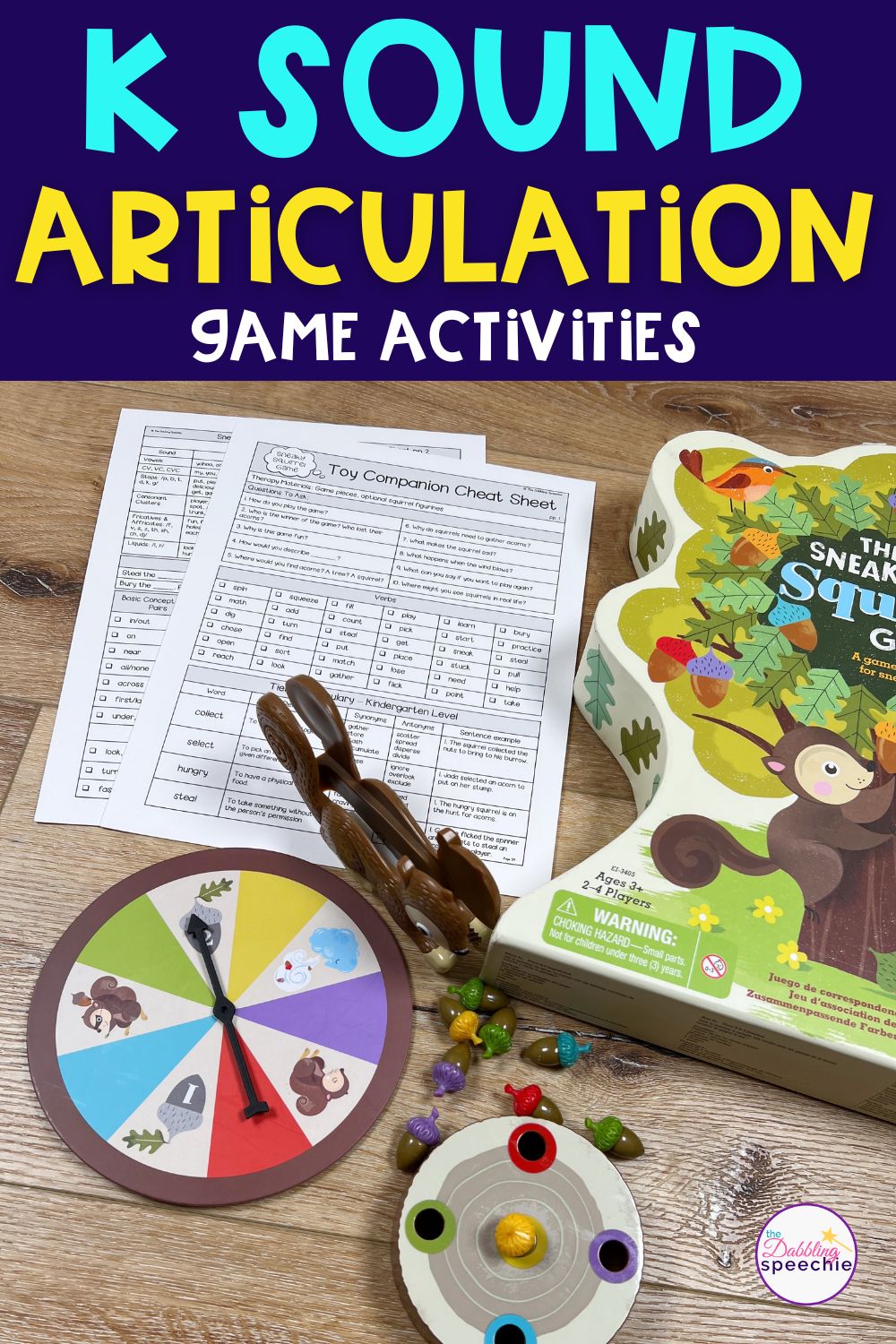
Here are a few ways to build K sound speech therapy practice into games:
You can pair K-sound words with your favorite speech therapy games to easily complete 100+ trials, and if you write out a list of K words that naturally come up in the game, your students won’t be bored while practicing!
Compare and contrast similar nouns that contain the K sound. This is a great way to work on sentence structure while getting repeated K productions. For example, you can compare cats and dogs or cookies and cupcakes by discussing what they have in common and what differs between them. This activity naturally supports sentence expansion and descriptive language while also presenting lots of opportunities to practice the K sound.
Here are some K articulation compare-and-contrast word pairs:
With your K sound word lists, have students create tongue twisters to practice the K sound in short sentences. You can turn this into a speech sound book by having students illustrate each sentence. For example:
Another fun option is to create alliteration poems using the K sound. Students can recite their poem multiple times for practice, then draw a picture to accompany it for added engagement.
You can also make an I Spy sensory bin using K mini trinkets (keys, cars, coins, cups) and other sound items. Pair the bin with these free articulation mats or sentence strips so students practice full K-loaded sentences such as “I spy a key in the box.”
Last, but certainly not least, here are some ideas for working on the K sound at the reading and conversational levels. At this stage, the goal is carryover, getting accurate K productions while students are reading, explaining, answering questions, and sharing opinions across settings and speakers.
You can use low-prep K-sound conversation activities such as short fiction stories, non-fiction passages, character comparisons, conversation starter cards, picture scenes, or step-by-step instructions for how to do something. These activities help students practice the K sound naturally while focusing on comprehension and expressive language.
For reading-based K sound practice, use non-fiction passages or articles from ReadWorks. Choose topics that naturally include K-sound vocabulary, such as animals, food, science, or places. Some example topics that work well include:
To increase repetitions, create K sound–loaded questions or “Would You Rather” prompts. For example:
These prompts work well for both structured conversation and group discussions.
Another easy way to target K at the conversational level is to have students read game directions or cards aloud while playing games such as Bubble Talk or Apples to Apples Junior. This adds functional reading practice while still sneaking in K productions.
You can also create a K word bank (cake, cookie, cat, kite, backpack, rocket, monkey, chicken, truck, snack) and have students:
There are so many effective ways to target K articulation at the reading and conversation levels while still keeping therapy engaging and functional. What are your favorite K sound carryover activities? Share them on social media or in the comments!
The K sound can feel tricky to teach at first, but with the right strategies, activities, and resources, it’s possible to get high trials while keeping students motivated. I hope these K sound speech therapy ideas help you feel more confident planning sessions from elicitation through conversation-level practice.
If you’re working on other speech sounds, be sure to check out my speech therapy posts for additional articulation ideas and low-prep activities. And if you have a favorite way to target the K sound in therapy, I’d love for you to share it in the comments or tag me on social media.