CYBER SALE! ➔

9 Effective Ways on How to Make Articulation Therapy Fun!

How to make articulation therapy fun!

If you’ve ever wondered how to make articulation therapy fun, you’re in the right place! Let’s face it. Many speech disorder approaches to successful therapy outcomes require high does or high frequency drill practice of the target sound or process. But, that can get boring really quickly for our speech students, right!? By incorporating games, movement, and little tweaks to drill practice, kids won’t feel like they are doing a boring activity in speech therapy. Learn about some fun articulation activities to help you plan effective speech therapy sessions.

Tips on How to Make Articulation Therapy Fun

Tips and ideas for how to make articualtion therapy fun!

Before you start planning fun articulation activities, consider these factors when thinking about materials, the length of the activity, or how you structure your speech therapy sessions:

  • Interview the child or family: Learn what motivates the child – whether it is certain hobbies, sports, TV shows, or activities they like to do, when possible, build practice around those things.
  • Use Quick Activities: Alternate focused drills with fun, short games or breaks to maintain focus. Give your students something to work on while playing the game or break related to their target sound.
  • Set Clear Expectations: For older kids, explain the schedule: first, a drill session; then, a fun activity. For example, drill for 5 minutes, then play Uno with a single speech target like saying “Let’s go!” (G sound) on every turn.
  • Allow Breaks Without Speech Demands: Giving kids a chance to play freely after focused work can boost motivation for future sessions.
  • Look at your materials: Is there a way to embed sound-loaded words or phrases while playing the game or toy? Can you naturally work on the child’s target sound while reading a book, playing with a sensory bin, toy set, or game?

If you are still struggling with how to make articulation therapy fun, check out some of the ideas, and materials in this blog post to give you some inspiration for lesson planning. 

Fun Articulation Activities For High Trial Drill Practice

1. Turn Trials into a Time Chanllenge

Many kids don’t just want to drill flashcards because it gets boring quick. But we don’t have lots of money or time to prep new materials, so to plan fun articulation activities that are quick to prep, do time challenges! Set a timer to see how many quality productions the student can achieve in a short time. Kids love trying to beat their own record! Repeat 2-3 times to see if they can get more. Watch the motivation to practice shoot up through the roof!

 
Fun articulation activities for drill practice.

How to Make Articulation Therapy Fun with Sensory Bins

Tips for how to make articulation therapy fun!

2. Sensory Bins for Speech Practice


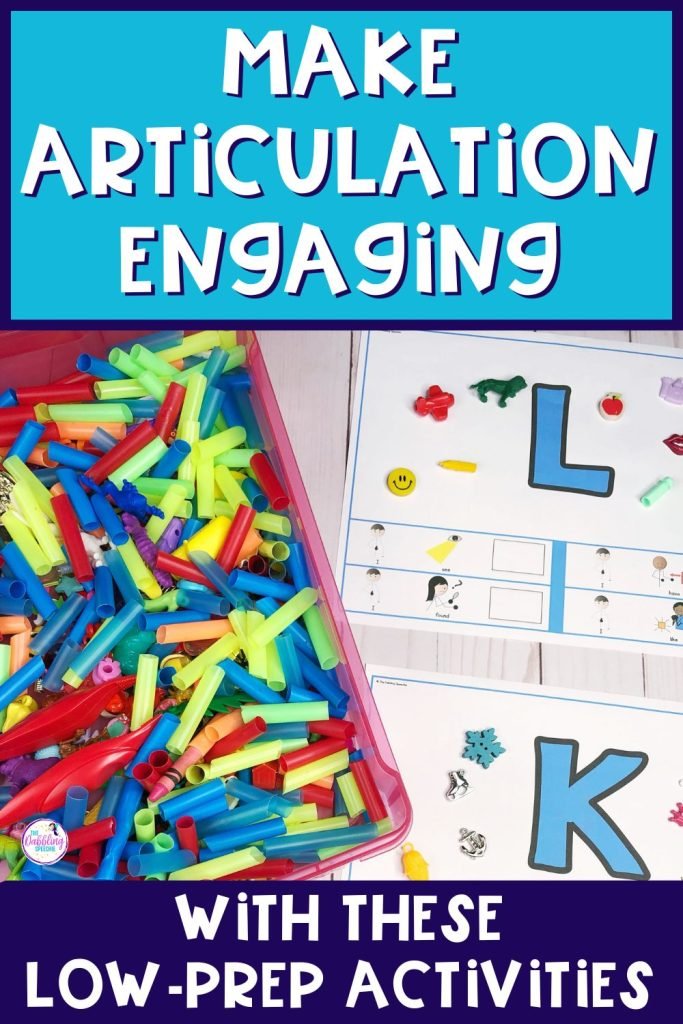
Hide articulation cards or objects in bins filled with rice, cut up jumbo straws, kinetic sand, pom pom balls or any filler. Kids search for the items and say their target words as they find them.

  • Seasonal Tip: Use snow (cotton fluff) for winter, seashells for summer, or leaves for fall. Then, slide a sheet of articulation picture words at the bottom of the bin. Kids can rake the leaves away or plow the snow to reveal their articulation words.
  • Articulation flashcards: We provide themed articulation flashcards in color and black and white printing options in the Themed Therapy SLP membership.
  • I Spy Sensory Bin: One easy sensory bin that makes for a fun articualtion activity is an I Spy bin. You need any filler and then throw in your favorite mini-trinkets. Have your students go on a speech sound hunt for mini-trinkets that have their speech sound.

Fun Play-Based Articulation Speech Therapy Ideas

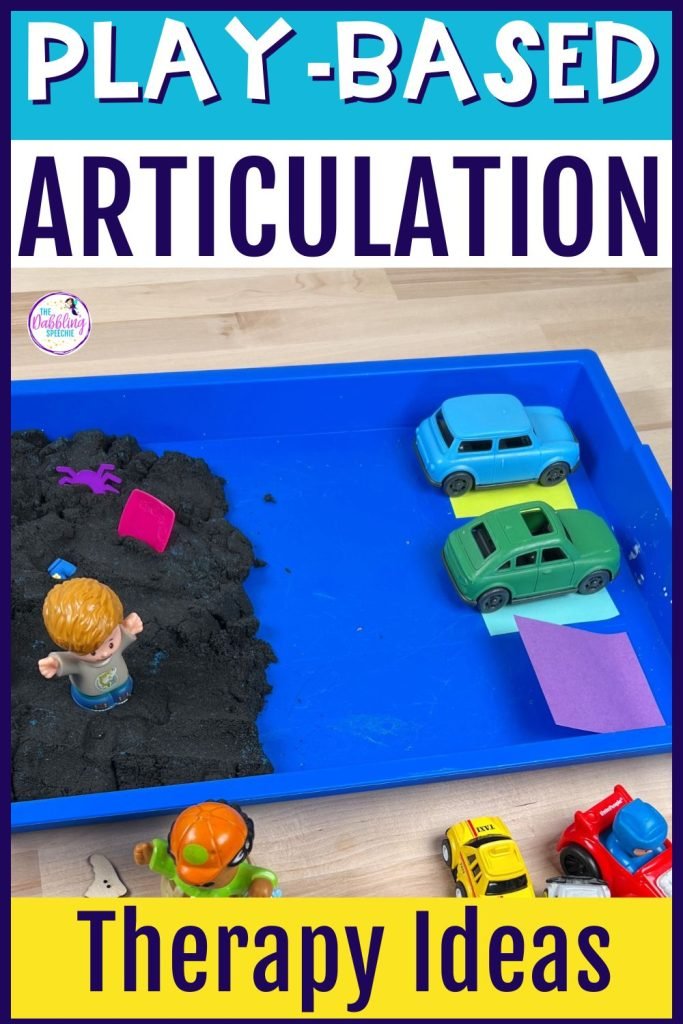
3. How to Make Articulation Therapy Fun with Toy Sets:

Some students shut down when they see flashcards, worksheets and anything that looks like work. So, instead, you can pull out a toy set and work on getting drill practice in while playing. For example, embed practice with toy cards such as “Go,” “Get,” “Big car,” “Get gas,” or “Pull in the garage,” for targeting the G sound.

  • Toy Companion Cheat Sheets: You can take the mental load of coming up with articulation or phonology targets while playing with toys using the 2-page toy companion speech therapy cheats sheets for 45 of your favorite toys and games.
  • Phonology: If you are looking for play-based ideas when using a minimal pairs approach, you can get some fronting ideas to spice up your drill practice!
  • Top tip for picking games: Find games that have sound-loaded phrases that can easily be practice when taking turns. This will increase trials while your students are enjoying the game!

Movement Articulation Therapy Activities

Get ideas for fun activities for speech therapy to work on articulation and phonology goals.

4. Fun Articulation Activities with Movement


Combine drills with action to keep kids engaged:

  • Speech Bowling: Knock down pins labeled with sound words.
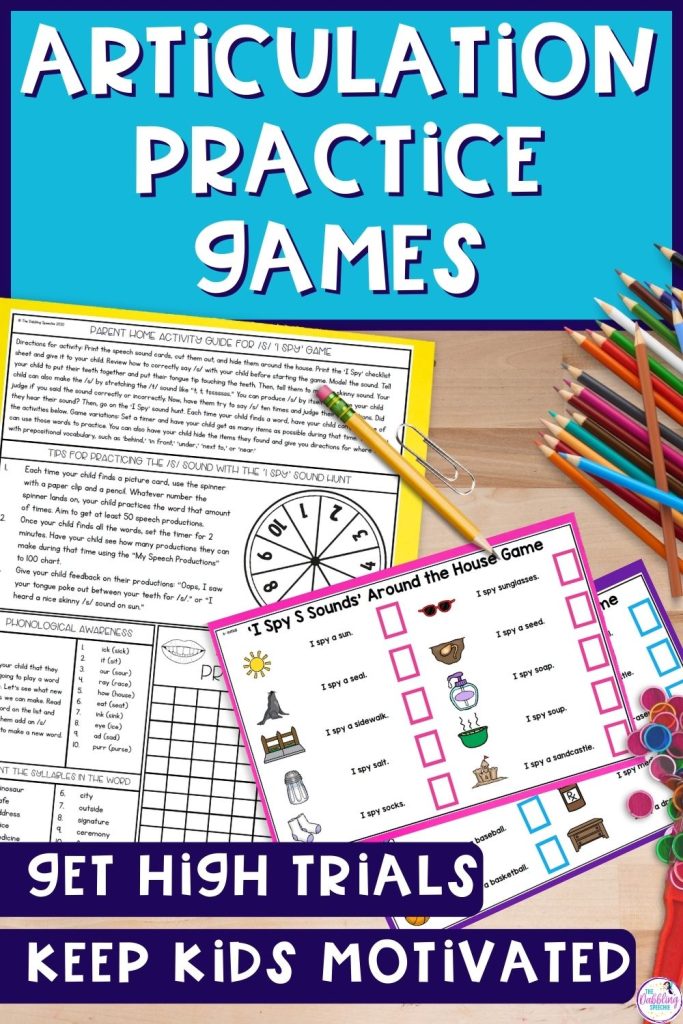
  • Scavenger Hunts: Hide cards around the room. When they find a card, they practice the word or sentence. Use these I Spy Scavenger Hunt sets with flashcards, parent handouts, and game mats. 
  • Obstacle Course: The Gift of Gab has a fun idea of making an obstacle course in your speech room while you practice sounds!

Make Articulation Drill Practice Fun with Craft Activities

5. Craft-Based Articulation Speech Therapy Ideas

You can pass this one up if you aren’t a fan of crafts, but I believe a good low-prep craft is just what you need to make articulation therapy fun! Aim for easy-to-prep crafts or crafts that you can use before and after they are assembled, and speech therapy materials!

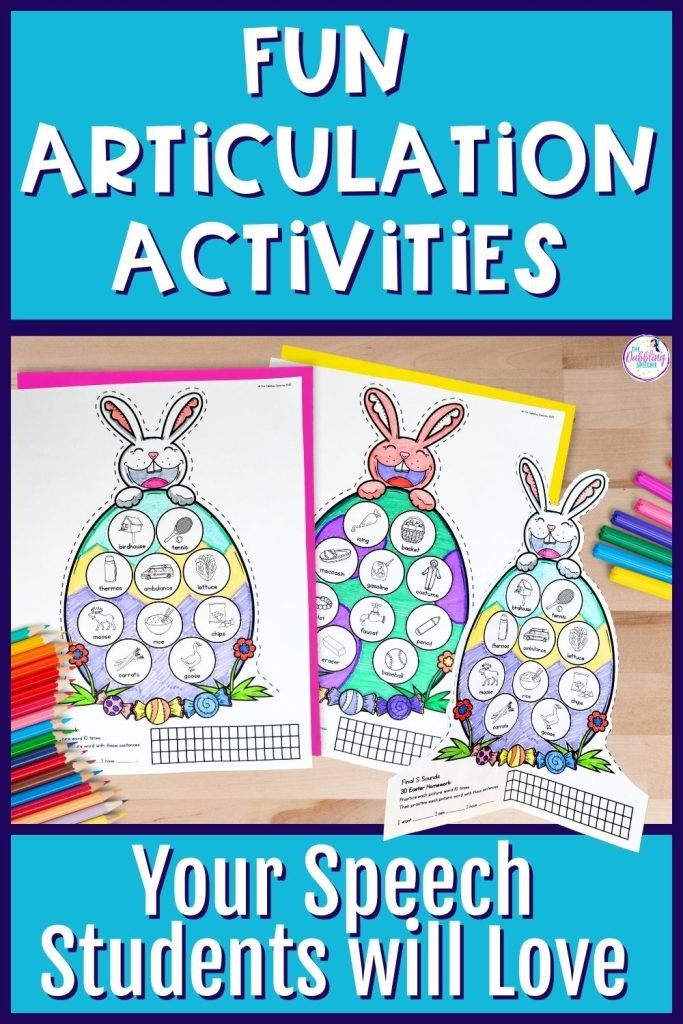
For example, this low-prep articulation craft uses only paper plates and, once assembled, can be used for warm-up drill practice every session or sent as homework!

3D Articulation Crafts: Kids love using these 3D articulation crafts to drill and they are perfect for speech homework.

Articulation Wallets: Make a festive articulation wallet that has your students’ speech sounds. While making the craft, you can practice their speech words. Then, they can store it in their speech folder to pull out each session. It’s perfect for sending as homework, too!

How to Make Articulation Therapy Fun with YouTube Videos

Easy articulation activities for middle schoolers.

6. Watch and Summarize YouTube Videos


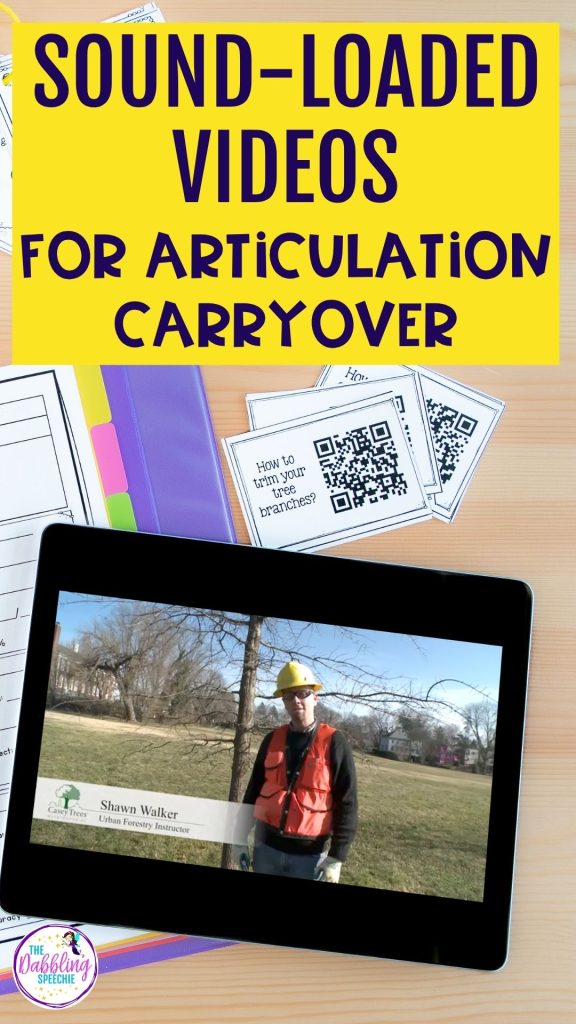
Instead of reading boring reading passage, make articulation therapy a little more fun by using sound-loaded YouTube videos or how-to tutorials that emphasize target sounds. For example:

  • Cooking Videos for S and SH sounds: Find videos for how to make soup, sushi, or shortcake.
  • Craft Tutorials: “Cut the paper” (P sound) or “Glue the glitter” (G sound).
  • Save time finding YouTube videos by sound: Use my articulation carryover resource to have QR flashcards linked to how-to YouTube videos that are sound-specific.

Fun Articulation Activities with Cooking

7. Speech Practice with Cooking Activities

Cooking activities are interactive, hands-on, and naturally repeat sound-loaded phrases. For example, if making pizza or English muffin pizzas you can target: 

  • “Get the ingredients” (G, S sounds).
  • “Spread the sauce” (S & S-blend sounds).
  • “Sprinkle the cheese” (S-blend and CH sounds)
  • ‘Top with pepperoni slices” (S and R sounds)
 

Pick easy snack recipes that have sound-loaded words that will naturally come up to practice during the session. 

Fun Articulation Games That Have Quick Turns

8. Fun Articulation Games that Are Quick to Play

Kids love games, so why not use them to plan a fun therapy lesson for articulation activities? Find games that can be used for quick articulation drill practice that have easy turn-taking, so you can play the game while still getting in trials. Here are some fun articulation games that don’t take tons of time in between turns:

  • Uno: Have students say a simple sound phrase like “Let’s go!” for G sounds when it’s their turn, or practice their speech sound the number of times that is on their card. Give special points for Draw 2, Draw 4, reverse so if they play that card they have to practice 10x.
  • Connect 4: Say a target word before dropping a piece.
    One easy speech task per turn keeps the game fun without constant interruptions.
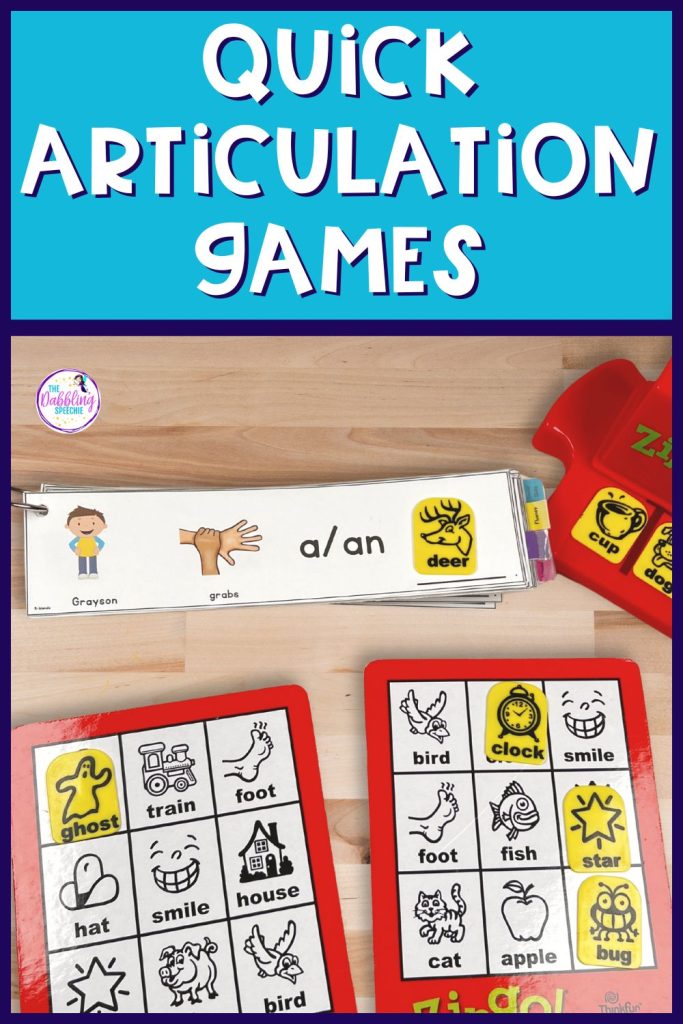
  • Zingo: Use the game pieces to practice speech sounds in sound-loaded carrier phrases like with these visual sentence strips. Apples to Apples Junior: Adapt this game to use the cards to play minute to win it games with sound-loaded words and phrases. Remember you don’t have to use the game as it is intended!
Learn about fun articulation games

Articulation Tools That Make Drill Practice More Fun!

How to use articulation practice games to make therapy more fun!

9. How to Make Articulation Therapy Fun with Hands-on Tools

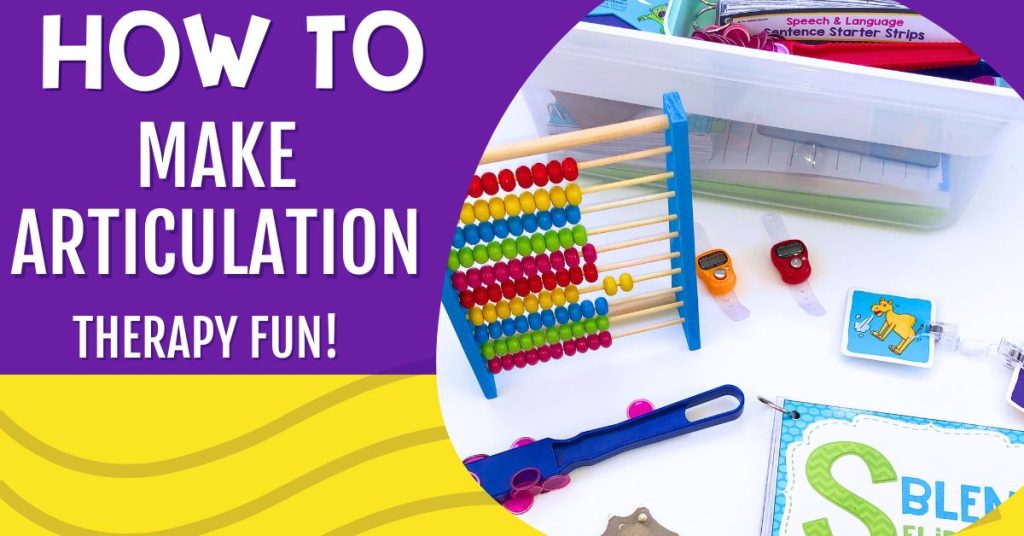
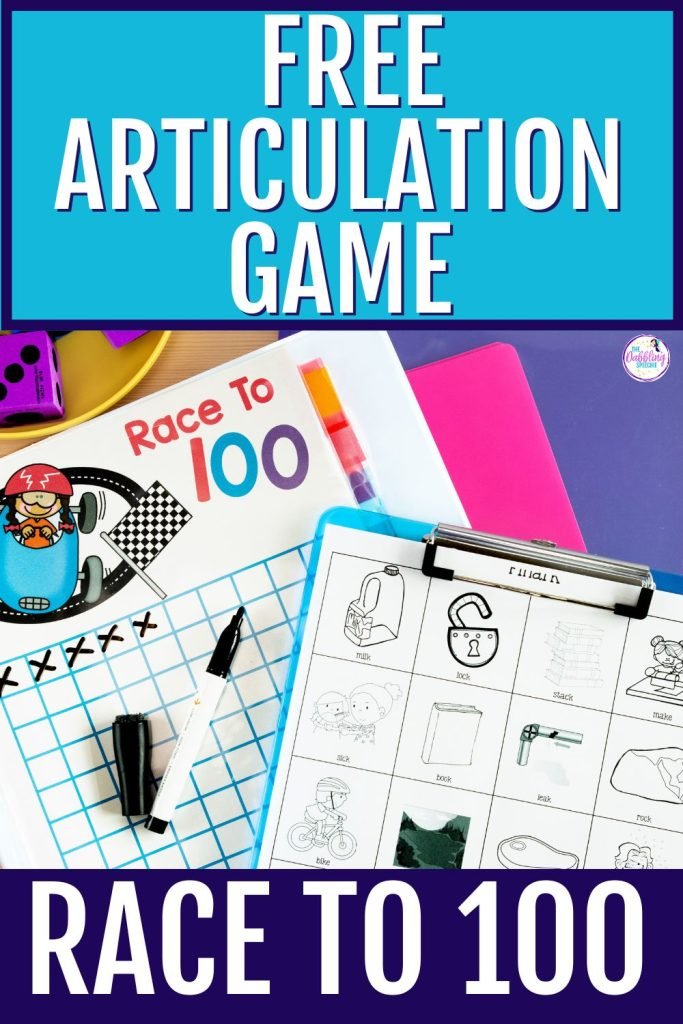
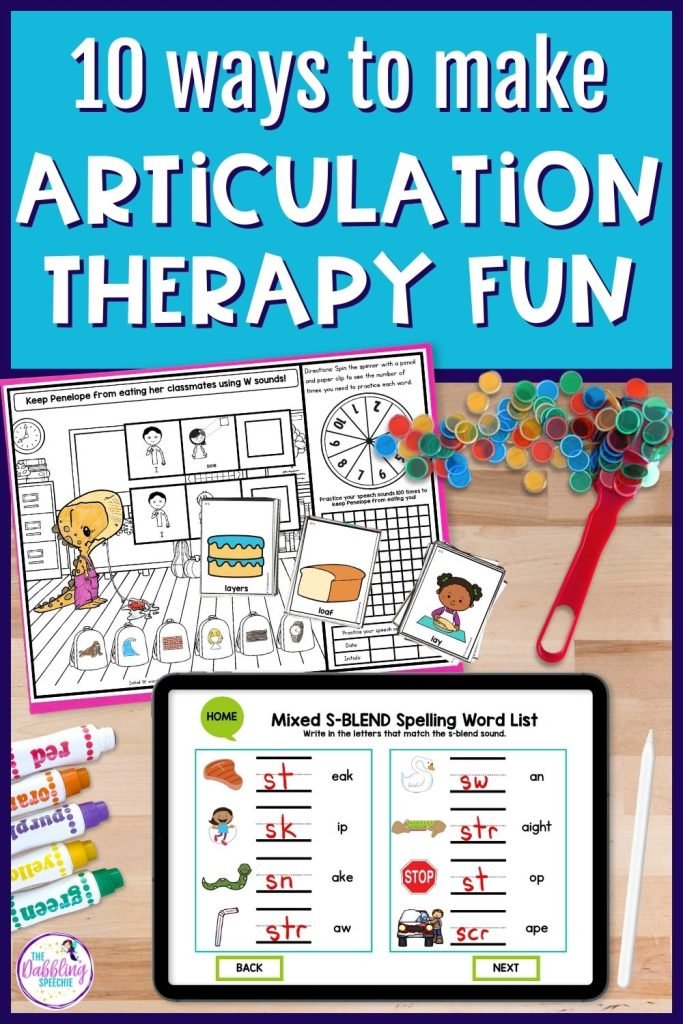
Anytime we can add some flair to worksheets, task cards, or flashcards, it makes things more fun! There are lots of tools to help you get 100 trials in speech therapy, but here are some of my top faves:

Abacus or make a DIY version: When kids have something to move while practicing, it distracts from the daunting task of practicing. Plus, you can make one for a very low cost!

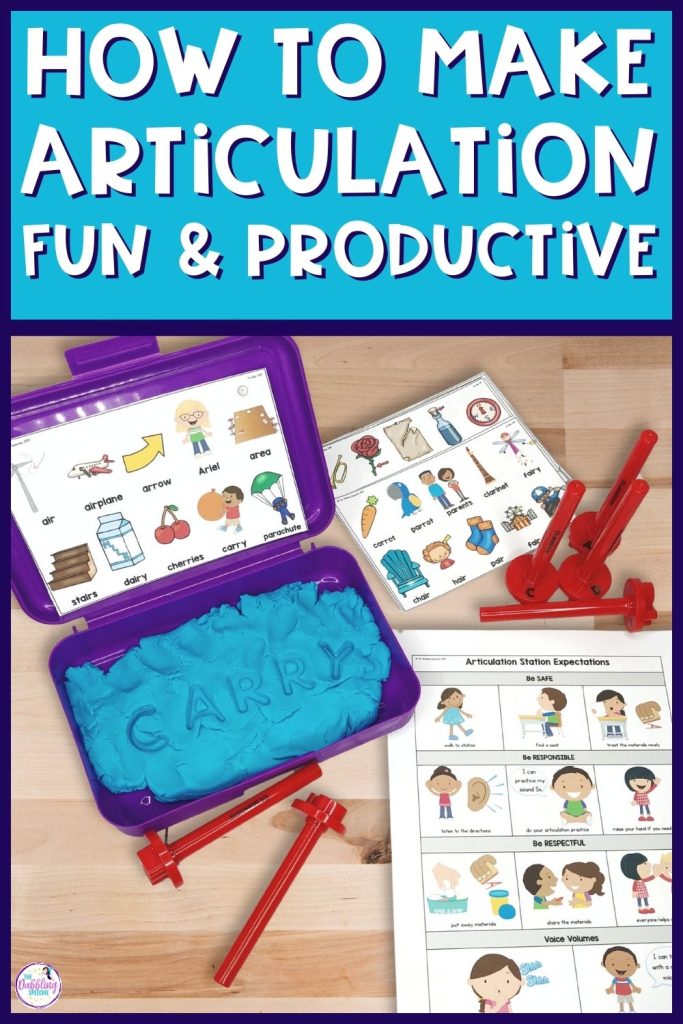
Ultra fine dry erase markers: If you have word or picture lists, put them in a page protector or laminate them so students can use a dry erase marker to mark the word off or fill-in-the-blanks. My articulation flipbooks are a massive hit because kids love using these markers!

Magnetic wand and chips: Earning or using magnetic chips with worksheets can make it fun to pick up after every picture or word is covered!

What tools do you have to help you plan fun articulation activities?

How Do You Make Articulation Therapy Fun?

By incorporating these fun articulation therapy activities, you can help students feel excited and motivated to practice their sounds. From sensory play and board games to YouTube videos and cooking, speech therapy can be both productive and playful. But I want to know! How do you make articulation therapy fun? If you have a fun game, tip for adapting materials, or know what kids dig, let us know in the comments!

Share it:
Email
Facebook
Pinterest