
Speech therapy sensory bins are a simple and engaging way to target multiple speech and language goals in one activity. With just one sensory bin, you can practice articulation, vocabulary, WH-questions, describing, sequencing, and social communication skills while keeping students actively involved in the lesson.
One of the biggest benefits of sensory bins in speech therapy is how easy they are to adapt for different goals and mixed groups. You can pair sensory bins with seasonal themes, classroom topics, or your favorite books to create meaningful language opportunities while students explore and play.
On this page, you’ll find ideas and resources to help you start using sensory bins for speech therapy in your sessions. Think of this guide as your reference hub for planning sensory bins, including materials to add, filler ideas, themed sensory bin activities, and ways to target articulation and language goals.
If you’re looking for ready-to-use lesson plans, the Themed Therapy SLP Membership includes printable sensory bin visuals and lesson plan cheat sheets to help you quickly set up themed sensory bins for your therapy sessions. You can also find speech therapy, sensory bin printables and lesson plan guides in my shop.
(Some links on this page are Amazon affiliate links for materials I use when setting up my sensory bins.)
Setting up speech therapy sensory bins is simple and doesn’t require complicated materials. Once you create a basic bin, you can easily adapt it to target articulation, language, and social-communication goals for different students.
Many SLPs build sensory bins around books, seasonal themes, vocabulary categories, or classroom topics. As students search through the bin, they can practice target speech sounds, answer WH-questions, describe objects they find, or retell parts of a story.
To set up a sensory bin for speech therapy:
Once your sensory bin is assembled, you can reuse it across multiple sessions by simply swapping out the picture cards, toys, or language targets.

Speech therapy sensory bins are a favorite tool for many SLPs because they combine play, exploration, and communication practice in one activity.
The hands-on nature of sensory bins naturally encourages students to talk, comment, ask questions, and interact with materials, creating meaningful opportunities for language development.
Sensory bins also work well for mixed groups, which many school-based SLPs manage daily. One student might practice articulation with hidden picture cards, while another works on describing vocabulary, answering WH-questions, using their AAC device, or sequencing events.
Another reason sensory bins are so effective is their flexibility. The same bin can be adapted to target a wide variety of speech and language goals, including:
Because sensory bins can be reused across many sessions, they are also a low-prep activity that saves time while keeping students engaged.
The key to making a speech therapy sensory bin is finding a container or box that works with your caseload. For students who can make things messy, picking a deeper container may be a good fit, whereas SLPs who travel to many sites might want a pencil box to make a mini sensory bin. Ideally, when creating sensory bins, you want one larger container that you reuse, and you organize the sensory bin materials you have when not using them. Here are some ideas for speech therapy sensory bin containers:
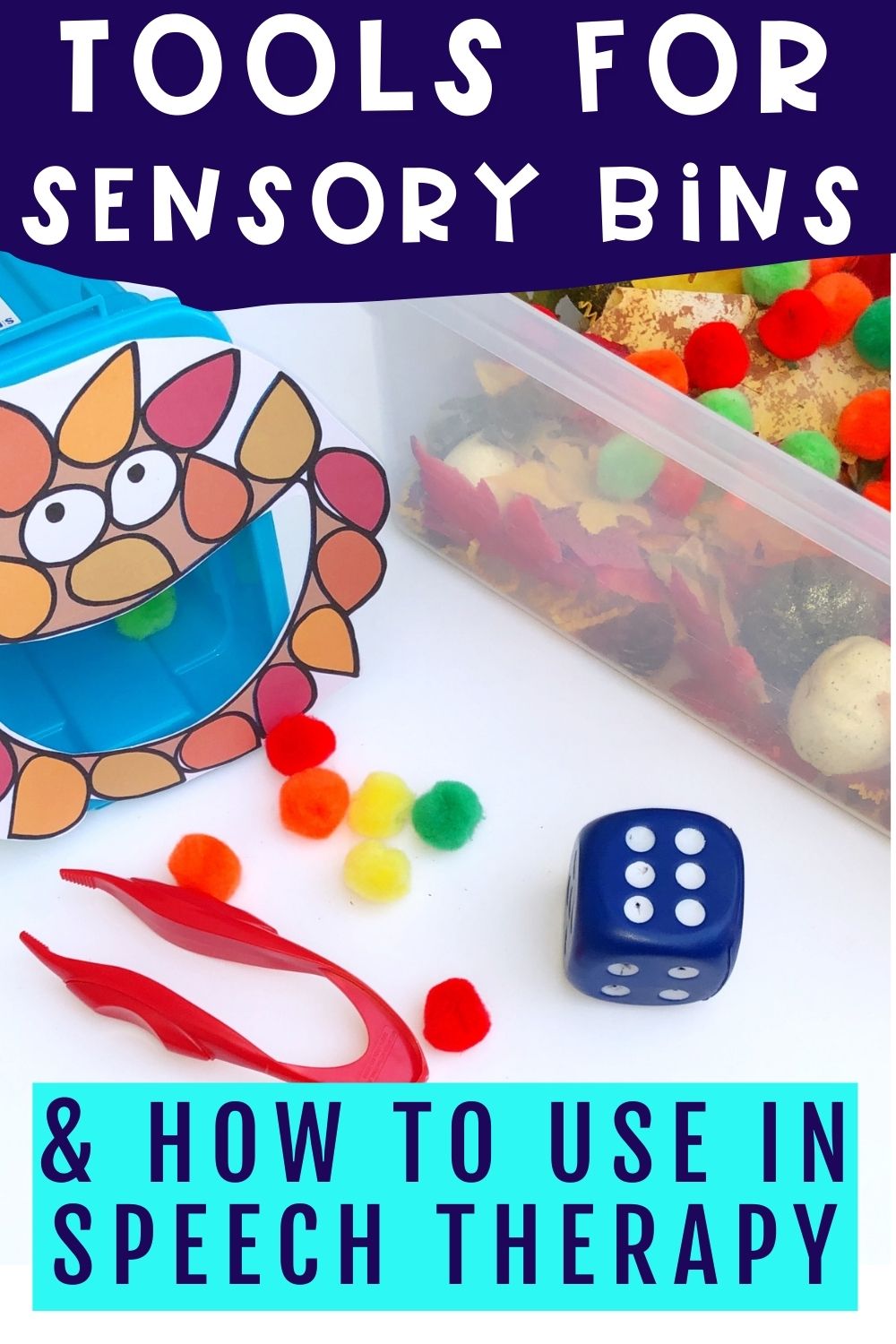
Adding simple tools to your speech therapy sensory bins can make the activity even more engaging while encouraging students to communicate during play. You can also use these tools to model verbs, phrases, and concepts. Plus, tools give students a reason to request, comment and interact with peers and adults while exploring the sensory bin. And, you probably have some tools in your kitchen so no need to buy anything new! Here are some helpful tools to use in your bins:
After you find the container you want to use, the next step is choosing fillers for your speech therapy sensory bins. The filler creates the base of the activity and helps set up opportunities for students to explore, search, and interact with the materials while practicing their speech and language goals.
These ideas are meant to help you plan your next sensory bin in speech therapy. The good news is that you don’t need anything fancy to get started. Many SLPs keep their sensory bins simple by using fillers such as black or brown beans. This gives you a consistent base that can easily be stored in your plastic bin and reused across sessions.
When you are ready to use your speech therapy sensory bins, you simply add the themed materials, articulation flashccards, printables, or vocabulary objects you want to target. The best part is that you can quickly swap out the items depending on your students’ goals or the theme you are working on that week.
Keeping a simple filler on hand makes it easy to set up sensory bins in speech therapy without needing to prep a completely new activity each time.
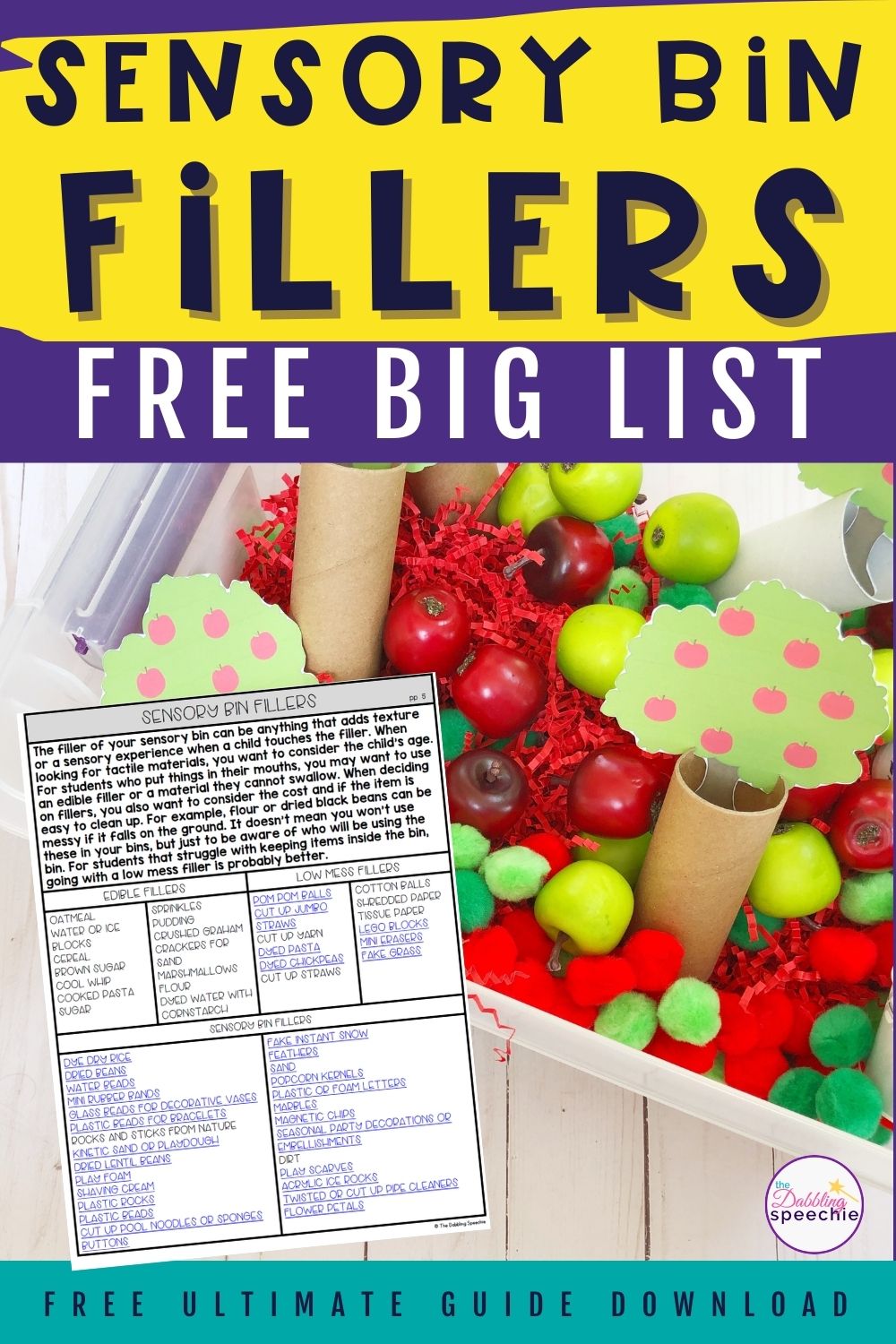
When thinking about your themed sensory bins, consider items that align with that theme that can be fillers. For examples of themed fillers, a fall theme has lots of great options to give you some ideas.
If you want to start using speech therapy sensory bins in your sessions but aren’t sure where to begin, this free guide will make it easy. Inside the printable, you’ll find simple ideas for setting up sensory bins, materials to use, and speech and language goals you can target with your students. It’s designed to help busy SLPs quickly plan engaging sensory bin activities that work for articulation, vocabulary, WH-questions, and mixed groups.
One concern many SLPs have when using speech therapy sensory bins is how to store all of the materials. Sensory bins can include fillers, small toys, and tools, so having a simple organization system makes it much easier to reuse your bins throughout the year.
The good news is that once you set up a basic system, sensory bins in speech therapy are easy to manage and reuse. Many SLPs store their fillers, tools, and themed materials separately so they can quickly swap out items depending on the lesson or theme.
Make one bin and see how you like using it with your students. If you find yourself wanting to make more, having a place to store the other materials is helpful when making a new bin.
Here are a few simple ways to keep your sensory bin materials organized:
Having an organized system makes it easy to rotate materials and reuse the same sensory bin for multiple therapy sessions.
If you’d like more ideas for organizing and storing your sensory bin materials, check out these posts:
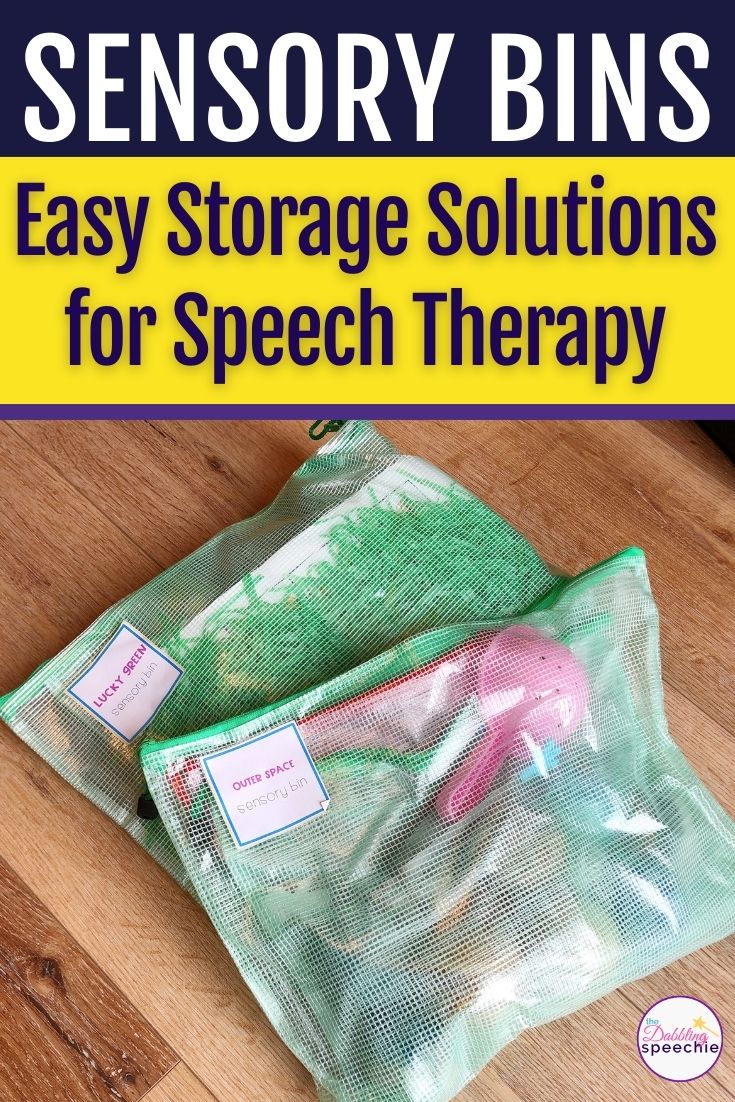
These posts include additional storage ideas to help you keep your sensory bin materials organized and ready for your speech therapy sessions.
Do your speech therapy sessions sometimes feel like you’re pulling teeth just to keep students engaged?
If you’re working with mixed speech and language groups, it can be hard to keep students motivated while targeting multiple goals. Sensory bins are one of the easiest ways to bring hands-on, play-based learning into speech therapy while still targeting articulation and language goals.
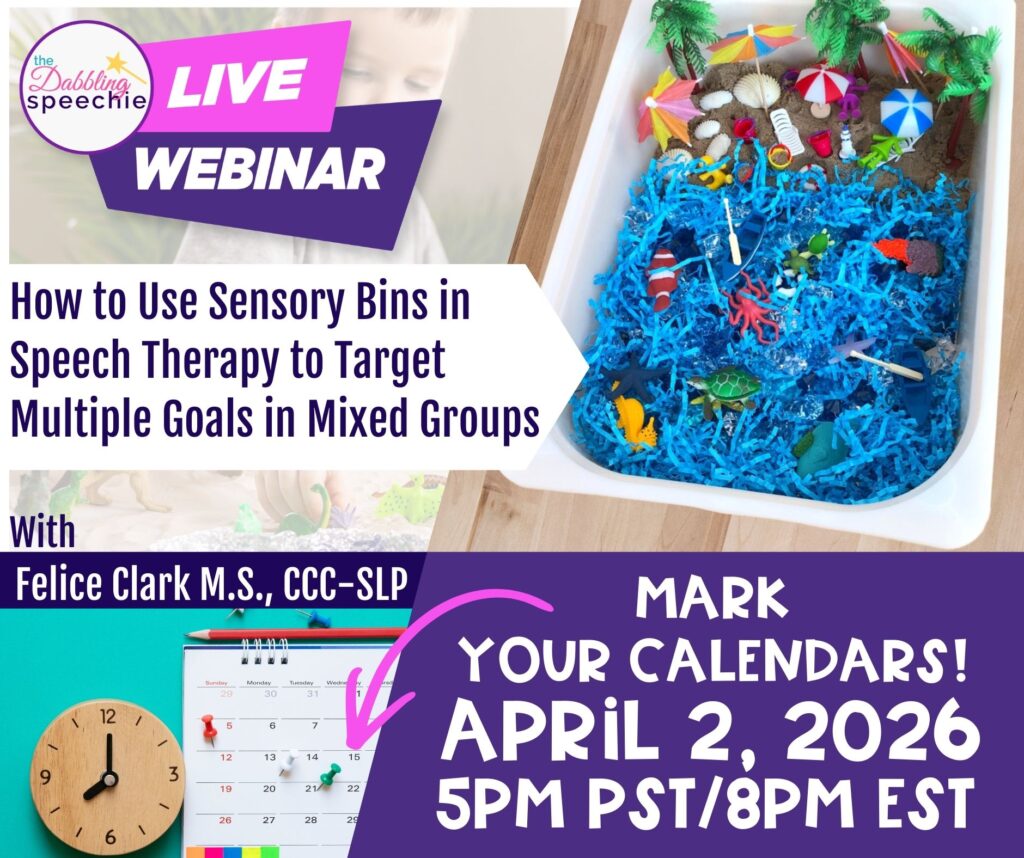
Sign up for this April 2nd speech therapy PD and learn how to use one material to cover your mixed groups so you don’t have to plan a bunch of individual lessons for each session!
One of the best things about speech therapy sensory bins is that you can use a wide variety of materials to target different speech and language goals. When planning sensory bins in speech therapy, I like to build the activity around a theme such as a book, seasonal topic, vocabulary category (transportation, food, clothes), or a specific language concept.
Here are some of my favorite materials to add to speech therapy sensory bins:

Small figurines are perfect for vocabulary development, storytelling, and WH-questions. Safari Ltd Toobs are some of my favorites because they come in themed sets. I personally use the Insect Toob, Penguin Toob, Flower Toob, and Arctic Toob to create themed sensory bins.
You can also use small figurines from places like Dollar Tree, Target, Amazon, or thrift stores. For example, if you are creating an insect sensory bin, you might include:
Kids also love Squinkies, Shopkins, Legos, and other miniature toys, which work perfectly in sensory bin play.
Picture cards and stimulus cards are easy to hide in sensory bins for speech therapy and can target many goals, including articulation, vocabulary, and WH-questions.
Some helpful card sets include:
Sequencing cards are a fantastic way to use sensory bins in speech therapy for narrative skills.
Students can search through the bin to find the picture cards and then organize them into beginning, middle, and end of the story. I often use sequencing cards from:
All of the book companions in the Themed Therapy SLP membership include sensory bin printables for the books.
Adding small objects can increase engagement and give students something fun to search for in the bin. Some easy items to include are:
These materials also work well for turn-taking games, counting trials, and following directions. Look through your game sets to see if there are items you can add to your bins. For example, Sneaky Snacky Squirrel has lots of acorns that you could add to the bin.
Character figurines are excellent for story creation, describing, and following directions with basic concepts. At our house, we have a Frozen set, which have definitely been “borrowed” for speech therapy sessions. On Amazon, they have these fun Minion figurines.
You can sometimes find similar figurines at Dollar Tree or thrift stores, making them an inexpensive addition to your sensory bins.
You don’t need to buy special materials to create effective speech therapy sensory bins. Many great items can be found around the house or classroom, such as:
These simple materials can easily be adapted to target articulation, vocabulary, sequencing, and descriptive language.
If you’re looking for easy materials to add to your speech therapy sensory bins, I created a free printable guide to help you get started. Inside the guide, you’ll find printable visuals and ideas that make it easy to set up sensory bins while targeting articulation, vocabulary, WH-questions, and describing skills.
Click here to get my Ultimate Speech Therapy Sensory Bin Guide for FREE
All of the printables used in the sensory bins below are included in the free guide, so you can quickly create engaging sensory bin activities for your therapy sessions.

If you’re looking for inspiration, here are some of my favorite speech therapy sensory bin ideas you can use throughout the year.
Make an ocean or beach sensory bin for the summer months and target LOTs of goals.
Story-based sensory bins are a great way to build vocabulary, answer WH-questions, and practice story retell.
These creative sensory bins from other speech therapy bloggers are also great inspiration:
Water Play Sensory Bin From Speech Sprouts
“I Spy” Sensory Bin For Speech & Language
March Sensory Bins For Speech Therapy
Dinosaur Excavation Sensory Bin By Hello Creative Family
Ladybug Sensory Bin for a Spring or Insect Theme

If you’re working with younger students, you may also love this collection of 30+ preschool sensory bins that are perfect for early language development and play-based learning.
These sensory bin ideas are especially helpful for preschool and early elementary speech therapy sessions where hands-on exploration supports language development.
Speech therapy sensory bins are a simple way to bring more hands-on learning and engagement into your sessions. They make it easy to target articulation, vocabulary, WH-questions, and social communication skills while students explore and play.
Once you start using sensory bins, you’ll find that they are easy to reuse and adapt for different themes, books, and therapy goals.
Be sure to grab the free Ultimate Speech Therapy Sensory Bin Guide to get printable materials and ideas for setting up your own sensory bins.